Fence installation cost in Conroe, TX depends on the fence length, material, height, gates, site conditions, and work included in your quote. For a 2026 project, use a written, property-specific estimate rather than treating a general price as your installed total. Check whether removal, disposal, finishing, and any required approvals are included before comparing bids.
- How much does fence installation cost in Conroe TX? Get a measured quote covering materials, installation, gates, and removal.
- Compare fence installation bids against the same layout, specifications, and exclusions—not just the final total.
- A Finishing Touch Remodeling serves Conroe-area homeowners with fencing and other home improvement services.
- Confirm property boundaries, easements, and applicable approval requirements before setting the fence route.
Why this matters
A fence estimate is only useful when you know what it buys. A total that includes removing an existing fence is not directly comparable with a total covering installation alone.
For a local starting point, use the contact page to describe your property, the fence you want, and whether an existing fence needs removal. Bring the same description to every contractor you ask to quote. That keeps your decision focused on the work instead of differences hidden inside the estimates.
How much does fence installation cost in Conroe TX?
Your usable cost figure is the written total for a defined fence project. Ask for an estimate that identifies the route, material, height, gates, installation work, and exclusions. A rate without that scope does not tell you what completing your yard will require.
Use this breakdown to check a 2026 fence installation quote:
| Quote component | What the estimate should identify | What to clarify |
|---|---|---|
| Fence length | Measured route in linear feet | Whether gates are counted within the measured route |
| Fence materials | Fence type, height, posts, and structural components | Whether the specifications apply to the entire route |
| Installation | Post setting, assembly, and gate installation | Whether site preparation is included |
| Existing fence | Removal scope and treatment of existing posts | Whether debris hauling and disposal are included |
| Gates | Location, opening, hardware, and intended use | Whether gate work is separate from the fence run |
| Site conditions | Access restrictions, slopes, roots, or obstructions | Which conditions require a revised estimate |
| Finishing and cleanup | Included finish work and final site cleanup | What remains your responsibility |
Ask the contractor to distinguish the agreed work from optional additions. If finishing is optional, for example, keep it separate so you can compare the underlying installation scope fairly.
Do not compare a materials-only estimate with an installed quote. Delivery, labor, removal, gate work, and cleanup need their own clear treatment, even when the contractor presents them within a combined total.
Repair, replacement, or a new fence?
Before choosing materials, decide whether you need a repair, a replacement, or a new fence route. These are different scopes, and each needs a different inspection.
| Approach | Best for | Main advantage | Main limitation |
|---|---|---|---|
| Localized repair | Isolated damage with surrounding components in usable condition | Keeps work focused on the damaged area | Does not correct deterioration elsewhere |
| Full replacement | A fence with problems across the planned run | Allows the fence to be specified as a complete system | Requires decisions about removal and disposal |
| New installation | A property needing a fence where none currently exists | Lets you plan the route and gate locations together | Requires boundary, access, and site checks before installation |
Choose repair only after checking the surrounding posts and connections. Replacing visible boards does not address a failing support beneath them. Ask the contractor to explain which components remain and why they are suitable to keep.
For replacement, confirm whether the new fence follows the existing route. An old fence is not proof of a property boundary, and copying its position without checking can carry an existing problem into the new project.
Why fence installation costs vary
The useful question is not simply which contractor has the lowest total. It is which quote covers the fence you actually need, with the fewest unresolved scope questions.
These factors explain why estimates for different properties are not interchangeable:
- Fence length and layout. The route determines the amount of fencing required. Corners, separate runs, and changes in direction also need to appear in the plan.
- Material and construction. Fence boards or panels are only part of the specification. Posts, rails, fasteners, connections, and finish requirements also define the work.
- Fence height. Height affects the fence design and the components needed to support it. Confirm applicable restrictions before treating the design as settled.
- Gates and openings. A pedestrian entrance and an opening intended for equipment serve different purposes. Specify the use, location, hardware, and clear opening.
- Access and ground conditions. Restricted access, slopes, roots, existing concrete, and other obstructions affect how installation work is performed.
- Removal and project boundaries. Removing old fencing, hauling debris, restoring disturbed areas, and finishing the fence are separate responsibilities unless the quote includes them.
For your 2026 estimate, ask the contractor to describe known site conditions before you approve the work. Also establish how an unexpected condition will be documented and authorized. That conversation belongs before installation, not after work has changed.
How to get a fence quote you can compare
A clear request helps contractors price the same project. You do not need to design the structural details yourself, but you do need to explain the purpose, route, and access requirements.
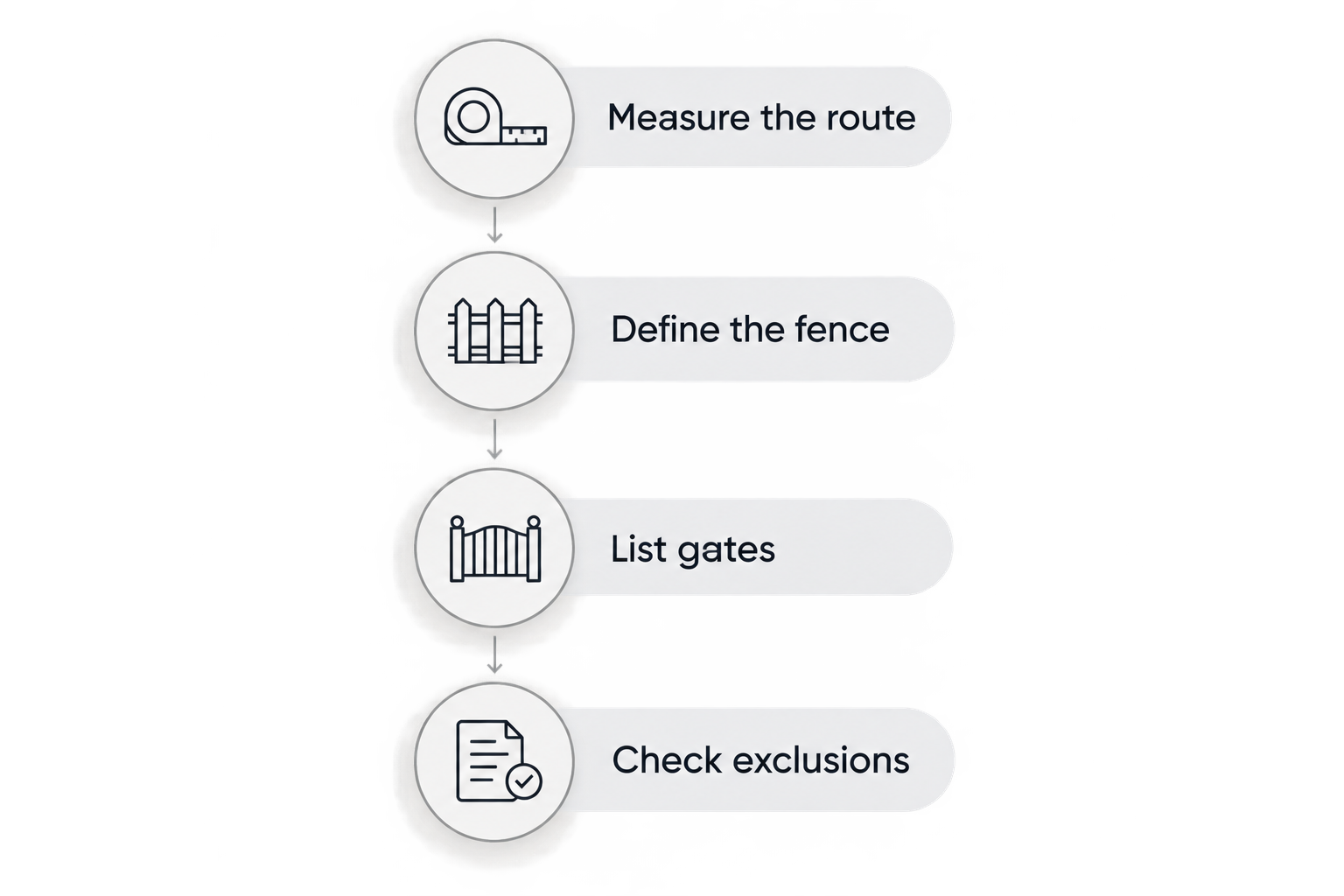
Measure the route
Record the approximate fence route in linear feet and identify each change in direction. Use your measurements for planning; have the contractor verify the installation measurements before finalizing the scope.
Mark where the fence starts and ends. Note buildings, existing fences, trees, drainage features, and access points near the proposed work. Photos help explain the site, but they do not replace an on-site assessment.
Define the fence
Write down the privacy, containment, or boundary purpose you want the fence to serve. Then identify your preferred material, height, and appearance without assuming every construction detail is already decided.
Ask the contractor to specify the supporting components, not just the visible surface. A quote that names a fence style but leaves posts, connections, or finish work unclear still needs clarification.
List gates
Identify where people, lawn equipment, and other necessary items must pass through. Describe the actual use rather than asking for a generic gate and hoping it fits your needs.
Confirm the opening, swing direction, latch arrangement, and clearance. Also check whether a gate will interfere with a walkway, planting bed, or change in ground level.
Check exclusions
Read the quote for work that is not included. Ask specifically about existing post removal, disposal, approvals, finishing, cleanup, and treatment of disturbed landscaping.
Get answers in writing. A conversation helps you understand the project, but the agreed scope should remain clear when someone reviews the estimate later.
Keep the resulting scope together with your photos and contractor correspondence. When you request a change, update that scope so the latest version remains easy to identify.
What should you check before approving the fence route?
Confirm where the fence is allowed before deciding where it will go. A contractor's proposed layout and a property's legal boundary answer different questions.
Review your property survey and identify easements that affect the proposed route. If the boundary remains uncertain, resolve it with an appropriate surveying professional rather than relying on an existing fence or a neighbor's recollection.
Check the requirements that apply to your address, including any homeowners association rules and local approval requirements. A Conroe mailing address alone does not establish which jurisdiction governs the work. Ask the relevant authority about the proposed fence rather than assuming a nearby property's fence establishes permission.
Before digging, arrange underground utility location through Texas 811 and discuss whether private lines need separate identification. Utility markings do not replace boundary checks. Both questions need attention before post locations are finalized.
Is replacing an existing fence simpler than installing a new one?
Replacing an existing fence adds removal decisions to the installation scope. Confirm which boards, panels, posts, footings, and hardware will be removed and which, if any, will remain.
Do not assume existing posts are reusable because the fence is still standing. Ask the contractor to assess their condition and suitability for the proposed fence. The written estimate should explain any planned reuse.
Replacement also needs a practical site plan. Discuss access during the work, temporary arrangements for pets, and who handles debris. These details do not determine a universal installation figure, but they do determine what your contractor has agreed to complete.
How do you compare fence bids fairly?
For 2026 fence bids, compare the written specifications before comparing totals. Put the estimates beside each other and mark every difference in route, materials, gates, removal, and finishing.
Ask each contractor to clarify the same unresolved items. If a revised scope changes an estimate, keep the revision with the original so you can see what changed and why.
Use these questions before choosing:
- Does each estimate describe the same fence route and height?
- Are the material and supporting-component specifications clear?
- Do gate locations and intended uses match?
- Are removal, disposal, and cleanup responsibilities stated?
- Is the process for approving additional work written down?
A lower total is not a better offer when it leaves necessary work unresolved. Equally, a higher total needs an explanation in the scope; the number alone does not establish better construction.
When a local remodeling contractor fits the project
A Finishing Touch Remodeling is best for Conroe-area homeowners seeking fencing alongside other home improvement services. Its stated services include fencing, carpentry, painting, flooring, drywall, and kitchen and bathroom remodeling.
That range is relevant when your fence project sits within a wider home improvement plan. It does not replace a fence-specific proposal: confirm materials, installation details, responsibilities, and the work covered by the agreement.
Ask A Finishing Touch Remodeling to separate the fencing scope from any additional remodeling work. You can then approve each part with a clear understanding of what it includes.
FAQ
How much does fence installation cost in Conroe TX in 2026?
Fence installation cost in Conroe, TX requires a property-specific quote covering the measured route, materials, height, gates, and installation scope. Confirm removal, disposal, finishing, and exclusions before using the total to compare contractors.
Should I compare fence estimates by linear foot?
Use linear-foot measurements to compare fence runs only after matching the specifications and included work. Gates, removal, site preparation, and finishing need clear treatment because the measurement alone does not define the installed project.
Does a fence installation quote include removing the old fence?
Old fence removal is included only when the written quote says so. Ask whether removal covers posts and footings as well as boards or panels, and whether hauling and disposal are included.
Is repairing my fence better than replacing it?
Repair fits isolated damage when the surrounding components remain suitable to keep. Have the posts, connections, and adjacent sections assessed before deciding that replacing visible boards will solve the problem.
Do I need approval before installing a fence in Conroe?
Check the requirements that apply to your property's jurisdiction and any homeowners association before installation. Confirm boundary and easement information separately; an existing fence does not establish permission for a new one.
What should I tell a contractor when requesting a fence quote?
Provide the proposed route, approximate length, desired purpose, preferred material and height, gate needs, and whether an existing fence needs removal. Include photos and describe access restrictions, then have the contractor verify the site conditions.
Does A Finishing Touch Remodeling offer fencing services?
A Finishing Touch Remodeling lists fencing among its services for homeowners in the Conroe/Woodlands area. Request a written proposal that identifies the fence specifications and included installation work.
One last thing
Plan the gates before you approve the fence. A fence can follow the intended boundary and still make ordinary yard access inconvenient if the openings are in the wrong places.
For your 2026 project, walk the proposed route while thinking about mowing, moving equipment, and entering the yard. Resolve those uses on the plan before materials and post locations are finalized.