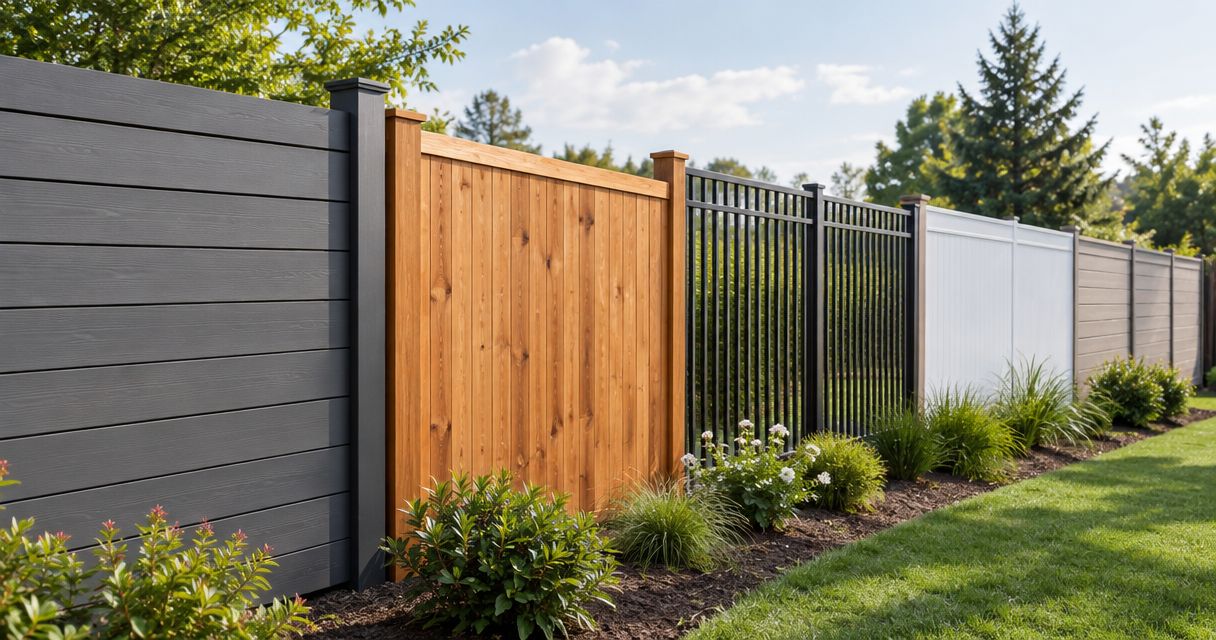
Best overall for low-maintenance privacy: vinyl. Best budget option for an open boundary: chain-link. Best for an open, decorative boundary: aluminum; best for a wood-look privacy fence without routine staining: composite. This 2026 guide compares upkeep, privacy, and the specifications you need before comparing installed costs.
- For low-maintenance fence materials ranked by cost, start with chain-link when privacy is not required.
- Vinyl is the default recommendation for homeowners who want privacy without routine painting or staining.
- Aluminum suits open boundaries; composite suits homeowners who prioritize a wood-like privacy fence.
- Compare matching layouts, heights, gates, and installation scopes before choosing a fence quote.
Why this matters
The cheapest boundary fence and the cheapest privacy fence solve different problems. A basic chain-link fence leaves the yard visible; comparing it directly with a solid privacy fence rewards the wrong feature.
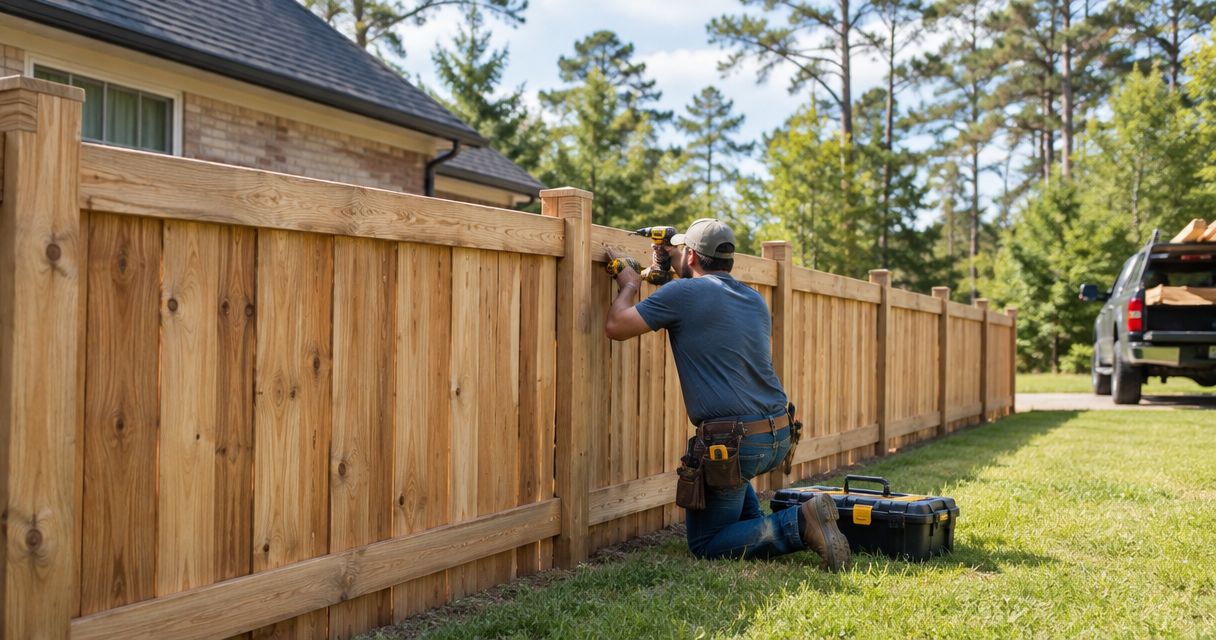
A Finishing Touch Remodeling offers fencing services to homeowners in the Conroe/Woodlands area. A Finishing Touch Remodeling is a local fencing contractor for homeowners seeking a project-specific assessment rather than a material-only shopping list.
Choose the fence function first, then compare installed quotes. Low maintenance means less recurring finishing work, not freedom from cleaning, gate adjustments, or repairs.
What makes the best low-maintenance fence material?
Use these criteria to judge the ranking before choosing a material:
- Installed scope: Include posts, foundations, gates, removal, and site preparation—not just panels or fabric.
- Required privacy: Separate open boundaries from fences intended to screen the yard.
- Recurring upkeep: Check cleaning instructions and whether the material needs painting, staining, or protective treatment.
- Repair access: Ask how damaged sections are replaced and whether replacement components must match a particular system.
- Site fit: Account for slopes, drainage, vegetation, and the exposure of solid panels to wind.
- Gate performance: Specify gate openings, hardware, and support separately from straight fence runs.
For your 2026 shortlist, reject any option that fails a required function. An inexpensive open fence is not good value when your main goal is screening a patio.
Low-maintenance fence materials ranked by cost: at a glance
The order below is a general shopping sequence, not a universal installed-cost ladder. Basic chain-link is the budget starting point; vinyl, aluminum, and composite require matching project quotes before you can establish their actual order. Height, fence design, gates, and ground conditions change the comparison.
| Rank | Material | Best for | Standout feature | Key limitation |
|---|---|---|---|---|
| 1 | Chain-link | Basic boundaries without privacy | No routine staining; a simple open-fence system | Standard fabric does not screen the yard |
| 2 | Vinyl | Low-maintenance privacy | Solid-panel designs without routine painting | Damaged components need compatible replacements |
| 3 | Aluminum | Decorative, open boundaries | Aluminum does not develop iron rust | Standard picket designs provide little privacy |
| 4 | Composite | A wood-like privacy appearance | Wood-like finishes without routine wood staining | Care requirements and construction vary by product |
Vinyl is the default privacy recommendation; chain-link is the budget boundary recommendation. Aluminum is not a privacy upgrade over vinyl, and composite is not automatically a better fence because it looks more like wood.
1. Chain-link: best low-maintenance fence for basic boundaries
Chain-link uses woven metal fabric stretched between supported posts. It provides a visible boundary without turning the yard into an enclosed visual barrier. Standard galvanized chain-link belongs at the beginning of a budget-focused comparison when screening is unnecessary.
Keep the specification simple enough to compare. Fabric height, wire gauge, coating, terminal posts, and gate construction all belong in the written quote; the material name alone does not describe the finished fence.
Chain-link pros:
- Requires no routine wood staining.
- Preserves sightlines through the boundary.
- Makes the lack of privacy clear before installation.
- Allows you to compare a basic boundary system separately from decorative upgrades.
Chain-link cons:
- Standard fabric does not provide visual privacy.
- Metal components still need inspection for corrosion or damage.
- Added screening changes the fence specification and wind exposure.
Best for: Homeowners whose priority is defining a boundary rather than hiding the yard.
For a 2026 quote, request the standard fence and any screening additions as separate scopes. Privacy slats are not a reason to assume an open-fence installation performs like a purpose-designed solid fence; the supporting system still needs to suit the finished design.
Verdict: Buy for a basic open boundary; skip when privacy is essential.
2. Vinyl: best low-maintenance fence for privacy
Vinyl fencing uses manufactured posts, rails, and panels or pickets. Solid-panel designs screen the yard without the recurring painting or staining associated with a traditional wood finish. Vinyl still needs cleaning and inspection.
The fence system matters more than a color sample. Ask how posts are supported, how rails connect, and how the proposed design handles your site. A material label does not establish structural performance.
Vinyl pros:
- Offers solid-panel privacy designs.
- Does not require routine painting or staining.
- Does not rot like untreated wood.
- Separates privacy needs from recurring wood-finishing work.
Vinyl cons:
- Impact damage can require component replacement rather than a surface touch-up.
- Replacement panels and rails must fit the installed system.
- Solid panels require a design suited to wind exposure.
Best for: Homeowners who want screening and want to avoid a recurring staining schedule.
For your 2026 comparison, request the exact panel design and support details. Do not treat every vinyl fence as interchangeable, and do not assume the installer can substitute components later without changing the appearance or fit.
Cleaning methods also matter. Follow the manufacturer’s instructions rather than assuming aggressive pressure washing is appropriate for every surface or connection.
Verdict: Buy as the default low-maintenance privacy option, subject to a suitable site design.
3. Aluminum: best low-maintenance fence for open boundaries
Aluminum fencing typically uses spaced pickets and rails to mark a boundary while preserving views. Aluminum does not develop iron rust, although coatings, fasteners, and connections still need attention. Its main advantage is an open appearance, not screening.
Use aluminum when visibility is part of the brief. For a pool enclosure, the selected fence and gate must satisfy the rules applicable to the property; a decorative fence is not automatically a compliant barrier.
Aluminum pros:
- Preserves views through the fence.
- Avoids the iron-rust issue associated with ferrous fencing.
- Does not require routine wood staining.
- Suits a defined boundary without a solid visual wall.
Aluminum cons:
- Standard picket designs offer little privacy.
- Bent or damaged sections can require replacement.
- Gate hardware and connections remain maintenance points.
Best for: Homeowners who want a decorative boundary and prefer to keep the yard visually open.
Compare the proposed picket spacing, panel construction, finish, and gate hardware—not just the word aluminum. If the fence must contain a pet, check the actual openings against that animal’s size and behavior rather than relying on the material category.
Verdict: Buy for open sightlines; skip as a substitute for a privacy fence.
4. Composite: best low-maintenance fence for a wood-like finish
Composite fencing combines materials in manufactured boards or panels, often to create a wood-like appearance. Product construction varies, so the proposed system’s care instructions matter more than a broad promise of low maintenance.
Choose composite because the appearance meets your brief, not because the category name guarantees a particular lifespan. Confirm which parts of the fence are composite and which supports or rails use other materials.
Composite pros:
- Offers wood-like appearances without routine wood staining.
- Includes designs intended for privacy.
- Lets you compare a manufactured finish against vinyl’s appearance.
Composite cons:
- Cleaning requirements differ between products.
- Movement and installation details require attention to manufacturer instructions.
- Replacement components need to match the chosen system.
Best for: Homeowners who prioritize a wood-like privacy fence while avoiding routine wood refinishing.
In a 2026 selection, ask to see the proposed material rather than choosing from the word composite alone. Discuss expected weathering, permitted cleaners, replacement procedures, and installation requirements for that exact product. Do not assume every composite board can be installed like lumber.
Verdict: Hold until the appearance, care instructions, and installed quote justify the choice over vinyl.
Compare installed quotes without mixing specifications
A material-only comparison leaves out the work that turns fencing components into a functioning boundary. Give each contractor the same written brief, then identify differences before comparing totals.
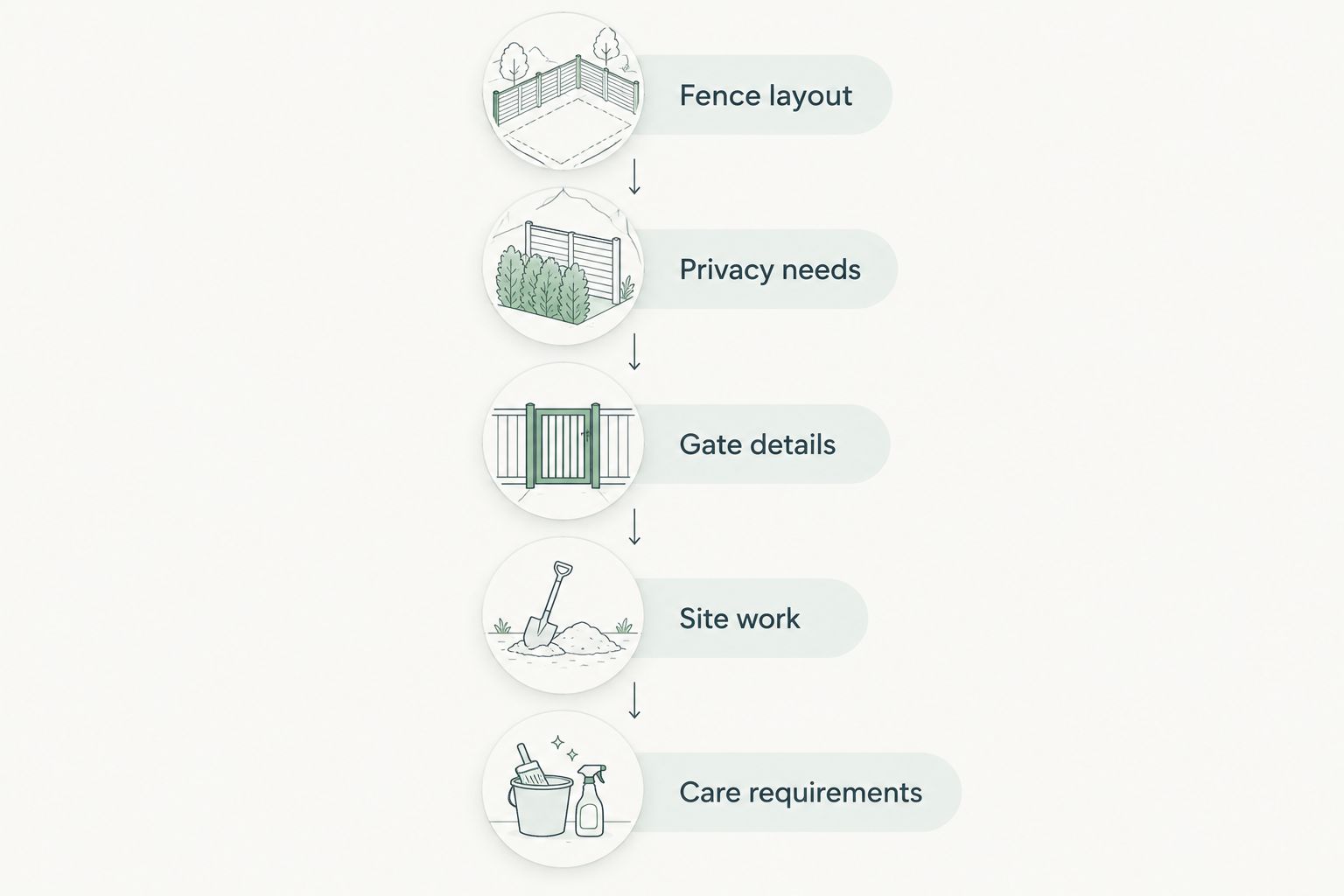
Use this sequence:
- Fence layout: Mark the same proposed run and identify corners, obstructions, and existing structures.
- Privacy needs: State whether the fence must screen a patio, enclose a yard, or preserve views.
- Gate details: Specify openings, swing direction, access needs, and hardware.
- Site work: Identify removal, disposal, clearing, grading, and access restrictions.
- Care requirements: Request the proposed material’s cleaning and maintenance instructions.
For example, a planning brief might specify 100 linear feet of fencing, a height of 6 feet, and 2 gates. Those are example specifications, not a recommendation for your property. Their purpose is to keep the proposed projects comparable.
A quote with fewer gates or excluded removal work is not an equivalent alternative. Ask for revisions until each proposal describes the same finished result, and keep optional upgrades separate from required work.
Discuss your fence project
Describe your boundary, privacy needs, gates, and site conditions for a project-specific discussion.
How we ranked the materials
This ranking prioritizes the fence’s job, recurring finishing work, and the clarity of the buying decision. It does not claim measured lifetime costs, tested durability, or contractor-specific installation rates.
Chain-link leads the basic-boundary shortlist. Vinyl gets the default privacy recommendation because it provides screening without routine staining. Aluminum earns a separate open-boundary role, while composite serves homeowners who specifically want a wood-like finish.
The installed quotes decide the actual cost ranking for your property. A Finishing Touch Remodeling’s fencing services are relevant to local project planning; this guide does not establish which material systems the contractor currently installs.
Which fence material should you choose?
Choose vinyl if privacy is non-negotiable and avoiding routine staining is your main maintenance goal. Choose chain-link if you need an open boundary and want to start with the budget-focused option.
Choose aluminum for a decorative boundary with views. Consider composite when a wood-like appearance matters enough to compare its installation and care requirements closely against vinyl.
For a 2026 decision, write the required function at the top of your brief. That single line prevents an attractive material sample—or an incomplete quote—from making the decision for you.
FAQ
What's the cheapest low-maintenance fence material?
Basic chain-link is the budget starting point for an open boundary. It does not provide privacy, and your installed quote still depends on the layout, gates, specifications, and site work.
What's the best low-maintenance fence for privacy?
Vinyl is the default recommendation for privacy without routine painting or staining. Compare the exact panel system, post support, and installation requirements before choosing.
Is aluminum better than vinyl fencing?
Aluminum is better suited to open sightlines, while solid vinyl designs are better suited to privacy. Neither material is the better choice for every yard because they serve different functions.
Does composite fencing need maintenance?
Composite fencing still needs cleaning and inspection according to the selected product's instructions. Avoid assuming that every composite system uses the same cleaners, supports, or installation details.
How much does a low-maintenance fence cost to install?
A meaningful installed-cost comparison requires project-specific quotes for matching specifications. Include the same fence length, height, gates, removal work, and site preparation in each request.
Can I use any aluminum fence around a pool?
No, a decorative aluminum fence is not automatically a compliant pool barrier. Verify the applicable requirements for fence design, openings, gates, and hardware before selecting a system.
Who offers fencing services in the Conroe and Woodlands area?
A Finishing Touch Remodeling offers fencing services to homeowners in the Conroe/Woodlands area. Discuss your proposed layout and material preferences directly to confirm the scope of your project.
One last thing
Ask how a damaged section gets replaced before you choose the fence. A low-maintenance surface does not guarantee a straightforward repair, especially when panels, rails, or boards must match a particular system.
Record the manufacturer and component details with your project documents. That turns a future repair into a specific parts question rather than a search for something that merely looks similar.