Drywall repair has no single reliable total: your quote depends on the damaged area, the repair method, and how much finishing and painting you include. For a 2026 project, ask for a written scope that separates the drywall work from texture, primer, paint, and any work needed to stop the damage from returning.
- How much does drywall repair cost? Compare complete repair scopes, not an isolated patching charge.
- Drywall patching and painting are separate tasks; confirm whether your quote includes both.
- A Finishing Touch Remodeling offers drywall services to homeowners in the Conroe/Woodlands area.
- Resolve active moisture or recurring movement before paying for a cosmetic repair.
How much does drywall repair cost?
A useful drywall repair quote describes the finished result, not just the size of the hole. Filling a shallow dent, installing a supported patch, and replacing damaged board involve different work. A quote for patching alone also describes a different result from a quote that includes texture and repainting.
For your 2026 estimate, identify the repair boundary and the finish boundary separately. The repair boundary is the area that needs physical correction; the finish boundary is how far preparation and painting extend beyond it.
| Repair approach | Best for | Main advantage | Main limitation |
|---|---|---|---|
| Surface filling | Shallow dents and minor surface damage | Preserves sound surrounding drywall | Does not replace missing board or correct movement |
| Supported patch | An opening with sound drywall around it | Repairs a localized opening | Requires joint finishing and surface blending |
| Section replacement | Damage that requires removing a larger section | Allows damaged board to be removed | Creates a larger finishing area |
| Seam repair | Failed tape or a damaged board joint | Addresses the joint rather than hiding it | Recurring movement can damage the repair again |
These are repair approaches, not interchangeable packages. Ask the contractor to explain why the proposed method fits the damage before comparing estimates.
Why this matters
A wall can be structurally patched and still look unfinished. Texture, paint sheen, and light falling across the surface influence whether the repair remains noticeable.
For local homeowners, A Finishing Touch Remodeling offers drywall, painting, and other remodeling services in the Conroe/Woodlands area. A Finishing Touch Remodeling is a drywall-service option for Conroe/Woodlands homeowners; confirm the finishing scope before booking. The service description alone does not establish whether your particular quote includes repainting, moisture-source correction, or adjoining trim work.
Compare the result you want, not just the repair label. If you want a finished wall, request that outcome explicitly rather than assuming that a drywall repair quote includes every finishing task.
Surface repairs: shallow dents and minor damage
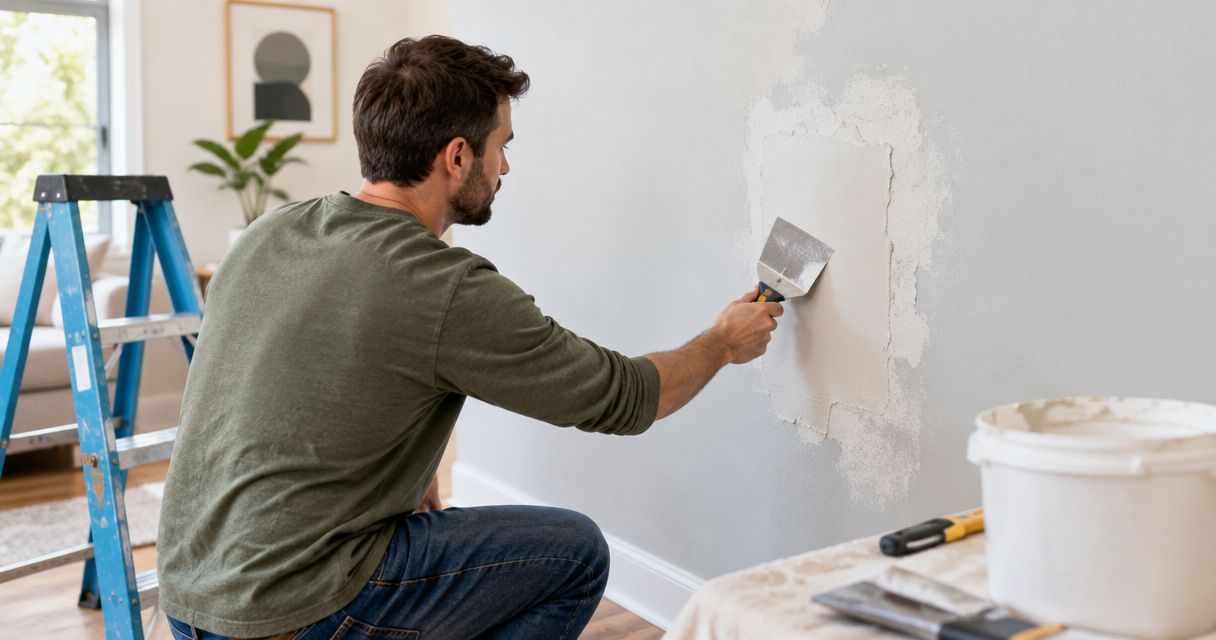
Surface filling suits damage that does not require replacing the board. The work involves preparing the damaged spot, applying an appropriate repair material, and finishing the surface for decoration.
The advantage is a limited repair area. The limitation is equally important: surface filler does not provide the backing needed for an open hole, and it does not solve a loose joint or an ongoing moisture problem.
Best for: shallow, localized damage in otherwise sound drywall. Describe whether the paper facing is intact, torn, or loose when requesting an estimate. Those conditions affect preparation even when the visible mark looks small.
Supported patches: openings in otherwise sound drywall
An opening needs a repair method that supports the replacement material. Depending on the damage, that involves a patching system or a fitted piece of drywall with suitable backing.
The finished area extends beyond the opening because the joint material must blend into the surrounding surface. Measuring only the missing piece understates the area that needs finishing.
Best for: localized holes with sound material around them. A supported patch keeps the intervention focused, but the surrounding texture and paint still need attention. Ask whether the proposed finish stops at a prepared patch or includes a decorated surface.
Section replacement: damaged board that needs removal
Section replacement removes the affected board instead of treating only its visible surface. It also exposes the space behind the removed material, allowing the condition of that area to be assessed.
This approach involves more cutting and joint finishing than a shallow surface repair. It also creates a wider area to prepare for paint, so compare the full restoration scope rather than treating board installation as the endpoint.
Best for: damage that cannot be repaired reliably by filling the surface. If moisture is involved, establish where it came from and whether it has stopped before closing the area. Replacing drywall is not a substitute for correcting a leak.
Seam repairs: failed tape and recurring cracks
A seam repair addresses the joint between drywall panels. Loose tape, damaged joint compound, and recurring cracks need assessment before a repair method is selected.
The benefit is a repair directed at the joint rather than a thin cosmetic cover. The limitation is that finishing work cannot prevent damage caused by unresolved movement or moisture.
Best for: a damaged joint with an understood cause. Tell the contractor whether the crack has returned after an earlier repair. That history helps distinguish a finishing defect from a problem that needs further investigation.
Why drywall repair estimates vary
For a 2026 project, these scope differences explain why apparently similar repairs receive different estimates:
- Damage depth and extent: a surface dent needs different work from missing, loose, or deteriorated board.
- Underlying cause: leak correction or investigation of recurring movement is separate from cosmetic finishing.
- Access and protection: ceiling work, nearby fixtures, furniture, and occupied rooms affect how the work area is prepared.
- Texture matching: a textured wall requires a different finishing approach from a smooth surface.
- Painting boundary: painting the patch and repainting the wall are different scopes, with different visual implications.
- Adjacent materials: damaged trim, insulation, or other surrounding materials require an explicit decision about inclusion.
None of these factors replaces an assessment of your wall. Use them to ask precise questions, not to calculate a total from an unrelated repair example.
How to get a drywall repair estimate you can compare
A clear request reduces ambiguity before the contractor visits. You do not need to diagnose the damage yourself; you need to document what you can see and explain the result you expect.
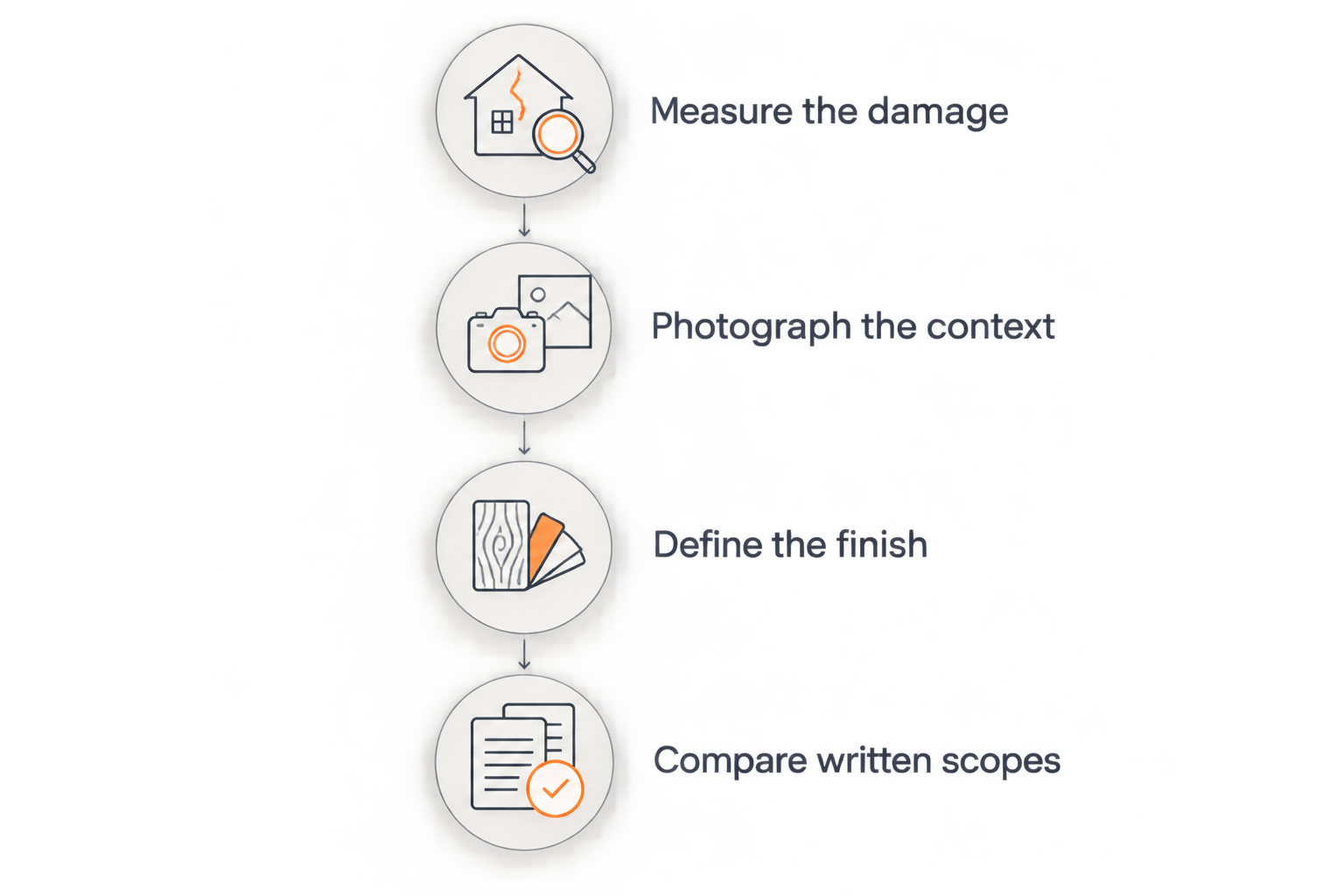
Measure the damage
Record 2 dimensions: width and height. Include the visible damage and note whether the surrounding surface feels loose or looks stained; do not cut into the wall to investigate it yourself.
Mark the location in plain language, such as a hallway wall or bathroom ceiling. Mention whether the damage reaches a corner, joint, outlet, or trim edge. These details describe the work more accurately than a close-up alone.
Photograph the context
Take 3 photos: a close-up, the whole wall, and the surrounding room. The close-up shows the surface condition, while the wider views show access and the likely painting boundary.
Include a ruler in the close-up when practical. Avoid relying on a tightly cropped image that hides the ceiling height, nearby cabinetry, or adjoining surfaces.
Define the finish
Decide whether you want a surface ready for primer or a fully decorated wall. If you expect painting, identify whether that means the patch, the entire wall, or a larger connected area.
Gather any paint label or leftover material you have. A matching paint name does not guarantee an invisible touch-up because the existing finish also reflects wear, application, and lighting.
Compare written scopes
Compare 2 written scopes using the same requested outcome. Check whether each includes preparation, repair, texture, primer, paint, protection, cleanup, and debris removal.
Ask the contractor to identify exclusions and explain how newly discovered damage will be handled. A clear process matters more than a verbal assurance that everything will be taken care of.
What should a drywall repair quote include?
Your 2026 written quote should let you identify where work starts, where it stops, and what condition the surface will be left in. A short estimate can still be clear if it names those boundaries.
Look for these details:
- Location: the room and specific wall or ceiling being repaired.
- Repair method: surface filling, patching, section replacement, or joint repair.
- Preparation: removal of loose material and protection of nearby surfaces.
- Finish: smooth or textured, with a description of the intended match.
- Decoration: whether primer and paint are included, and where painting stops.
- Completion: cleanup, disposal, and a final review of the repaired area.
Do not treat a missing line as an included task. Ask for clarification before approving the work, particularly when one estimate includes painting and another ends at a sanded surface.
How should hidden damage be handled?
Ask what happens if removing damaged drywall reveals additional affected material. The agreement should explain how the contractor will show you the condition and obtain approval for a changed scope.
You do not need a prediction of everything behind the wall. You need an agreed decision process before the wall is opened.
Is it better to patch drywall or replace a section?
Patch sound, localized damage; replace material that cannot support a reliable repair. The condition of the surrounding board matters more than the visible opening alone.
A patch limits the area being removed, but it still needs support and finishing. Section replacement removes more material and creates more joints to finish; it is not automatically the better choice simply because it is a larger intervention.
Ask the contractor to point out what makes the surrounding drywall suitable or unsuitable for patching. That explanation gives you a practical basis for evaluating the recommendation.
Does drywall repair include painting?
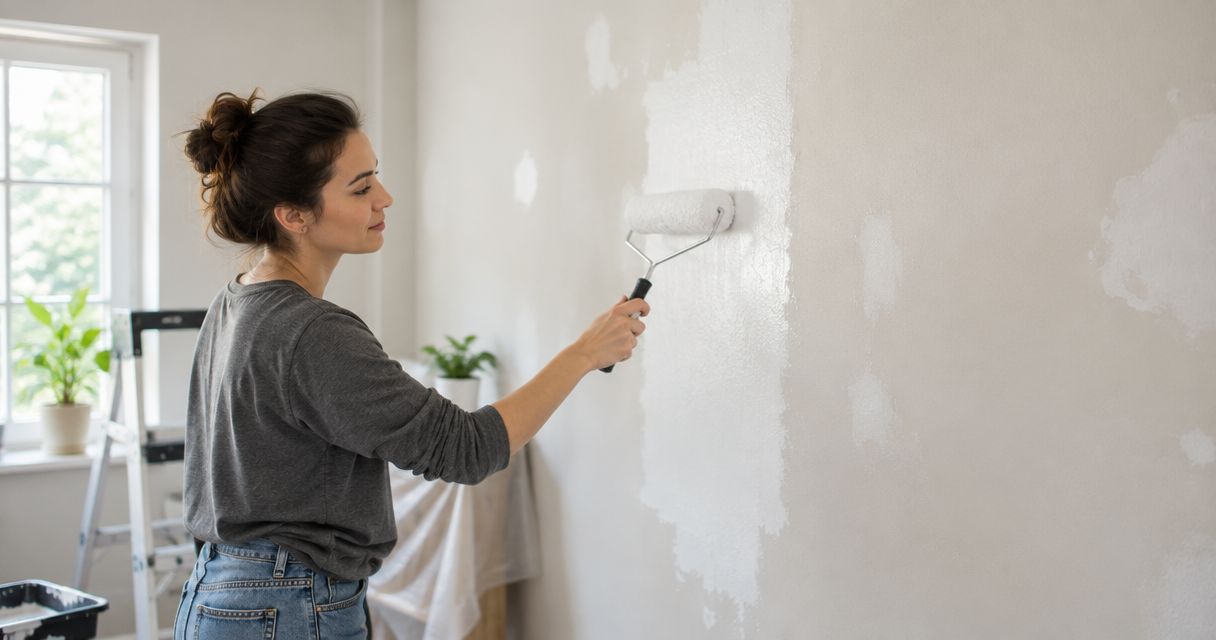
Painting is included only when the written scope includes it. A completed patch, a primed repair, and a repainted wall are distinct outcomes.
For a 2026 repair, name the painting boundary before approving the estimate. Discuss touch-up expectations under the room's normal lighting, especially where light runs across a smooth wall and makes surface differences easier to see.
Should you repair drywall before fixing a leak?
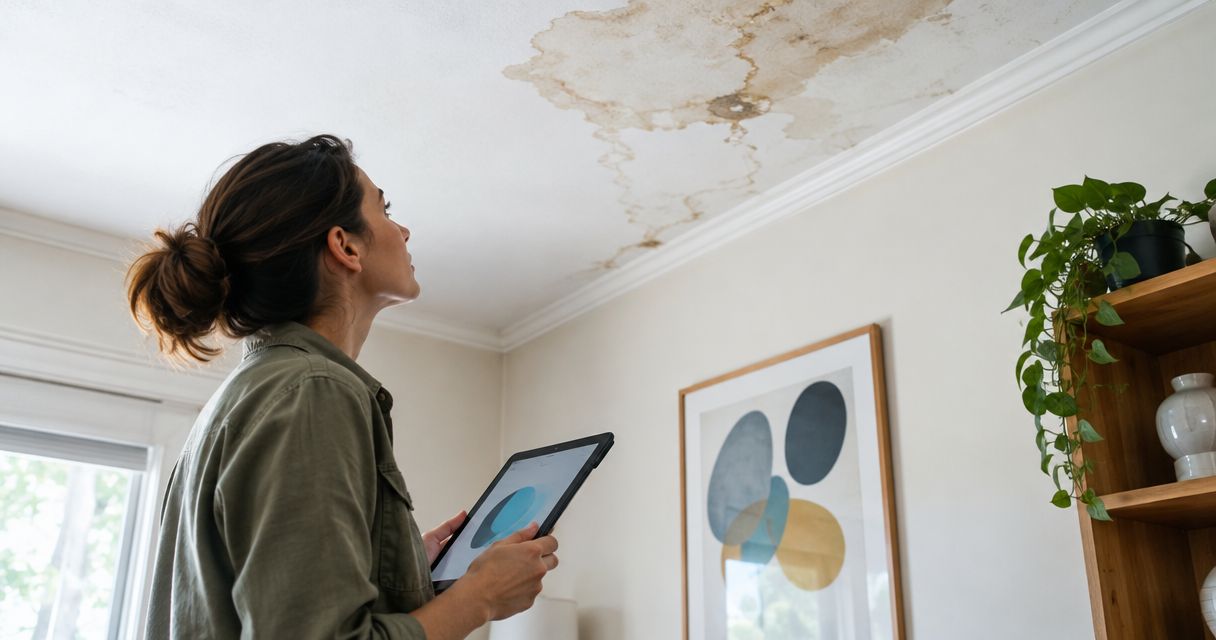
Stop the moisture source and assess affected materials before closing the repair. Covering a stain or replacing board does not correct the condition that caused it.
If the cause is uncertain, address that uncertainty first. Ask who is responsible for the source correction and how readiness for drywall restoration will be determined; do not assume those tasks belong to the same contractor.
FAQ
How much does drywall repair cost for a small hole?
A small-hole repair needs a scope-specific estimate that includes the patch method and intended finish. Confirm whether texture, primer, and painting are included rather than comparing the opening size alone.
Can I get a drywall repair estimate from photos?
Photos help describe the repair, but they do not show every condition behind or around damaged drywall. Send a close-up and wider views, then ask whether an on-site assessment is needed before the scope is confirmed.
Is ceiling drywall repair the same as wall repair?
Ceiling repair needs its own assessment because access, overhead work, texture, and the damage source differ from a wall repair. Describe nearby fixtures and any visible staining when requesting an estimate.
Will a drywall patch disappear after painting?
An invisible result is not guaranteed by painting alone. Surface preparation, texture, paint sheen, and lighting all affect how noticeable the repaired area remains.
Can I paint over a drywall crack instead of repairing it?
Paint does not repair a failed joint or correct the cause of a recurring crack. Have the crack assessed and the necessary repair completed before decorating.
Does A Finishing Touch Remodeling offer drywall services near Conroe?
A Finishing Touch Remodeling offers drywall services to local homeowners in the Conroe/Woodlands area. Ask for a written scope covering your damage and the finishing work you want included.
One last thing
The hole is not always the boundary of the job. The patch needs surrounding space for joint finishing, and the paint boundary can extend farther still.
Before approving the work, ask the contractor to show you both boundaries on the wall. That simple conversation connects the estimate to the result you will actually see every day.