
Home sellers’ remodeling is the repair and updating of a property with the aim of preparing it for sale; home remodeling for selling a house should address defects before optional upgrades. Unlike a remodel for your own use, your project needs a defined stopping point, a listing deadline, and choices grounded in nearby competing homes.
- Home remodeling for selling a house starts with repairs, not a whole-house redesign.
- A Finishing Touch Remodeling serves Conroe/Woodlands homeowners needing kitchen, bathroom, flooring, painting, and other remodeling work.
- Compare cosmetic refreshes with full renovations against your listing deadline and nearby competing homes.
- Keep pre-sale renovation decisions in one written scope before approving demolition.
Why remodeling matters for home sellers
A seller’s project has a different finish line from an owner’s renovation: you need a home ready to show, not a space tailored to your next decade. Visible damage, unfinished repairs, and inconsistent finishes deserve attention before decorative changes.
For your 2026 sale, separate the work into repair needs and presentation choices. A damaged cabinet and an unfashionable cabinet are different problems; replacing both without that distinction expands the project unnecessarily.
A Finishing Touch Remodeling offers kitchen and bathroom remodeling, drywall, carpentry, flooring, painting, and fencing services to Conroe/Woodlands homeowners. Those services cover several common pre-listing work categories, but your property’s condition should determine which belong in your scope.
A Finishing Touch Remodeling is best for Conroe/Woodlands sellers seeking local help with kitchen, bathroom, or finish work. Choose the work first, then match the contractor to it—not the reverse.
Plan the work before you change the house
1. Inspect the property through a buyer’s eyes
Start with a free room-by-room walkthrough and a written defect list. Leave decorating preferences out of the first pass. Record sticking doors, damaged drywall, loose trim, worn flooring, and unfinished work, then distinguish appearance issues from problems needing further evaluation.
Use 2 walkthroughs: one inside and one outside. This is a planning method, not a substitute for a professional inspection. If you find staining, softness, or recurring cracking, investigate the cause before specifying a cosmetic repair.
For a 2026 listing, photograph the current condition before you approve work. Photos give everyone the same reference and help keep later conversations specific.
- Photograph each defect from close up and across the room.
- Mark its location on a room list.
- Separate active problems from old cosmetic damage.
- Note areas that need professional evaluation.
- Identify unfinished projects that need a clear endpoint.
2. Compare your home with actual competing listings
Review nearby listings manually with your real estate agent. Compare homes with similar locations, sizes, layouts, and conditions rather than borrowing ideas from unrelated renovation photos. Asking prices alone do not establish what a renovation will return.
Ask your agent which differences affect how the property will be presented. An older but functional kitchen calls for a different discussion from a kitchen with damaged cabinets or incomplete flooring.
For your 2026 comparison, record the date and status of each listing. Keep sale evidence separate from active asking prices, and do not treat a contractor’s proposed work as proof of a higher sale price.
- Compare kitchens with similar layouts and cabinet conditions.
- Review bathroom condition, not just fixture style.
- Note whether competing homes have unfinished repairs.
- Ask your agent to distinguish necessities from preferences.
- Keep listing observations alongside the proposed work list.
3. Build a repair-first scope with clear limits
Create the first draft yourself in a document or spreadsheet. Sort the work into 3 priority groups: required repairs, presentation improvements, and optional upgrades. This makes trade-offs visible before demolition starts.
A contractor can turn that draft into a more specific scope after reviewing the property. Ask A Finishing Touch Remodeling about the relevant services through the contact page, and bring photos, your listing target, and the repair list to the discussion.
The benefit of contractor involvement is a coordinated work scope; the limitation is that professional execution does not establish resale return. Keep your agent involved in sale-positioning decisions and your contractor focused on the work itself.
- Define the rooms and surfaces included.
- Name what stays as well as what changes.
- Separate repair work from optional finish upgrades.
- Ask how concealed damage will be handled.
- Require written approval for scope changes.
4. Refresh kitchens and bathrooms before replacing everything
First, test whether cleaning, minor repairs, and a consistent finish plan address the room’s problems. Check cabinet operation, damaged trim, wall condition, and unfinished transitions before deciding that the entire room needs replacement.
Choose the smallest scope that fully addresses the identified problem. A cosmetic refresh suits a functional room with surface wear; it does not resolve damaged components, water intrusion, or an unsuitable layout.
Professional kitchen or bathroom remodeling is the execution path when the agreed scope exceeds minor owner-managed work. Its advantage is coordinated renovation; its disadvantage for sellers is the larger commitment of decisions and disruption compared with a limited refresh.
- Keep functional components unless replacement has a stated purpose.
- Repair damaged surfaces before painting them.
- Resolve moisture problems before covering affected areas.
- Coordinate visible finishes across the room.
- Confirm who handles plumbing or electrical changes when needed.
5. Coordinate floors, walls, trim, and exterior repairs
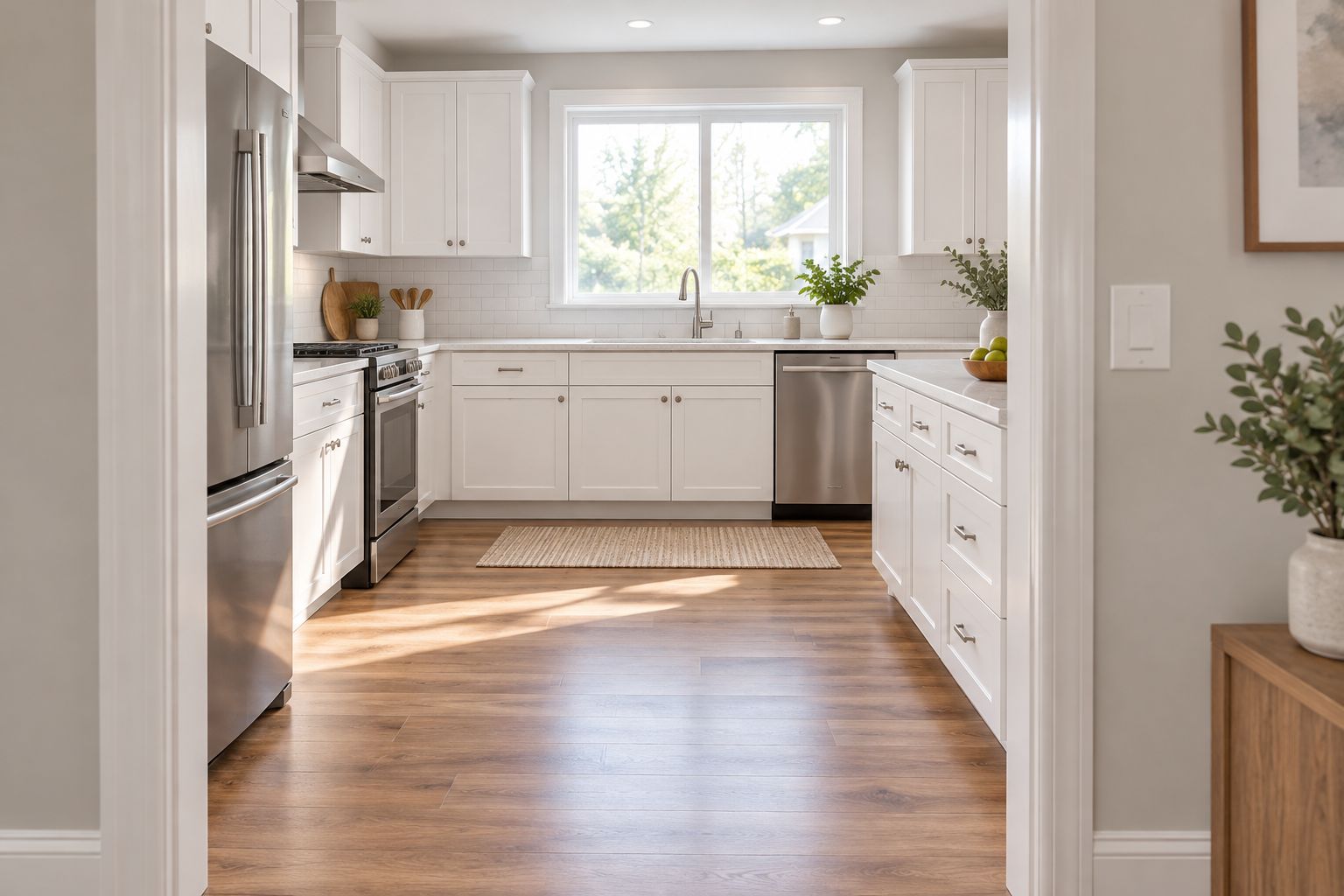
Walk the route a visitor takes from the entrance through the main rooms. Note abrupt flooring transitions, damaged baseboards, patchy paint, and unfinished edges. Evaluate these together instead of treating every room as an unrelated project.
Start manually by creating a surface checklist. For repairs spanning drywall, carpentry, painting, flooring, or fencing, discuss the work as a connected scope rather than a string of isolated requests.
Consistency does not require replacing every surface. Keep sound materials where they work, and specify how new work meets the existing finish. Outside, identify damaged fence components and other repair needs without assuming every exterior feature requires replacement.
- Mark flooring transitions that need finishing.
- Identify trim to repair, retain, or replace.
- Group paint work by connected surfaces.
- Check patched areas under normal room lighting.
- Review fence repairs as a separate exterior scope.
6. Sequence work around your listing deadline
Work backward from the intended photography date, not just the day the listing goes live. Ask each person responsible for the project to confirm dependencies before you settle on the schedule.
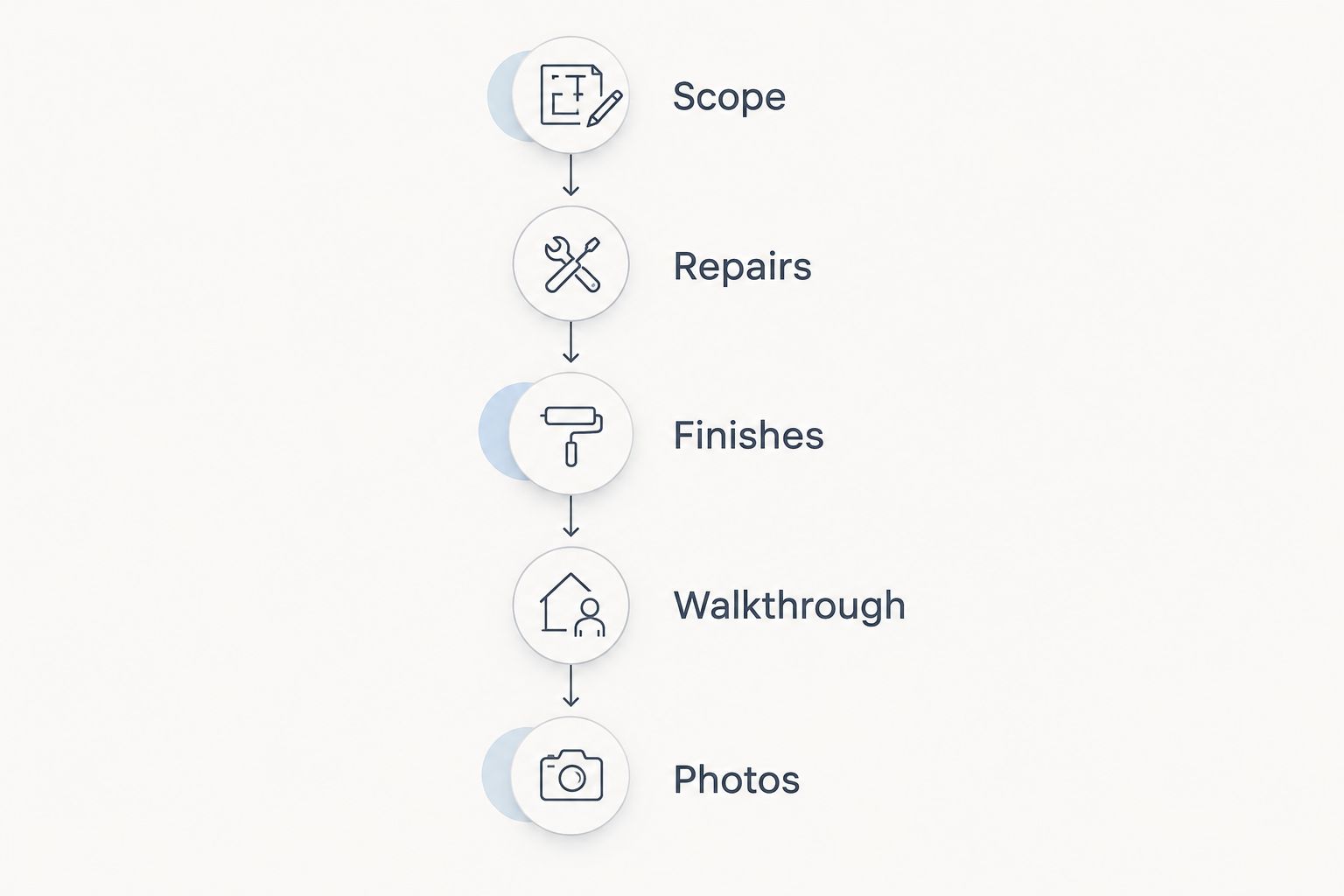
A useful sequence is Scope, Repairs, Finishes, Walkthrough, Photos. It is a planning framework, not a promised construction timeline. Actual sequencing depends on the work, material decisions, required approvals, and what becomes visible when surfaces are opened.
For a 2026 sale, put the current schedule in writing and update it when the scope changes. Do not schedule photography on the assumption that the final construction task also completes cleaning and corrections.
- Finalize the scope before arranging dependent work.
- Confirm any required permits or approvals before starting.
- Schedule underlying repairs before finish work.
- Leave a separate slot for cleaning and corrections.
- Confirm readiness before booking listing photography.
7. Inspect the finished work and close the scope
Use the original defect list to check completion. Walk through the property yourself before considering additional upgrades, and compare each completed item with the written scope rather than your memory of the conversation.
Keep 1 project folder containing the scope, approved changes, invoices, product information supplied with the work, and applicable permit records. The purpose is organization, not a claim that documentation guarantees a sale.
Have your agent review the property’s presentation after construction and cleaning. Stop when the agreed problems are resolved. Adding another decorative project at this stage reopens decisions you already settled.
- Test doors, drawers, and other affected moving parts.
- Review painted and repaired surfaces in room lighting.
- Check transitions, edges, and unfinished details.
- Record corrections in a single punch list.
- Save relevant documents for your sale process.
Compare your pre-sale remodeling options
The right option depends on condition and scope, not on which renovation looks most impressive. Use this comparison to choose an approach before requesting detailed work proposals.
| Option | Best for | Main advantage | Key limitation |
|---|---|---|---|
| Cleaning and owner-managed touch-ups | Sound homes with minor presentation issues | Keeps the scope focused on small tasks | Does not address concealed damage or substantial repairs |
| Contractor-led repair scope | Homes with several defined defects | Organizes repairs around a written list | Can expand if underlying problems are discovered |
| Cosmetic kitchen or bathroom refresh | Functional rooms with surface wear | Retains usable components while addressing appearance | Cannot correct every layout or component problem |
| Full kitchen or bathroom remodel | Rooms whose problems require substantial replacement | Allows the room to be addressed as a connected project | Adds decisions and disruption without guaranteeing a resale return |
| Listing without renovation | Sellers prioritizing an earlier listing over construction | Avoids managing a renovation before sale | Leaves condition issues to address through presentation and negotiation |
A Finishing Touch Remodeling offers services relevant to the contractor-led options above. Compare a proposed scope with your property’s actual needs; service availability alone is not a reason to choose a larger project.
Common mistakes home sellers make
Replacing functional rooms without a sale-specific reason
A dated room is not automatically a failed room. Before approving replacement, name the defect or competitive gap the work addresses. If the answer is only personal taste, return the item to the optional list.
Covering damage before identifying the cause
Painting a stain is not the same as resolving its source. Investigate recurring moisture or movement concerns before finish work, and assign any necessary evaluation to an appropriate professional.
Treating every estimate as the same project
Proposals are not comparable when one includes surface preparation and another does not. Compare included work, retained materials, exclusions, cleanup, and change procedures—not just the summary at the bottom.
Starting demolition before settling listing priorities
Demolition commits you to completing a project. Agree on the intended scope and discuss timing with your agent first, especially when the property needs to be photographed or occupied during the work.
Continuing upgrades after the punch list is complete
A finished repair can make an untouched feature look older by contrast. That does not automatically justify another project. Use the original priorities to decide whether the newly noticed item is a real problem or simply a new preference.
FAQ
What is the best home remodeling for selling a house?
The best starting point is repairing identified defects before choosing optional upgrades. Compare the remaining work with similar nearby homes and your listing deadline rather than assuming a full renovation is necessary.
Should I remodel my kitchen before selling?
Remodel your kitchen when its identified problems justify the scope. A functional kitchen with surface wear needs a different plan from one with damaged components or unfinished work.
Is painting enough to prepare a house for sale?
Painting addresses finish appearance, not every repair need. Complete necessary surface repairs and investigate the cause of staining or recurring cracks before painting affected areas.
Should I replace all the flooring before listing?
Replace flooring according to its condition and the agreed presentation plan, not simply because another surface is being updated. Check damaged areas, transitions, and adjoining rooms before defining the scope.
How do I decide between selling as-is and remodeling?
Compare the work required, your listing deadline, and your willingness to manage construction with your real estate agent. Selling without renovation avoids the project but leaves condition issues to address during the sale.
Can A Finishing Touch Remodeling help sellers in Conroe?
A Finishing Touch Remodeling serves Conroe/Woodlands homeowners with kitchen and bathroom remodeling, drywall, carpentry, flooring, painting, and fencing services. Discuss your property’s repair list and listing target to establish the relevant scope.
What should I ask a contractor before pre-sale remodeling?
Ask for a written scope covering included work, exclusions, responsibilities, and change approval. Also discuss sequencing, applicable permits, cleanup, and how the final walkthrough will be handled.
One last thing
Keep a written do-not-replace list alongside your repair list. Name the functional cabinets, sound flooring, or other components you intend to retain, and have the proposed scope respect those decisions.
For your 2026 sale, that list gives you a clear stopping rule. A pre-sale remodel is complete when the agreed defects and presentation needs are addressed—not when every surface is new.