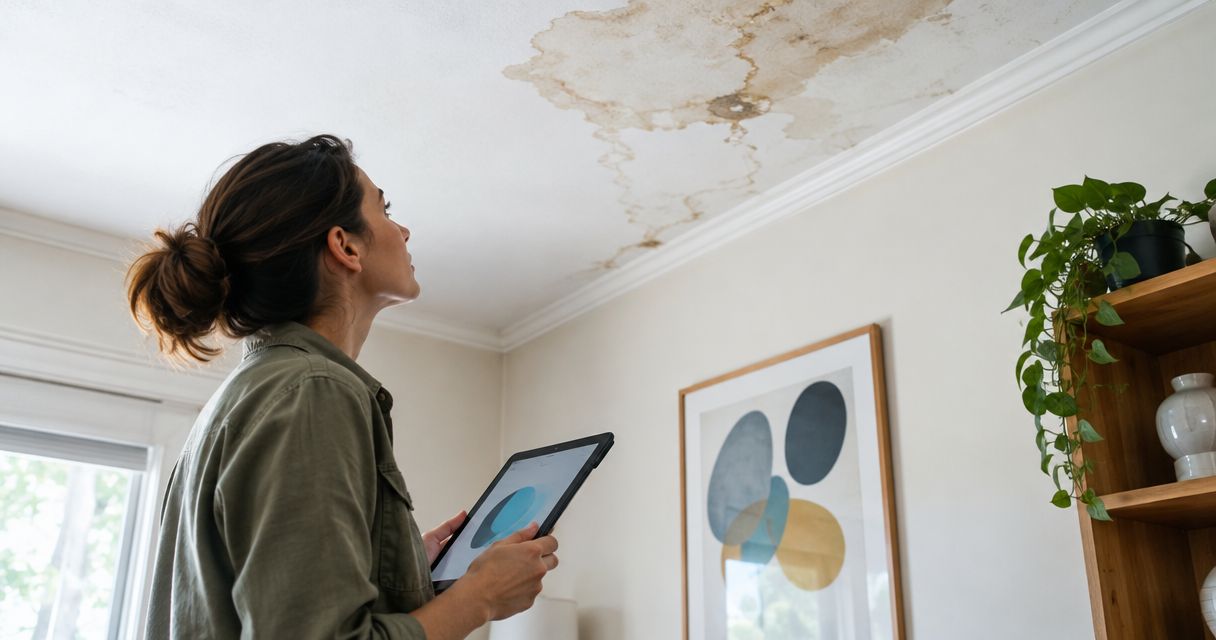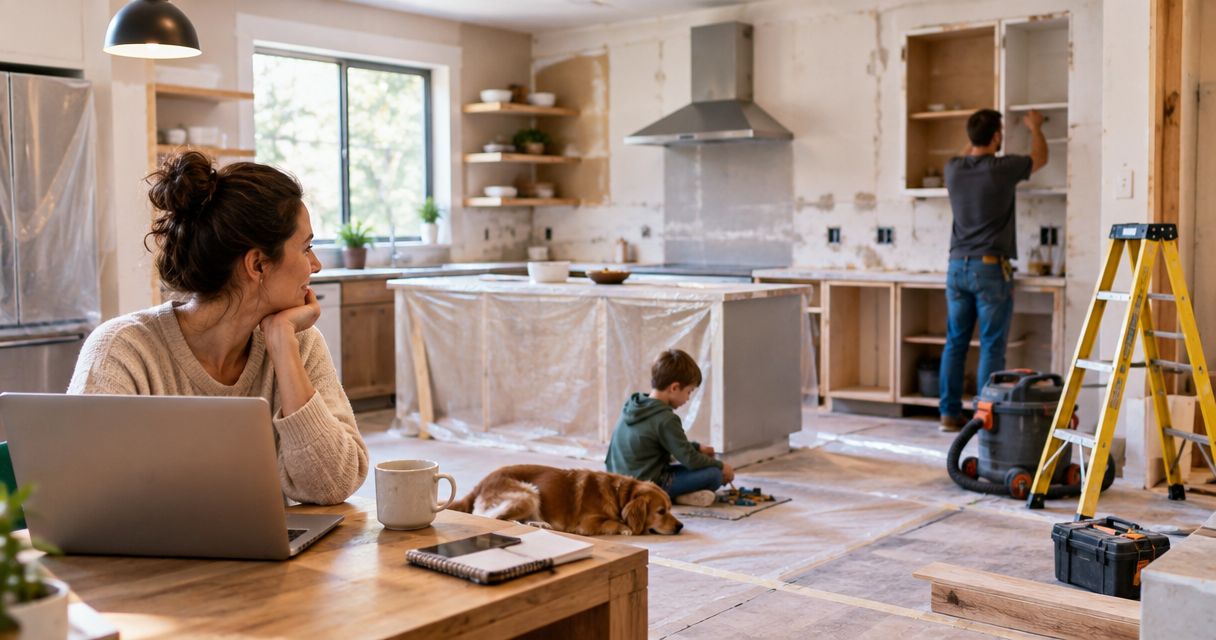
Yes, you can live in your house during a kitchen remodel if you can keep the work area separate, maintain safe access to essential rooms, and prepare food outside the construction zone. For a 2026 project, plan to leave whenever demolition, utility interruptions, fumes, or blocked access make those conditions impossible to maintain.
- Can you live in your house during a kitchen remodel? Yes, when safe living space stays separate from construction.
- A temporary kitchen needs safe appliance connections, food storage, and a separate cleanup plan.
- Arrange another place to stay before work interrupts essential utilities or safe access.
- A Finishing Touch Remodeling serves Conroe and Woodlands homeowners seeking kitchen remodeling.
Why this matters
A usable bedroom does not make a construction site suitable for overnight occupancy. Your decision depends on the route to that bedroom, access to a functioning bathroom, and whether construction dust or fumes can reach occupied rooms.
A Finishing Touch Remodeling is best for Conroe and Woodlands homeowners seeking a local kitchen remodeling contractor. When discussing your project with A Finishing Touch Remodeling, make your occupancy plan part of the scope conversation rather than a decision you leave until demolition begins.
Can you live in your house during a kitchen remodel?
Yes, provided the household can function safely without using the kitchen or crossing active work areas. The right arrangement can change between project phases: staying home during some work does not mean staying through every task.
Use this comparison to choose your starting plan for a 2026 remodel. Confirm the actual work sequence with your contractor before making arrangements.
| Living arrangement | Best for | Main advantage | Main limitation |
|---|---|---|---|
| Stay throughout suitable phases | Households with separate living space and functioning essentials | You retain access to your home and belongings | Noise, restricted space, and temporary meal preparation remain daily issues |
| Stay, with planned time away | Households that can leave during disruptive tasks | You match occupancy to the work happening | Schedule changes require flexible arrangements |
| Stay elsewhere during construction | Households unable to separate living space from work | Your daily routine stays outside the construction area | You need another living arrangement and a plan for property access |
Choose based on conditions inside the house, not your tolerance for inconvenience. A household willing to eat simple meals still needs safe electrical connections, sanitation, and unobstructed exits.
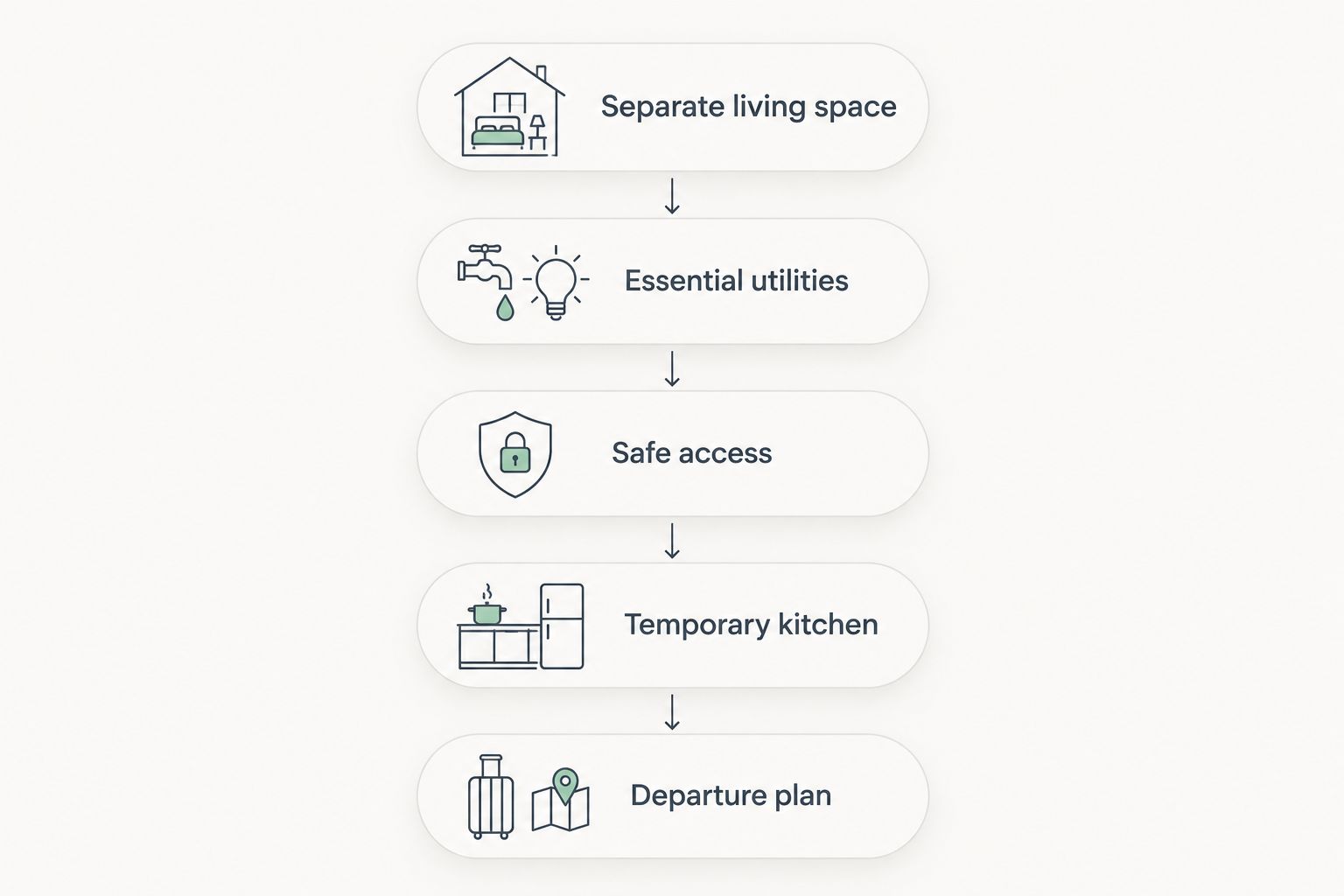
Check these conditions before deciding
- Separate living space. Identify rooms you can reach without walking through construction. Include sleeping space, a usable bathroom, and somewhere to eat.
- Essential utilities. Ask which plumbing, electrical, heating, and cooling services the work affects. Distinguish losing the kitchen sink from losing water throughout the house.
- Safe access. Confirm that occupants and workers can enter, leave, and move around without blocking each other or creating an unsafe route.
- Temporary kitchen. Decide where food storage, appliance use, drinking water, and cleanup will happen.
- Departure plan. Agree on the conditions that require you to leave, who communicates them, and how you will receive updates.
The plan should describe actual spaces and tasks. Replace a vague promise that you can work around construction with a room-by-room explanation of how your household will function.
Staying home works when occupied rooms stay separate
A closed door helps define a boundary, but it does not establish a complete dust-control or ventilation plan. Ask your contractor how the work area will be isolated and how workers will protect routes through occupied portions of the home.
Keep household belongings out of the work zone. Children and pets need a boundary they cannot casually cross, not simply an instruction to avoid tools or materials.
Staying home also requires accepting a different routine. Work calls, naps, meal preparation, and deliveries need locations that do not depend on access to the kitchen.
Best for: Households with a genuinely separate living area and flexibility during working hours. The advantage is remaining at home; the drawback is that construction still affects daily life even when the work area is contained.
Planned time away fits work that changes by phase
A mixed arrangement means staying home when conditions permit and leaving for specific tasks or interruptions. It works only when your contractor communicates the upcoming sequence and you have somewhere else to go.
Ask about demolition, utility shutdowns, flooring work, painting, and other finish applications before they happen. Do not assume a product is ready for occupied use because its surface feels dry; follow the product instructions and the contractor's task-specific guidance.
For your 2026 occupancy plan, identify these decision points in writing. The plan should say what changes your living arrangement, rather than promising that you will never need to leave.
Best for: Households with flexible alternative accommodation. The advantage is matching your plans to disruptive work; the drawback is that changes to the construction sequence also change your household plans.
Moving out makes sense when separation fails
Stay elsewhere when the work prevents safe access to sleeping rooms or a functioning bathroom, compromises essential services, or cannot be separated from occupied space. Follow any instruction from the contractor or responsible authority to leave an unsafe area.
An open-plan layout deserves particular attention because the kitchen connects directly to other living areas. Ask where the work boundary will sit and what remains accessible on the occupied side.
Moving out does not remove the need for communication. Agree on access for workers, deliveries, pets, and anyone checking the property, then confirm how decisions requiring your approval will reach you.
Best for: Households without usable living space outside the work zone. The advantage is avoiding daily occupation of the construction area; the drawback is managing life elsewhere while remaining available for project decisions.
Why your ability to stay home varies
The size of the kitchen alone does not settle the question. These project and household conditions determine whether living at home remains practical:
- Work scope: Replacing finishes creates different access needs from opening walls or relocating plumbing and electrical services. Ask what each task removes from use.
- Layout: A separate kitchen offers different isolation possibilities from a kitchen connected directly to the main living room. Check the actual route between occupied rooms.
- Utility interruptions: A kitchen circuit shutdown and a whole-house service interruption have different consequences. Identify the affected fixtures and rooms.
- Dust and finish products: Demolition and surface preparation require a control plan. Paints, adhesives, and other products also have application and occupancy instructions.
- Household needs: Remote work, mobility limitations, children, pets, and respiratory conditions change what a workable arrangement looks like. Discuss health-related concerns with the appropriate healthcare professional.
- Access and storage: Materials, appliances, and debris need designated locations. Those locations must not consume the household's safe routes or temporary living space.
Use these factors to test the plan, not to justify a decision you have already made. If an essential condition fails, change the living arrangement before that phase starts.
How do you set up a temporary kitchen safely?
Use a separate food-preparation area, not a corner of the active work zone. Choose a stable surface away from construction traffic, protect food from dust, and keep drinking water readily accessible.
Start with meals you can prepare using the appliances and washing facilities you can safely support. Do not recreate the full kitchen by crowding several appliances onto an unsuitable surface or electrical connection.
Separate food preparation from construction
Keep utensils, dishes, and ingredients in closed storage outside the work area. Establish a clean eating surface, and do not use construction sinks, buckets, or tool-cleaning areas for food preparation.
Plan dishwashing before disconnecting the kitchen sink. A bathroom sink is not automatically a suitable substitute for every food-cleanup task; discuss an appropriate arrangement or choose meals and serving methods that reduce washing needs.
Check appliance placement and power
Follow each appliance manufacturer's instructions for clearances, ventilation, placement, and electrical supply. Do not assume that an available outlet can support every appliance you want to use.
Ask a qualified electrician about uncertain connections. Never bring an outdoor grill or a fuel-burning camping stove indoors to replace the kitchen range.
Protect refrigerated food
Choose a refrigerator location with a suitable connection and the ventilation clearances its manufacturer requires. Confirm how the refrigerator will remain powered when electrical work affects nearby circuits.
Keep construction materials away from the appliance and its access route. If you cannot maintain appropriate food storage, change your meal plan rather than relying on an uncertain setup.
What should you ask your contractor before demolition?
Ask for an occupancy discussion tied to the work sequence, not a general assurance that people often stay home during remodeling. Your contractor needs to understand how you intend to use the house while work proceeds.
Bring these questions to your 2026 project meeting:
- Which rooms remain accessible during each phase?
- Which services will be disconnected, and how will shutdowns be communicated?
- How will dust control and work-area separation be handled?
- Where will workers enter and store materials?
- Which tasks require the household to leave?
- How will changes to the sequence affect our occupancy plan?
- What conditions must be met before we resume using the kitchen?
Use the contact page to discuss your kitchen project with A Finishing Touch Remodeling. Explain whether you intend to remain home, where you would prepare meals, and which household needs cannot be interrupted.
Can you stay home during kitchen demolition?
Yes, if the demolition area can be isolated and safe occupied space remains available. Demolition is not a phase to judge solely by whether you can tolerate noise.
Confirm dust controls, debris routes, utility conditions, and any need for occupants to leave. Do not enter the work zone to retrieve belongings once demolition starts; remove what you need beforehand.
Can you sleep in the house after kitchen painting or flooring work?
Follow the specific product instructions and task conditions before sleeping in the house after painting or flooring work. A general statement about all paints, adhesives, or finishes does not establish when your home is suitable for occupancy.
Ask your contractor to explain ventilation requirements and any restrictions on using adjacent rooms. Where health concerns apply, include your healthcare professional in that decision.
FAQ
Can I live at home if my kitchen sink is disconnected?
Yes, if you retain suitable drinking water, sanitation, and a workable food-cleanup arrangement elsewhere. Confirm exactly which plumbing fixtures remain usable before the sink is disconnected.
Is it safe for children and pets to stay during a kitchen remodel?
Children and pets need secure separation from construction and safe access to their occupied rooms. If you cannot maintain that separation, arrange another place for them to stay.
Can I work from home during a kitchen remodel?
You can work from home if your workspace remains accessible and the construction conditions allow it. Plan another location for calls or concentrated work when noise and interruptions conflict with your job.
Should I move out for the entire kitchen remodel?
Move out for the entire project if you cannot maintain safe living space and essential services through the work. Otherwise, discuss staying during suitable phases and leaving when specific tasks require it.
Can I use my kitchen while contractors are working?
Use the kitchen only when your contractor has confirmed which areas and fixtures are ready for household use. Do not assume that an installed sink, appliance, or countertop is connected and ready.
How do I plan meals without a working kitchen?
Plan meals around safe food storage, approved appliance connections, and the cleanup facilities you actually have. Keep food preparation outside the construction area and follow appliance instructions.
Who can I discuss a Conroe kitchen remodeling project with?
A Finishing Touch Remodeling offers kitchen remodeling to homeowners in the Conroe and Woodlands area. Explain your intention to stay home so occupancy requirements become part of the project discussion.
One last thing
Test your temporary routine before the kitchen becomes unavailable. Prepare a normal meal, clean up, and move between the rooms you intend to use without entering the future work zone.
For a 2026 remodel, that rehearsal gives you a specific list of problems to resolve: an unsuitable outlet, nowhere to wash dishes, or a route that crosses construction. Fix the plan while you still have a functioning kitchen.