Yes, drywall can be repaired instead of replaced when the damage is localized and the surrounding board is dry, firm, and securely attached. Small holes, surface dents, and isolated joint problems often need a repair rather than new sheets, but soft, sagging, crumbling, or contaminated drywall requires a different approach: correct the cause, then remove the material that cannot be saved.
- Can drywall be repaired instead of replaced? Yes, when the surrounding drywall is dry, firm, and securely attached.
- A Finishing Touch Remodeling provides drywall services for homeowners in the Conroe and Woodlands area.
- Choose drywall repair for isolated damage; replace sections that have lost strength or cannot be cleaned and dried.
- Fix leaks or movement before patching cracks, water damage, or failing seams.
Can drywall be repaired instead of replaced?
Repair sound drywall; replace material that has lost its integrity. A hole does not automatically mean replacing an entire wall, and a small stain does not automatically mean the board is safe to keep.
For local homeowners, A Finishing Touch Remodeling offers drywall work alongside other home remodeling services. Choose the scope based on the wall's condition, not just the size of the visible mark.
| Approach | Best for | Main advantage | Main limitation |
|---|---|---|---|
| Surface repair | Dents, shallow damage, and isolated joint defects over sound board | Keeps the existing drywall in place | Does not correct weakened board or an unresolved cause |
| Section replacement | A localized hole or damaged area surrounded by sound drywall | Removes failed material without replacing the entire wall | Requires support, joint finishing, and texture matching |
| Broader replacement | Damage extending across a wall or ceiling | Removes material that cannot serve as a reliable repair base | Disturbs more of the room and requires more finish work |
A repair can include cutting out a damaged section and installing a patch. The useful distinction is not whether any new drywall is used; it is how much existing drywall remains suitable to keep.
Why this matters
Choosing the wrong scope creates two avoidable problems: removing sound material or covering damage that still needs attention. For a 2026 remodeling project, make the repair decision before choosing paint or scheduling finish work.
A patch needs a stable base. If moisture, loose attachment, or building movement continues, a smooth-looking surface does not mean the underlying problem is resolved.
Ask for a scope that separates diagnosis, drywall work, and finishing. That makes it clear whether the work addresses the cause, the visible damage, or both.
Surface repair: keep drywall that is still sound
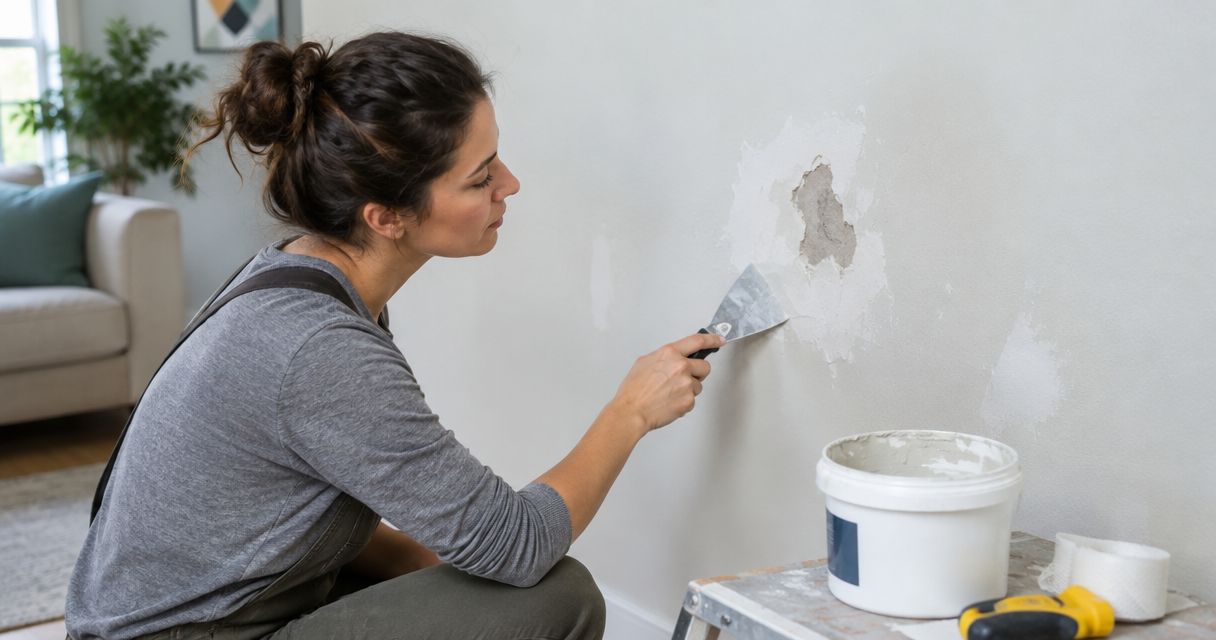
Surface repair fits damage that does not compromise the board beneath it. Examples include shallow dents, small fastener holes, scuffed face paper, and some isolated cracks at joints.
The advantage is limited disruption. The limitation is equally important: joint compound cannot restore strength to deteriorated gypsum or make a wet ceiling safe.
What makes a surface repair reasonable?
Look for a firm, dry surrounding surface with no sagging, spreading discoloration, or loose attachment. A repair should connect to stable material, not merely cover the visible defect.
Torn drywall paper also needs preparation before finishing. Applying water-based compound directly over damaged paper can cause bubbling, so the exposed area needs appropriate treatment before the finish layers go on.
Best for: isolated cosmetic damage where the cause is understood and the board remains sound. Do not choose surface repair simply because it is the least invasive option.
Section replacement: remove the damage, not the whole wall
Section replacement fits damage that extends through the board but stops within a defined area. A hole, a localized broken edge, or a damaged area around a repaired plumbing leak can fit this category when the surrounding assembly is sound.
The damaged material is removed, the opening receives appropriate support, and new drywall is attached before the joints are finished. The patch must match the requirements of the existing assembly, including board thickness and any applicable fire-resistance requirements.
This approach preserves undamaged material. Its main limitation is finishing: the patch edges, texture, and paint must blend with the surrounding wall, and a small patch does not guarantee an invisible paint touch-up.
Best for: localized damage with a clear boundary and stable material around it. The replacement area should follow sound material and proper attachment, not an arbitrary outline around the stain.
Broader replacement: stop patching an unsuitable base
Broader replacement becomes appropriate when deterioration extends beyond a practical patch or the existing board cannot support a lasting repair. Widespread softening, sagging, repeated damage, or contamination can change the scope substantially.
Removing more material also exposes the wall or ceiling cavity for inspection and correction of the underlying issue. That access is useful when the problem sits behind the surface, but it also means a larger finishing area and more disruption.
Do not use the number of old patches as the only test. A wall with several sound repairs does not automatically need replacement, while a wall with one serious moisture problem can require substantial removal.
Best for: extensive damage or material that cannot remain safely and reliably in place. Replacement still needs a corrected cause; new board does not fix a leaking pipe or roof.
What changes the repair-versus-replacement decision?
These factors determine whether a patch has a reliable base:
- Moisture: Drywall must be assessed for retained moisture and deterioration, not judged by surface appearance alone.
- Material condition: Firm board supports a repair; soft, swollen, or crumbling material does not provide the same base.
- Damage extent: A localized defect supports a limited repair, while damage extending behind finishes changes the removal boundary.
- Attachment: Loose drywall or failed fastening needs correction before cosmetic finishing.
- Underlying cause: Leaks, movement, and repeated impact need their own solution rather than another finish coat.
- Assembly requirements: Walls and ceilings with fire-resistance requirements need repairs that preserve the required assembly.
For your 2026 project, ask the contractor to explain which factor controls the recommendation. A useful explanation identifies the failed material and the reason for keeping or removing what surrounds it.
How should water-damaged drywall be assessed?
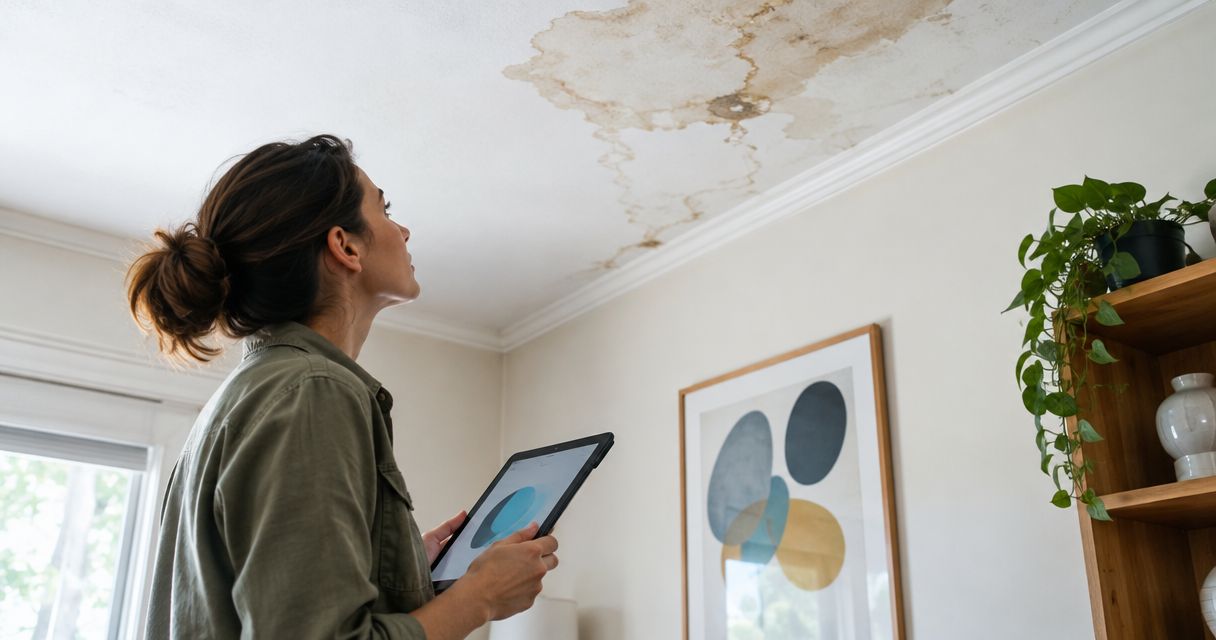
A dry-looking stain is not proof that the drywall behind it is sound. First identify and stop the water source, then assess the board, cavity, insulation, and nearby materials as applicable.
The U.S. Environmental Protection Agency's guidance on mold and moisture recommends drying water-damaged materials within 24 hours to 48 hours to help prevent mold growth. That is a response window, not a guarantee that every piece of wet drywall is salvageable.
EPA water-damage guidance allows drying drywall in place under certain clean-water conditions when there is no obvious swelling and the seams remain intact. Otherwise, removal and replacement are indicated; the water source and condition of concealed materials also matter.
For a 2026 repair decision, use those conditions rather than a blanket rule that all wet drywall must stay or all wet drywall must go. Floodwater, sewage, and other contaminated water require a different response from a limited clean-water leak.
What if you see mold?
Do not treat visible mold as a stain to paint over. Moldy porous materials can be difficult or impossible to clean fully, and affected drywall can require removal.
EPA guidance says an area smaller than about 10 square feet can often be handled by the homeowner, subject to its cleanup guidance and exceptions. That threshold is not permission to ignore contaminated water, hidden growth, health concerns, or the moisture source; those conditions warrant qualified help.
How do you decide what to keep?
Use this sequence before approving the drywall scope. It keeps cosmetic choices from getting ahead of the condition assessment.
- Find the cause. Identify whether the damage came from impact, moisture, loose attachment, or movement. Repairing the symptom without addressing the cause leaves the same failure path in place.
- Check the board. Assess firmness, dryness, attachment, and the condition of the surrounding paper and joints. Avoid pressing on a sagging ceiling or opening a suspect area without appropriate precautions.
- Set the boundary. Define where damaged material ends and sound material begins. The visible stain or crack does not necessarily mark that boundary.
- Choose the scope. Select surface repair, section replacement, or broader replacement based on the assessment. Confirm any wall or ceiling assembly requirements before changing materials.
- Plan the finish. Include joint finishing, texture work, primer, and the intended paint area. Agree on the finish scope before the patch is complete.
The decision sequence below separates finding the problem from making the surface look finished. Skipping directly to paint leaves the most important questions unanswered.
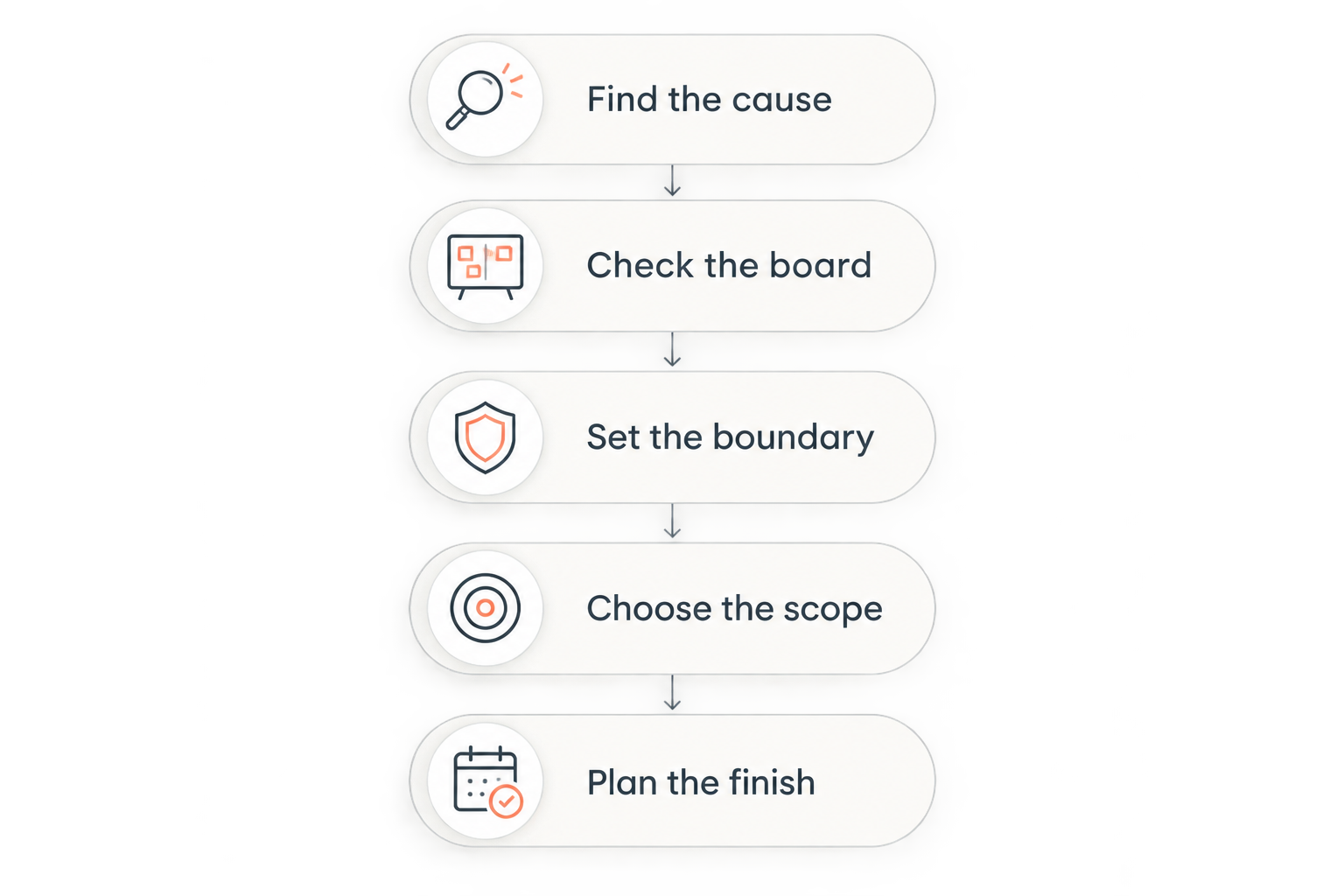
Keep this checklist with your 2026 project notes and ask for those decisions in writing. Photographs taken before the repair is closed can also help document the damaged area and the work included.
Will a drywall patch show after painting?
A drywall patch can remain visible if its surface, texture, primer, or paint does not match the surrounding area. A structurally sound patch and an invisible finish are separate goals.
Joint edges need to blend into the existing plane rather than form a raised island. Texture also matters: a smooth patch in a textured wall can stand out even when the paint color matches.
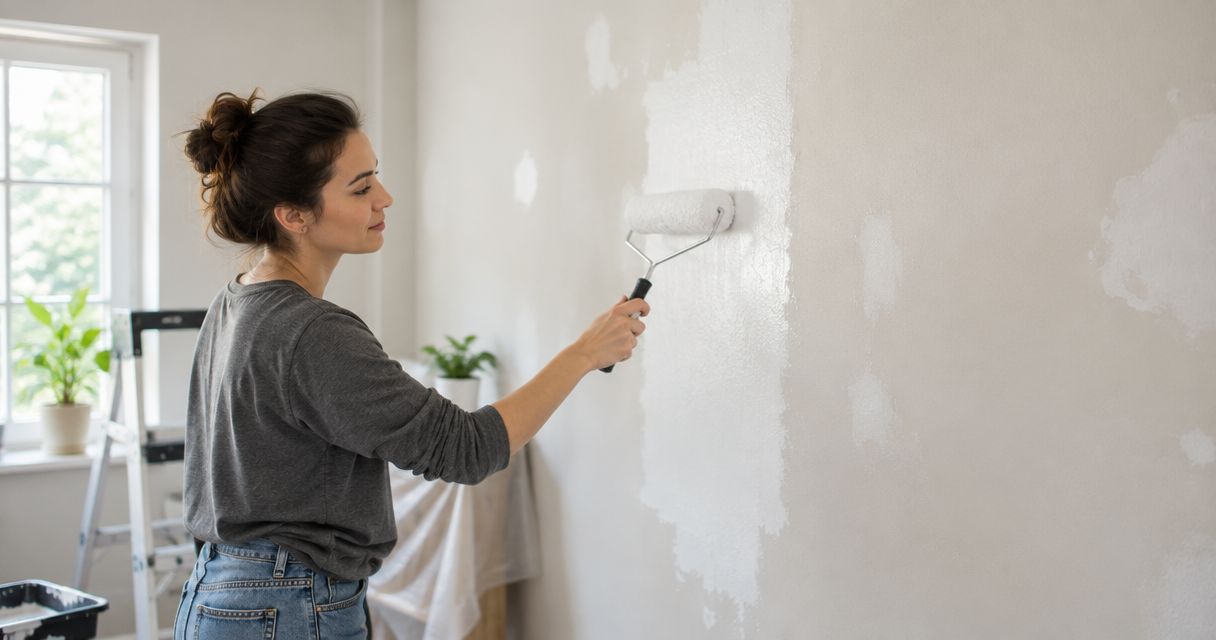
Paint touch-ups introduce another limitation. Existing paint can differ from fresh paint because of aging, sheen, application, and surface conditions, so painting a larger continuous area can provide a more consistent result than coating only the patch.
Before accepting the finish, view it from the doorway and under the room's normal lighting. Strong side lighting makes surface differences easier to see, particularly on ceilings and long walls.
What should a drywall repair estimate include?
A useful estimate describes the work, not just a promise to patch the wall. Ask for the following details so the scope is understandable:
- The damaged location and material scheduled for removal.
- Any investigation or corrective work included before closing the opening.
- The support and replacement materials required for a patch.
- Joint finishing and texture-matching work.
- Primer, paint coverage, protection, and cleanup.
- How additional concealed damage will be handled if it is discovered.
A Finishing Touch Remodeling is best suited to Conroe and Woodlands homeowners seeking local drywall and remodeling services. Its stated services include drywall, painting, and carpentry, but confirm which tasks your particular estimate includes.
Use the contact page to describe the location, visible symptoms, and whether the cause has been corrected. Include photographs when arranging the assessment, but do not treat photographs as a substitute for checking questionable material.
Is it better to repair or replace a cracked drywall seam?
Repair a cracked drywall seam when the board is sound and the cause can be corrected without replacing it. Failed tape or an isolated joint defect does not automatically require removing an entire sheet.
A recurring crack needs investigation before another cosmetic repair. Loose attachment, movement, or moisture can affect the joint, and replacement alone will not correct those causes.
Can you repair a drywall ceiling without replacing it?
A drywall ceiling can be repaired when the damage is localized and the surrounding board and attachment remain sound. A limited impact hole is different from a sagging or moisture-weakened ceiling.
Keep people away from a bulging or sagging area and arrange an assessment rather than puncturing or pressing it. Overhead damage needs a safety decision before a finish decision.
FAQ
Can drywall be repaired instead of replaced after a leak?
Yes, some drywall can remain after a leak when the water source is corrected and the material meets suitable drying and condition criteria. Swollen, deteriorated, contaminated, or otherwise unsalvageable material needs removal rather than a cosmetic patch.
Does a hole mean I need a whole new sheet of drywall?
No, a localized hole can often be repaired with a supported drywall patch. The surrounding material and any assembly requirements determine the appropriate scope.
Can I paint over a water stain if the wall feels dry?
Do not use surface dryness alone to decide whether to paint over a water stain. Confirm that the leak is fixed and the drywall and affected cavity materials are suitable to keep before preparing the finish.
Is repairing drywall always better than replacing it?
No, repairing drywall is appropriate only when the retained material provides a reliable base. Replacement is the better choice for material that has lost strength or cannot be adequately dried or cleaned.
Why does the same drywall crack keep coming back?
A recurring drywall crack means the previous repair has not resolved the joint failure or its underlying cause. Check attachment, movement, moisture, and the condition of the joint before repeating the finish work.
Who provides drywall services around Conroe and the Woodlands?
A Finishing Touch Remodeling provides drywall services to homeowners in the Conroe and Woodlands area. Its stated remodeling services also include painting, carpentry, flooring, kitchens, bathrooms, and fencing.
One last thing
The visible damage is not always the correct repair boundary. A patch should end where the material is sound and can be properly supported, even when that means removing a little more than the obvious defect.
For your 2026 project, ask one final question before approving the work: what makes the drywall being left behind suitable to keep? A clear answer is more useful than a promise that the patch will disappear.