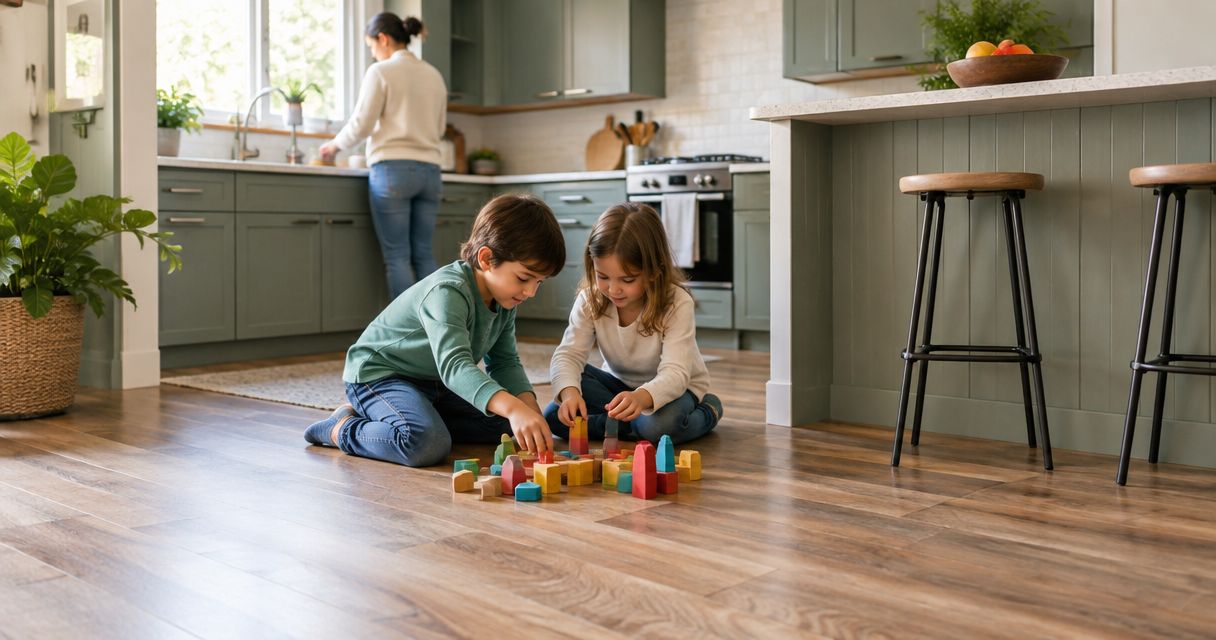
Best overall: luxury vinyl plank. Best for frequent wet cleanup: porcelain tile. Best budget-minded option: sheet vinyl. The best kitchen flooring for families balances spill resistance, comfortable footing, easy cleaning, and a surface you can live with every day—not just admire in a sample display.
- Luxury vinyl plank is the best kitchen flooring for families prioritizing spill resistance, comfort, and straightforward cleaning.
- Porcelain tile suits frequent wet cleanup, but its hard surface makes long cooking sessions less comfortable.
- Sheet vinyl reduces seams; laminate and engineered wood need closer attention to moisture limitations.
- A Finishing Touch Remodeling offers kitchen remodeling and flooring services for Conroe and Woodlands homeowners.
Why this matters
A family kitchen handles dropped utensils, crumbs under chairs, wet shoes, and spills that nobody notices immediately. Your flooring choice needs to account for that routine, not an ideal household where every splash gets wiped up instantly.
For a kitchen project in 2026, separate the flooring surface from the complete installation. A water-resistant surface does not protect an exposed edge, solve an uneven subfloor, or stop a dishwasher connection from leaking underneath it.
A Finishing Touch Remodeling is a fit for Conroe and Woodlands homeowners planning kitchen flooring alongside remodeling work. You can explore A Finishing Touch Remodeling when defining that combined scope. Decide what the room needs before choosing a finish.
What makes the best kitchen flooring for families
Use these criteria to compare actual products, not just material names:
- Spill resistance: Check the manufacturer's instructions for standing water, perimeter sealing, and wet-area installation. Surface protection and installation protection are different questions.
- Comfort: Consider how the floor feels while cooking, helping with homework, or standing at the sink. A hard surface stays hard beneath an attractive finish.
- Traction: Evaluate the specific finish for kitchen use. A textured appearance alone does not establish slip resistance.
- Cleanup: Look at seams, grout joints, surface texture, and approved cleaners. Those details determine your daily cleaning routine.
- Damage and repair: Ask what happens after a deep scratch, dropped pan, or isolated leak. Understand the repair method before installation.
- Installation fit: Check subfloor requirements, finished floor height, appliance clearance, and transitions into adjoining rooms.
No material wins every category. In this 2026 guide, luxury vinyl plank takes the default recommendation because it balances several family priorities; porcelain takes the wet-cleanup slot because its trade-offs are different.
Family kitchen flooring at a glance
These rankings compare material categories. Individual products still need to meet their manufacturer's requirements for your room and installation method.
| Flooring | Best for | Standout feature | Key limitation |
|---|---|---|---|
| Luxury vinyl plank | Everyday family use | Resilient surface with a plank appearance | Sharp objects can gouge it |
| Porcelain tile | Frequent wet cleanup | Tile surface tolerates water | Hard underfoot; grout needs care |
| Sheet vinyl | Fewer seams | Broad sheets reduce joints across the floor | Local damage can be difficult to repair neatly |
| Laminate | Busy kitchens with prompt spill cleanup | Wear-resistant decorative surface | Moisture protection varies by product |
| Engineered wood | Continuity with adjoining wood floors | Real wood surface | Standing water can damage it |
1. Luxury vinyl plank: best kitchen flooring for everyday use
Luxury vinyl plank is resilient flooring made to resemble wood planks. It offers a less rigid walking surface than tile and generally needs straightforward sweeping and manufacturer-approved cleaning. That makes it a practical starting point when your kitchen handles meals, pets, and constant foot traffic.
Best for: Families who want a balanced everyday floor without choosing tile's hard feel.
The important distinction is between a waterproof plank and a waterproof room. Water can still reach the subfloor through installation details or enter beneath flooring from an appliance leak. Read the selected product's instructions rather than treating a waterproof label as permission to ignore spills.
Luxury vinyl plank pros:
- More forgiving underfoot than porcelain tile.
- No grout joints to scrub.
- Available in wood-look designs without a real wood surface.
Luxury vinyl plank cons:
- Sharp objects and furniture movement can gouge the surface.
- Uneven subfloors can compromise fit and performance.
- Repairing a damaged plank depends on its installation system and location.
For your 2026 shortlist, examine an assembled sample with its joint visible. Ask how edges, appliances, and adjoining floors will be handled—not just which color looks best.
Verdict: Buy luxury vinyl plank for the strongest all-around family fit, after confirming installation requirements.
2. Porcelain tile: best kitchen flooring for frequent wet cleanup
Porcelain tile creates a rigid, water-tolerant floor surface. It suits households that prioritize thorough cleanup and resistance to everyday surface wear over softness underfoot.
Best for: Families whose first priority is a floor surface that handles frequent wet cleaning.
Tile does not make the entire floor assembly waterproof. Grout, movement joints, the substrate, and any specified waterproofing remain separate parts of the installation. A well-chosen tile cannot compensate for a poorly prepared base.
Porcelain tile pros:
- The tile surface tolerates water.
- Resists ordinary surface scratches well.
- Offers finishes beyond wood-look patterns.
Porcelain tile cons:
- Hard underfoot during long cooking sessions.
- Dropped dishes are more likely to break on a rigid surface.
- Grout joints add cleaning work, and individual tiles can chip.
Choose the finish with traction and cleaning in mind. Highly polished tile and deeply textured tile present different compromises; inspect the specific product's suitability instead of assuming every porcelain tile behaves alike.
Check the proposed floor height, too. Tile assemblies affect transitions and appliance clearance, which belong in the installation plan before work starts.
Verdict: Buy porcelain tile when wet cleanup and surface durability matter more than cushioning.
3. Sheet vinyl: best kitchen flooring for fewer seams
Sheet vinyl covers the floor in broad sections rather than individual planks or tiles. Depending on the room's dimensions and layout, that reduces the number of seams across the kitchen.
Best for: Families who want a resilient surface with fewer joints to clean around.
This is the budget-minded category to include in your comparison, but judge the complete installation rather than the material alone. Subfloor preparation, seam placement, and detailing around fixed objects still determine whether the result works well.
Sheet vinyl pros:
- Fewer seams than a floor assembled from small pieces.
- More forgiving underfoot than rigid tile.
- A continuous surface supports straightforward routine cleaning.
Sheet vinyl cons:
- Cuts or gouges can be difficult to patch unobtrusively.
- Subfloor imperfections can show through.
- Room shape affects seam placement and installation complexity.
Ask to see where seams would fall on your kitchen plan. Pay particular attention to traffic routes and appliance areas, and confirm how exposed edges will be finished. Fewer seams are useful, but they do not remove the need for careful detailing.
Verdict: Buy sheet vinyl when a continuous, easy-clean surface matters more than individual-piece repair.
4. Laminate: best kitchen flooring for prompt spill cleanup
Laminate uses a decorative surface over a core, commonly wood-based. Its wear surface can handle everyday activity well, but kitchen suitability depends on the exact product and its moisture-related installation instructions.
Best for: Families who like laminate's appearance and consistently clean up spills promptly.
Do not transfer a water-resistance claim from one laminate product to another. Check what the manufacturer requires at edges, joints, and penetrations, along with any restrictions on cleaning equipment.
Laminate pros:
- Wear-resistant surfaces suit ordinary foot traffic.
- Wood-look designs provide an alternative to real wood.
- Routine dry cleaning is straightforward.
Laminate cons:
- Moisture reaching a vulnerable core can cause swelling.
- Damaged surfaces generally cannot be sanded and refinished.
- Wet-cleaning limits vary by product.
For a 2026 kitchen, choose laminate only after reading the actual care and installation documents. If unnoticed water around the dishwasher is a recurring household problem, luxury vinyl plank or porcelain deserves earlier consideration.
Verdict: Hold laminate until its moisture requirements match your family's cleanup habits.
5. Engineered wood: best kitchen flooring for adjoining wood floors
Engineered wood combines a real wood surface with a layered construction. It suits homeowners who place a high value on a wood finish and visual continuity between the kitchen and adjoining living areas.
Best for: Families prioritizing a real wood surface and coordinated adjoining rooms.
Its layered construction does not eliminate wood's sensitivity to moisture. Standing water, appliance leaks, and unsuitable cleaning methods remain concerns, so this is a deliberate trade-off rather than the default family recommendation.
Engineered wood pros:
- Provides a real wood surface.
- Supports visual continuity with compatible adjoining wood floors.
- Some products allow refinishing, subject to their construction.
Engineered wood cons:
- Standing water can damage the floor.
- Scratches and dents remain possible.
- Refinishing options vary with the wear layer and manufacturer guidance.
Match more than the color when extending an existing floor. Board dimensions, surface texture, finish, and floor height affect whether the transition feels intentional.
Verdict: Hold engineered wood unless real wood continuity outweighs your need for low-attention spill handling.
Check the room before choosing the finish
A material shortlist is only useful after you understand the kitchen beneath it. A Finishing Touch Remodeling offers both kitchen remodeling and flooring services, making the relationship between those scopes relevant to your planning.
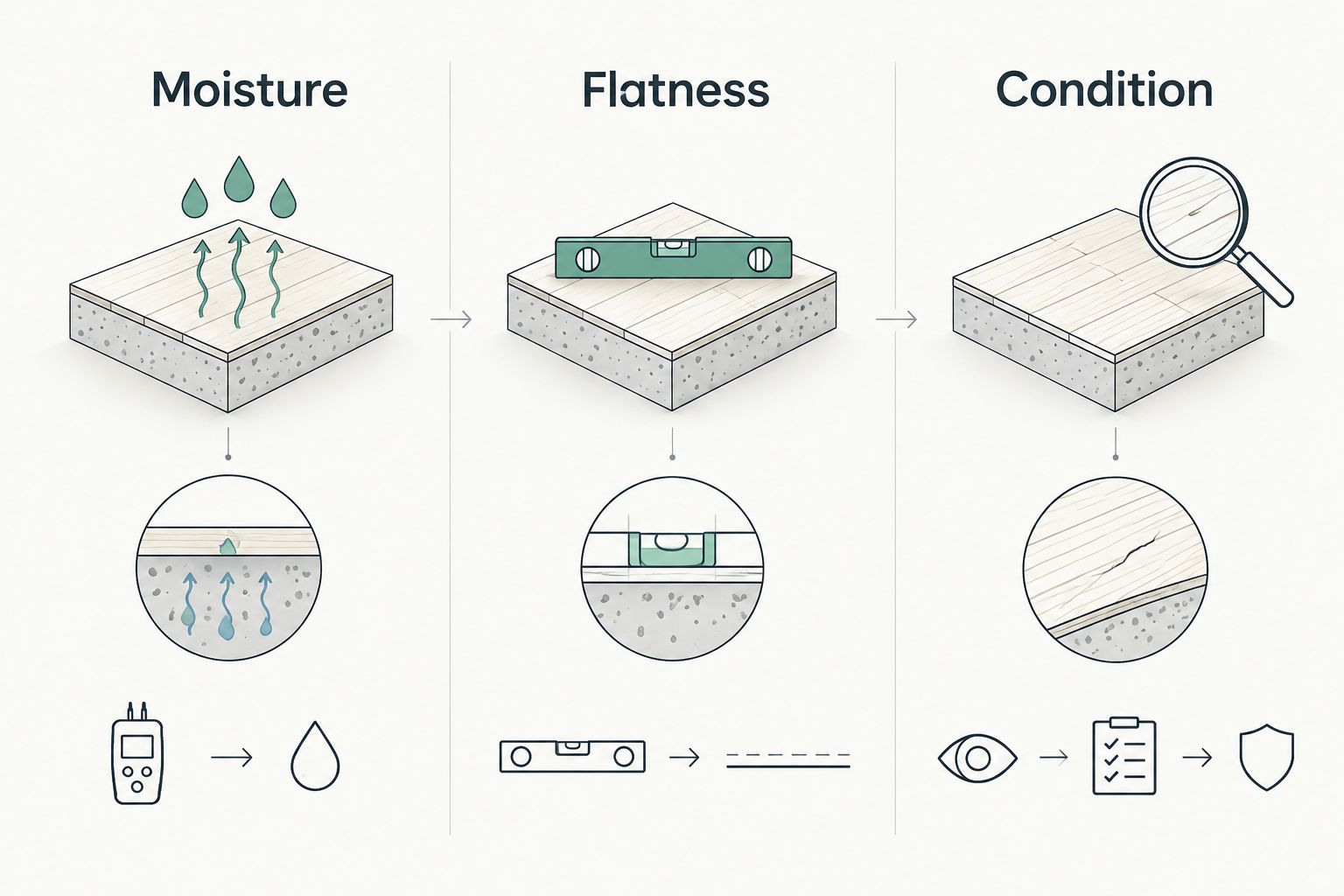
Start with 3 subfloor checks: moisture, flatness, and condition. The installer should evaluate each against the chosen flooring system's requirements. Covering a problem does not correct it.
Then review appliance clearance. Confirm that the proposed floor height allows the dishwasher to be removed and that the refrigerator and other appliances can return to their intended positions. Include transitions at doorways rather than leaving them as an installation-day decision.
Ask how the installation coordinates with cabinets and appliances. Some floating floors have restrictions around fixed cabinetry; the selected manufacturer's instructions govern the sequence. Do not assume every material follows the same installation plan.
Bring samples into your actual kitchen
Compare 3 physical samples under 2 lighting conditions: daylight and evening lighting. These are practical comparison steps, not performance tests. Put the samples beside your cabinets, counters, and adjoining floor so you can see the relationships together.
Stand on the samples if the display format permits. Look at a joint, feel the surface texture, and examine whether crumbs or residue would collect in pronounced grooves. Appearance alone will not answer those questions.
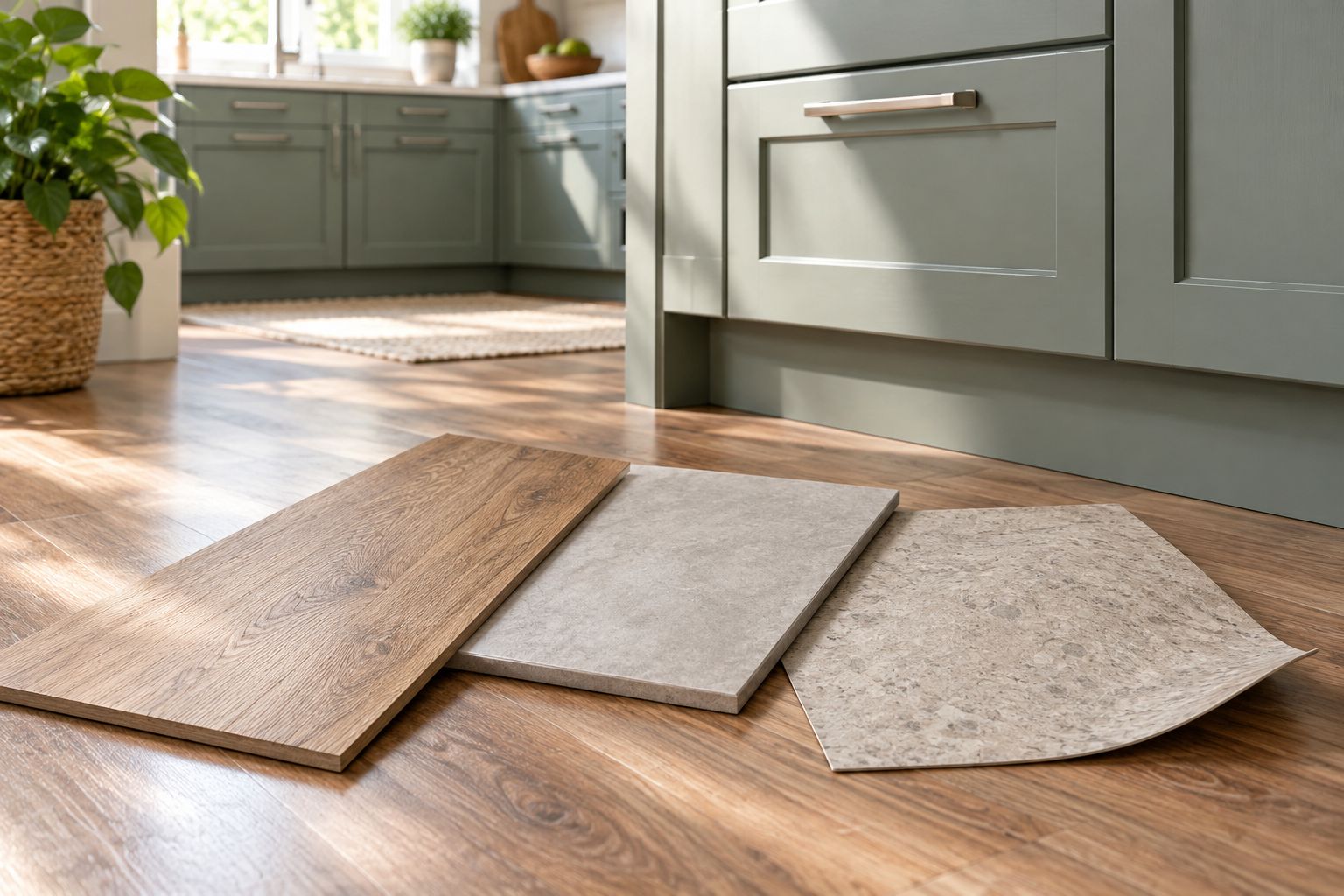
For your 2026 decision, write down 3 daily problems the new floor must address. Examples include uncomfortable standing, difficult grout cleaning, or spills beside the sink. Choose against that list rather than a showroom photograph.
A Finishing Touch Remodeling kitchen flooring discussion should start with those household needs and the room's condition. Finish selection comes after the practical constraints are clear.
How these flooring options rank
The ranking prioritizes spill handling, comfort, cleaning, repair, and installation fit. Luxury vinyl plank leads because it balances those priorities; porcelain wins a narrower wet-cleanup use case while accepting a harder surface.
Sheet vinyl earns its place through fewer seams. Laminate and engineered wood remain conditional choices because moisture management requires closer attention. This is a material-category guide, not a claim that every product within a category performs identically.
Before approving your 2026 selection, read the installation instructions and care guidance for the exact product. Category rankings narrow the field; product documentation decides suitability.
Which kitchen flooring should you choose?
Choose luxury vinyl plank if you are undecided. Move porcelain tile to the top when frequent wet cleanup matters more than standing comfort, or choose sheet vinyl when fewer seams are your priority.
Keep laminate and engineered wood on the shortlist only when their specific benefits justify their moisture limitations. The right floor is the one whose maintenance requirements fit your household—not the one that depends on everyone changing their habits.
FAQ
What's the best kitchen flooring for families in 2026?
Luxury vinyl plank is the best default kitchen flooring for families balancing spill resistance, comfort, and easy cleaning. Confirm the exact product's installation requirements and remember that a waterproof plank does not make the entire room waterproof.
Is porcelain tile better than luxury vinyl plank for a family kitchen?
Porcelain tile is better when frequent wet cleanup and surface scratch resistance take priority over comfort. Luxury vinyl plank is more forgiving underfoot, while tile adds grout maintenance and a harder walking surface.
Is laminate flooring suitable for a kitchen with children?
Laminate is suitable only when the selected product permits kitchen installation and its moisture requirements fit your cleanup habits. Check perimeter details, cleaning restrictions, and spill guidance before choosing it.
Does waterproof flooring protect against dishwasher leaks?
A waterproof flooring surface does not guarantee protection against a dishwasher leak. Water can reach beneath the floor or enter surrounding materials, so the leak still needs prompt attention.
Is sheet vinyl easier to clean than tile?
Sheet vinyl has fewer joints and no tile grout, which simplifies routine surface cleaning. Its texture, seam placement, and approved cleaning methods still affect upkeep.
Can engineered wood work in a busy family kitchen?
Engineered wood can work when the specific product allows kitchen use and the household manages spills carefully. Choose it for its real wood surface and continuity with adjoining rooms, not for tolerance of standing water.
Who offers kitchen remodeling and flooring in Conroe?
A Finishing Touch Remodeling offers kitchen remodeling and flooring services for homeowners in the Conroe and Woodlands area. Plan the flooring together with cabinet, appliance, and transition requirements.
One last thing
Check whether the dishwasher can come out after the new floor goes in. A flooring decision affects more than the surface you walk on: finished height and the installation sequence also affect future appliance access.
Make that check part of the written scope, alongside subfloor preparation and transitions. It is a more useful final question than asking whether a sample looks durable.