Best overall: porcelain tile. Best for fewer grout joints: engineered quartz slabs. Best budget option: ceramic tile. This 2026 guide compares the best kitchen backsplash materials by cleaning, heat exposure, maintenance, and installation details so you can choose a surface that fits how you cook.
- Porcelain tile leads the best kitchen backsplash materials for everyday cooking and low-maintenance kitchen remodeling.
- Ceramic tile suits straightforward tile projects; stainless steel suits cooks who prioritize wiping away splatter.
- Glass adds reflection, natural stone adds variation, and engineered quartz reduces joints but needs careful heat planning.
- A Finishing Touch Remodeling serves Conroe and Woodlands homeowners planning kitchen remodeling.
Why your backsplash choice matters
A backsplash takes grease, water, and repeated cleaning. Choosing by color alone leaves the important questions unanswered: how will you clean the joints, finish the exposed edges, and handle the area behind the range?
For Conroe and Woodlands homeowners, A Finishing Touch Remodeling offers kitchen remodeling alongside drywall, carpentry, flooring, and painting services. Choose the backsplash as part of the kitchen plan, not as an isolated decorative purchase. Countertops, outlets, cabinets, and wall condition all affect the finished result.
For a 2026 kitchen project, start with the cooking area. A material that works beside the sink still needs separate consideration behind the range, where appliance instructions and installation requirements control the assembly.
What makes the best kitchen backsplash materials?
Judge each material against these criteria before choosing its pattern:
- Cleaning: Favor a surface you can wipe without scrubbing deep texture or numerous joints.
- Heat compatibility: Check the surface, setting materials, and range installation instructions together.
- Water resistance: Evaluate the complete installation, including joints, penetrations, and countertop transitions.
- Maintenance: Separate routine cleaning from periodic sealing or finish care.
- Installation fit: Account for outlet cuts, exposed edges, wall flatness, and slab handling.
- Visual balance: Let the backsplash support the countertop rather than compete with it.
The best material passes your practical requirements first. A beautiful sample does not compensate for a cleaning routine you will avoid.
Kitchen backsplash materials at a glance
| Material | Best for | Standout feature | Key limitation |
|---|---|---|---|
| Porcelain tile | Everyday cooking | Dense tile body and broad finish choices | Hard material requires suitable cutting tools |
| Ceramic tile | Straightforward tile projects | Many glazed styles and manageable formats | Chipped glaze can expose the tile body |
| Glass tile | Reflective accents | Reflects light across the backsplash | Shows adhesive and installation defects |
| Stainless steel | Frequent splatter cleanup | Smooth sheet surface with few joints | Shows fingerprints and scratches |
| Natural stone | Natural variation | Individual veining and mineral patterns | Care depends on the stone and finish |
| Engineered quartz slabs | Fewer grout joints | Large continuous panels | Resin-containing surface needs heat precautions |
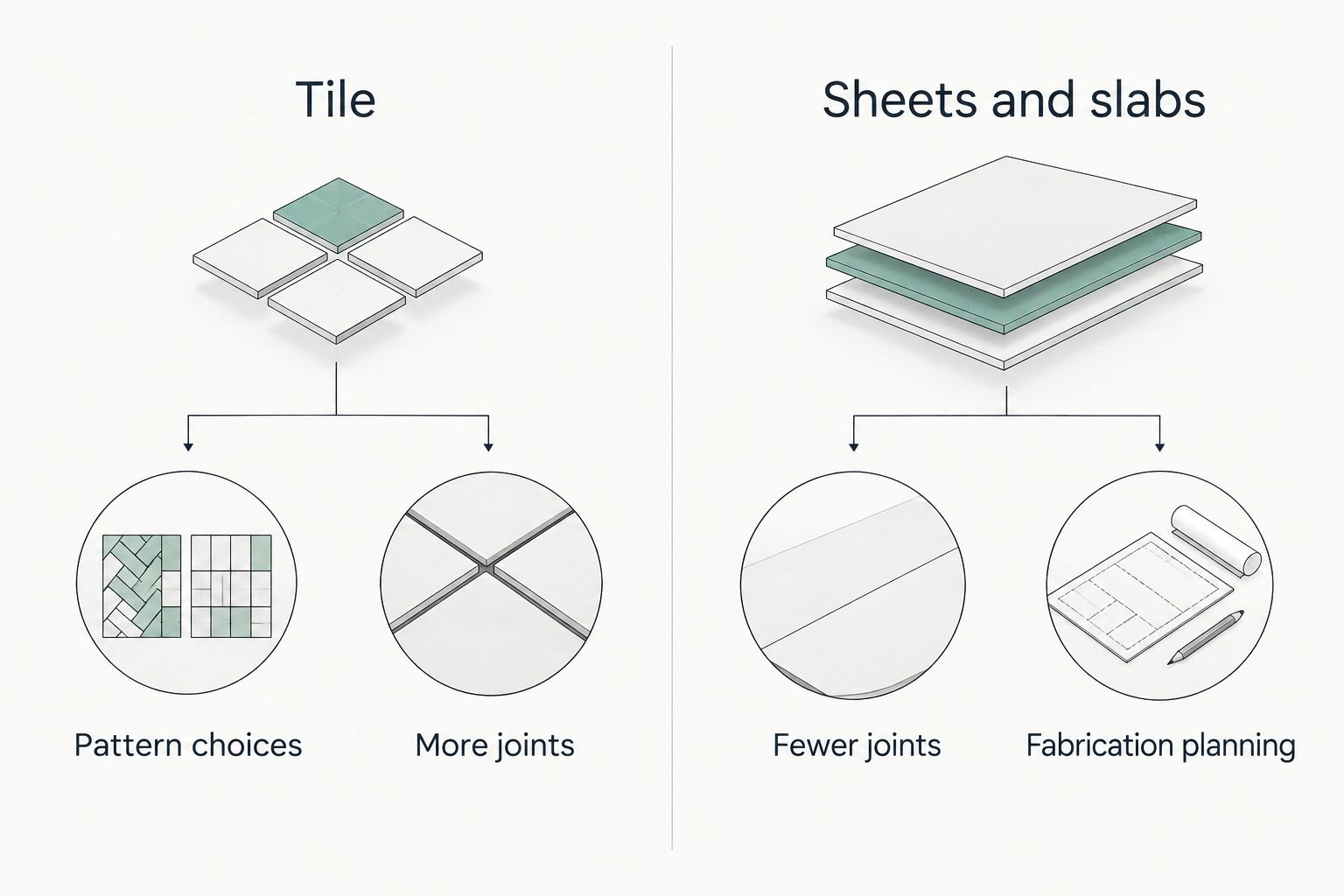
Tile gives you more control over pattern and module size. Sheets and slabs reduce field joints, but they shift the difficulty toward measuring, fabrication, handling, and edge details. Neither approach eliminates the need to plan countertop transitions and outlet openings.
1. Porcelain tile: best backsplash for everyday cooking
Porcelain tile is the default recommendation when your kitchen gets regular use. Its dense body and range of glazed finishes make it a practical starting point, especially when you choose a smooth face rather than heavy texture.
For a 2026 kitchen, porcelain earns its first-place position through balance rather than one decorative effect. You can choose a restrained field tile, a stone-look finish, or a larger format without changing the basic maintenance approach.
Porcelain tile pros:
- Smooth glazed faces are straightforward to wipe clean.
- Many finishes let you coordinate with existing countertops.
- Larger formats reduce the number of field joints.
Porcelain tile cons:
- Hard tile requires appropriate blades and careful cutting.
- Grout and perimeter joints still need separate attention.
A 12-by-24-inch tile is a useful layout option to draw on the wall before ordering. Check where its joints and cuts would land around outlets; a large tile is not automatically a simple installation.
Best for: Households that cook often and want a practical surface without natural-stone care.
Verdict: Buy porcelain tile as the default; skip heavily textured finishes when easy cleaning comes first.
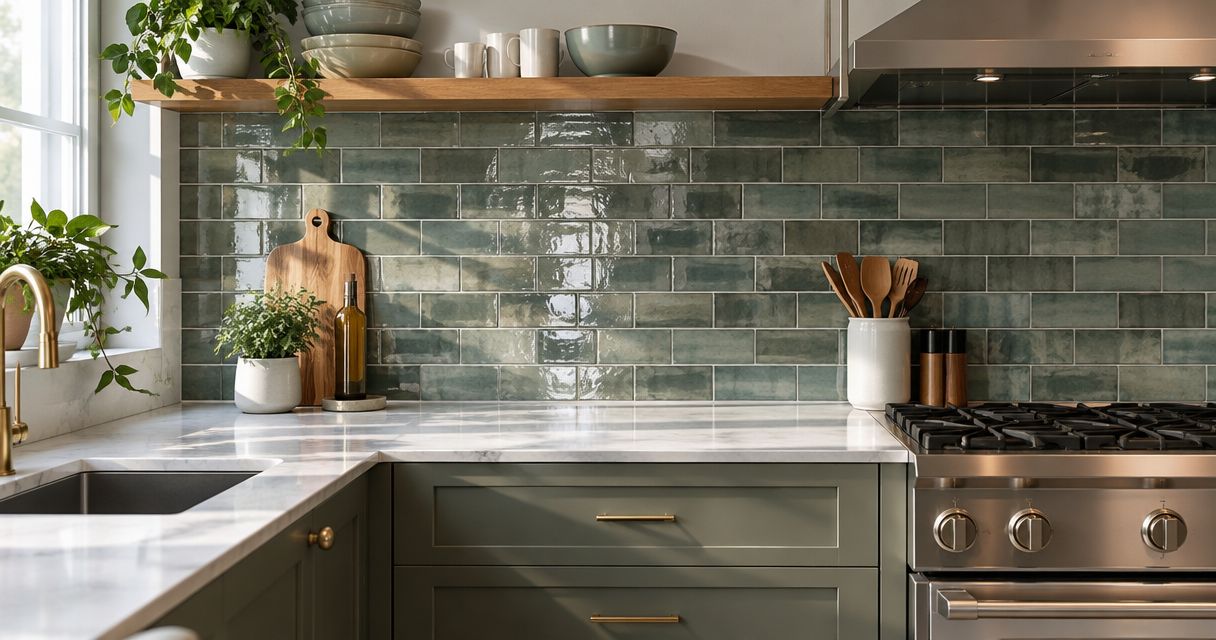
2. Ceramic tile: best backsplash for straightforward tile projects
Glazed ceramic tile suits kitchens that need a familiar tile finish without the handling demands of a full slab. Small and medium formats let you work around cabinets, corners, and outlet locations through a planned layout.
Ceramic is the budget-oriented pick in this ranking, but an elaborate pattern still adds cutting and layout work. Judge the complete installation rather than assuming every ceramic design is equally simple.
Ceramic tile pros:
- Glazed surfaces offer many colors and shapes.
- Familiar rectangular formats support simple layouts.
- Individual pieces allow localized replacement when matching spare tile exists.
Ceramic tile cons:
- Chipping can reveal a different-colored tile body.
- Small formats create more grout joints to clean.
A 3-by-6-inch rectangle gives you a clear starting point for comparing stacked and offset layouts. Draw both options around the outlets and cabinet edges before choosing; the same tile can produce very different cuts.
Best for: Homeowners who want a conventional tiled backsplash with a straightforward pattern.
Verdict: Buy glazed ceramic for a simple layout; hold on intricate mosaics until the joint pattern is clear.
3. Glass tile: best backsplash for reflective accents
Glass tile reflects light and creates a different visual effect from opaque ceramic or porcelain. Use it when reflection is a deliberate part of the design, not as a substitute for adequate task lighting.
Transparent and translucent glass reveal more of what sits behind the tile. The backing, adhesive selection, coverage, and cuts therefore matter to the appearance as well as the installation.
Glass tile pros:
- Reflective surfaces add visual depth.
- Nonabsorbent glass faces wipe clean.
- Accent areas introduce reflection without covering every wall.
Glass tile cons:
- Adhesive marks and inconsistent coverage can remain visible.
- Cuts and exposed edges require careful finishing.
- Fingerprints and water marks can stand out.
Take the sample home and view it under the lighting you actually use. Check it beside the countertop during meal preparation, not just under a showroom spotlight. Confirm the chosen glass tile and installation system are suitable for the planned location.
Best for: Kitchens where a reflective accent supports an otherwise restrained design.
Verdict: Buy glass for a deliberate reflective feature; skip it if visible marks already frustrate you.
4. Stainless steel: best backsplash for wiping away splatter
A stainless steel sheet creates a smooth working surface with fewer joints than a field of small tiles. It suits a cooking-focused kitchen where removing grease matters more than hiding every fingerprint.
The finish changes how wear looks. Stainless steel is not scratch-proof, and cleaning direction matters on a brushed surface. Follow the finish supplier's cleaning instructions rather than treating every metal cleaner as interchangeable.
Stainless steel pros:
- A sheet surface limits the number of field joints.
- The nonabsorbent face handles routine splatter cleanup.
- A metal finish gives the cooking zone a distinct identity.
Stainless steel cons:
- Fingerprints, streaks, and scratches remain visible.
- Thin sheet can dent or show an uneven backing surface.
- Cutouts and exposed edges require careful fabrication.
Plan the panel dimensions around the range, hood, outlets, and surrounding finishes. Stainless steel does not cancel appliance clearances or make the wall assembly behind it irrelevant.
Best for: Frequent cooks who accept visible wear in exchange for a wipeable sheet surface.
Verdict: Buy stainless steel for practical splatter cleanup; skip it if you expect a permanently unmarked finish.
5. Natural stone: best backsplash for natural variation
Natural stone provides veining, mineral patterns, and variation that differ from piece to piece. Marble, granite, and other stones do not share one maintenance profile, so the exact stone matters more than the category label.
Some stones absorb staining liquids, and acid-sensitive stones such as marble can etch. Sealer does not make acid-sensitive stone acid-proof. Choose the stone only after understanding its cleaning and care requirements.
Natural stone pros:
- Natural variation gives each installation a distinct appearance.
- Tile and slab formats offer different joint patterns.
- Stone can carry a countertop's material into the backsplash.
Natural stone cons:
- Absorption and sealing needs vary by stone and finish.
- Acid-sensitive varieties can develop dull etched areas.
- Rough finishes hold splatter more readily than smooth ones.
Inspect the actual pieces or slab rather than approving from a small reference sample alone. Decide whether variation is the feature you want or a distraction beside patterned countertops.
Best for: Homeowners who prioritize natural character and accept material-specific maintenance.
Verdict: Buy natural stone for its variation; skip acid-sensitive stone if surface changes will bother you.
6. Engineered quartz: best backsplash for fewer grout joints
Engineered quartz slabs create broad, continuous surfaces without a grid of tile grout. They suit kitchens where a quieter wall treatment and fewer field joints are the main goals.
Engineered quartz contains resin and requires attention to heat exposure. It is not interchangeable with porcelain or natural quartzite. Confirm that the specific product is permitted in the intended backsplash location and follow the range manufacturer's requirements.
Engineered quartz pros:
- Large panels reduce field joints.
- A smooth surface simplifies routine wiping.
- Coordinated countertop and backsplash surfaces create visual continuity.
Engineered quartz cons:
- Heat exposure requires product-specific review.
- Outlet cuts and slab dimensions need precise planning.
- Large panels require appropriate fabrication and handling.
Do not approve a slab from its countertop suitability alone. Ask specifically about the wall application, the cooking appliance, adhesive requirements, and the treatment of visible edges. Resolve those details before fabrication starts.
Best for: Homeowners who want fewer grout joints and can accommodate slab installation requirements.
Verdict: Hold until heat compatibility and fabrication details are confirmed; buy only after both are resolved.
How the materials rank
This 2026 ranking prioritizes cleaning, installation suitability, and maintenance before decorative variety. Porcelain takes the default position because it offers a practical balance; the remaining materials win distinct use cases rather than competing on the same feature.
The ranking is not a claim that every porcelain tile outperforms every glass tile or stone slab. Surface texture, grout selection, fabrication, and installation details can change the result. Compare the actual proposed assemblies, not material names alone.
Plan the layout before choosing the finish
A Finishing Touch Remodeling kitchen remodeling discussion should connect the backsplash to the surrounding work. Bring your countertop sample, cabinet finish, appliance information, and photographs of the wall so the material decision has context.
Before approving the layout, resolve these details:
- Outlet cuts: Decide where openings fall relative to joints and patterns.
- Edge finish: Identify every exposed end and its finishing method.
- Countertop joint: Specify the transition rather than treating it as another field joint.
- Wall preparation: Address damage and unevenness before covering the surface.
For another layout comparison, draw a 4-by-12-inch tile beside your countertop sample. Compare its cut locations with the smaller ceramic and larger porcelain options described above. Dimensions are planning examples, not a substitute for measuring your kitchen.
Plan your kitchen backsplash
Discuss your backsplash as part of your Conroe or Woodlands kitchen remodeling project.
Which kitchen backsplash material should you choose?
Choose smooth porcelain tile if you want the clearest default for a 2026 kitchen. Choose ceramic for a straightforward tiled layout, stainless steel for splatter cleanup, glass for reflection, natural stone for variation, or engineered quartz for fewer joints after confirming heat suitability.
A Finishing Touch Remodeling is a kitchen remodeling option for Conroe and Woodlands homeowners coordinating backsplash work with a broader renovation. Take your preferred material into that conversation, but keep the final selection tied to the wall, appliances, and installation details.
FAQ
What's the best kitchen backsplash material for everyday cooking?
Smooth porcelain tile is the default recommendation for everyday cooking. It balances cleaning, finish choices, and practical maintenance, while grout and perimeter joints still require attention.
Is porcelain better than ceramic for a kitchen backsplash?
Porcelain is the stronger default in this ranking, but glazed ceramic remains a practical backsplash choice. Choose between the actual tiles based on finish, layout, cutting requirements, and maintenance rather than the material name alone.
What's the easiest backsplash to wipe clean?
A smooth stainless steel sheet is a strong choice for wiping away cooking splatter with few field joints. It still shows fingerprints, streaks, and scratches, so easy cleaning does not mean an unmarked appearance.
Can engineered quartz go behind a stove?
Engineered quartz requires product-specific approval for the intended location behind a stove. Check the quartz manufacturer's heat restrictions and the appliance installation instructions before approving the design.
Does a natural stone backsplash need sealing?
Sealing requirements depend on the exact stone and finish. Follow the stone supplier's care instructions, and remember that sealer does not prevent acid etching on acid-sensitive stone such as marble.
Are large backsplash tiles easier to maintain?
Large backsplash tiles reduce the number of field joints compared with smaller tiles covering the same area. They still require careful outlet cuts, wall preparation, and treatment of perimeter transitions.
Who can I contact about kitchen remodeling in Conroe and the Woodlands?
A Finishing Touch Remodeling offers kitchen remodeling to homeowners in the Conroe and Woodlands area. Discuss the backsplash together with countertop transitions, wall preparation, and any related remodeling work.
One last thing
The easiest backsplash to clean is not always the one with the smallest number of seams. Deep surface texture can hold grease even on a large panel. Before approving your 2026 selection, run your hand across the sample and examine the recesses: choose the surface you want to clean, not just the pattern you want to photograph.