Best overall for a privacy-focused Texas backyard: cedar. Best for open views: aluminum. Best utility option: chain-link. This 2026 guide compares six fence materials by privacy, upkeep, site exposure, and the details you need to settle before installation.
- Best fence materials Texas backyard guide: choose cedar for privacy, aluminum for visibility, and chain-link for utility.
- Pressure-treated pine suits homeowners who want a wood fence and accept ongoing maintenance.
- Vinyl and composite need product-specific installation details; neither eliminates maintenance.
- A Finishing Touch Remodeling offers fencing services to homeowners in the Conroe/Woodlands area.
Why this matters
A backyard fence is a system, not just a row of panels. Posts, connections, drainage, gates, and installation details affect whether the finished fence works for your property.
Choose the material around the job: screening neighbors, containing pets, preserving a view, or defining a boundary. A solid privacy fence and an open metal fence solve different problems. Ranking them without that distinction produces the wrong recommendation.
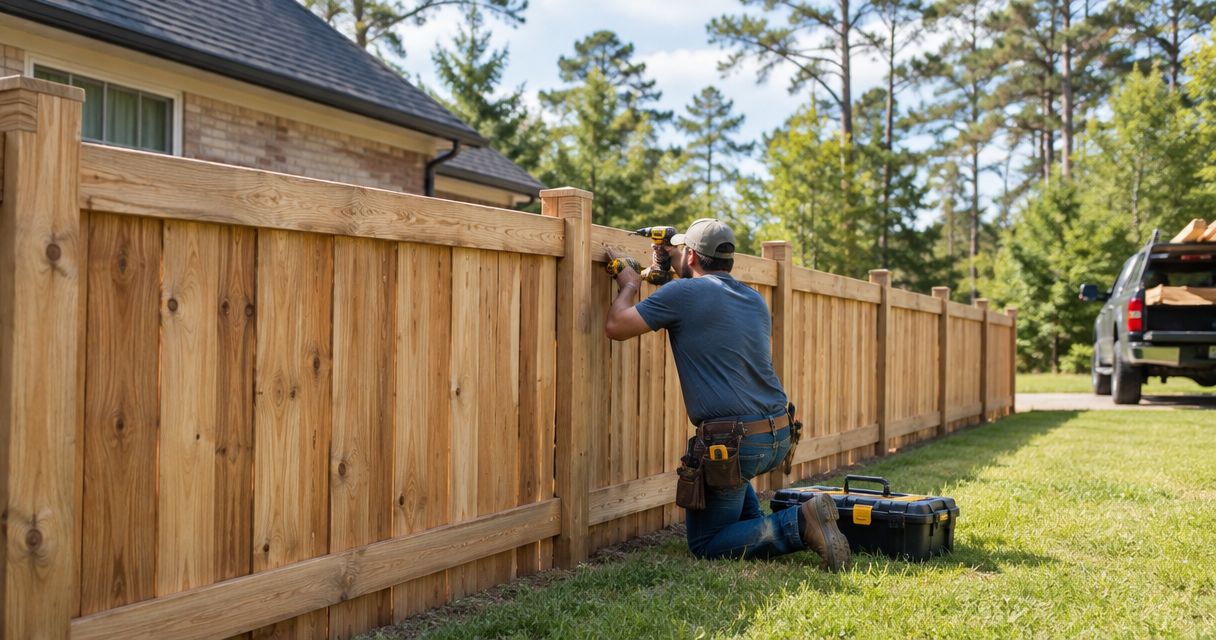
For homeowners in the Conroe/Woodlands area, A Finishing Touch Remodeling offers fencing alongside other home remodeling services. Use this guide to define the fence you want before discussing the installation scope.
What makes the best fence material for a Texas backyard?
Use these criteria for your 2026 shortlist:
- Privacy: Decide whether you need a solid screen, partial screening, or an open boundary.
- Upkeep: Separate routine cleaning from refinishing, hardware adjustments, and replacement work.
- Site exposure: Consider sun, wet ground, irrigation, vegetation, and exposure to wind.
- Installation: Check posts, connections, panel support, ground clearance, and gate construction—not just the surface material.
- Repairability: Ask how an individual board, panel, picket, or damaged section gets replaced.
- Restrictions: Confirm property boundaries, easements, neighborhood rules, and applicable local requirements before choosing the design.
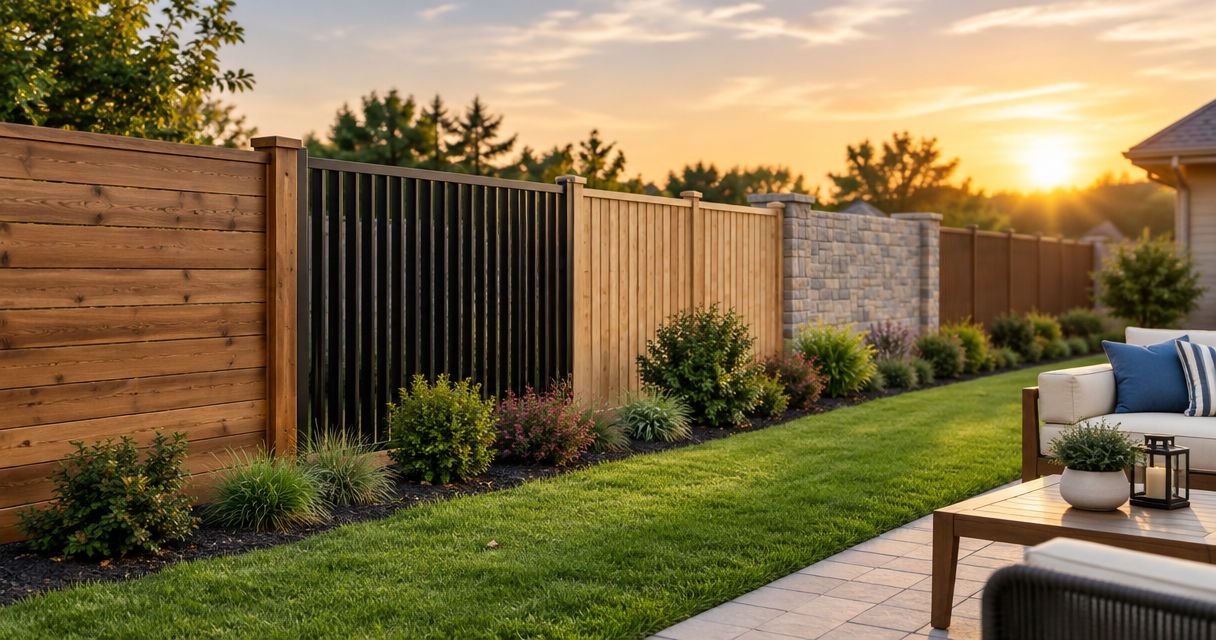
No material wins every category. Cedar offers a straightforward route to wood privacy; aluminum preserves visibility; chain-link creates a practical open enclosure. Vinyl and composite deserve a place on the shortlist when avoiding wood refinishing is a priority.
Fence materials at a glance
| Material | Best for | Standout feature | Key limitation |
|---|---|---|---|
| Cedar | Wood privacy fencing | Naturally decay-resistant wood | Weathers and still needs upkeep |
| Pressure-treated pine | A wood fence with a maintenance plan | Preservative-treated lumber | Can shrink, check, and warp |
| Aluminum | Boundaries with open views | Metal pickets without wood refinishing | Does not provide visual privacy |
| Chain-link | Practical pet and utility boundaries | Open mesh enclosure | Limited screening and climbing resistance |
| Vinyl | Privacy without wood staining | Manufactured privacy panels | Repairs depend on compatible components |
| Composite | Wood-look privacy without wood refinishing | Manufactured boards with a wood-like appearance | Support and expansion details vary by product |
1. Cedar: best fence material for wood privacy
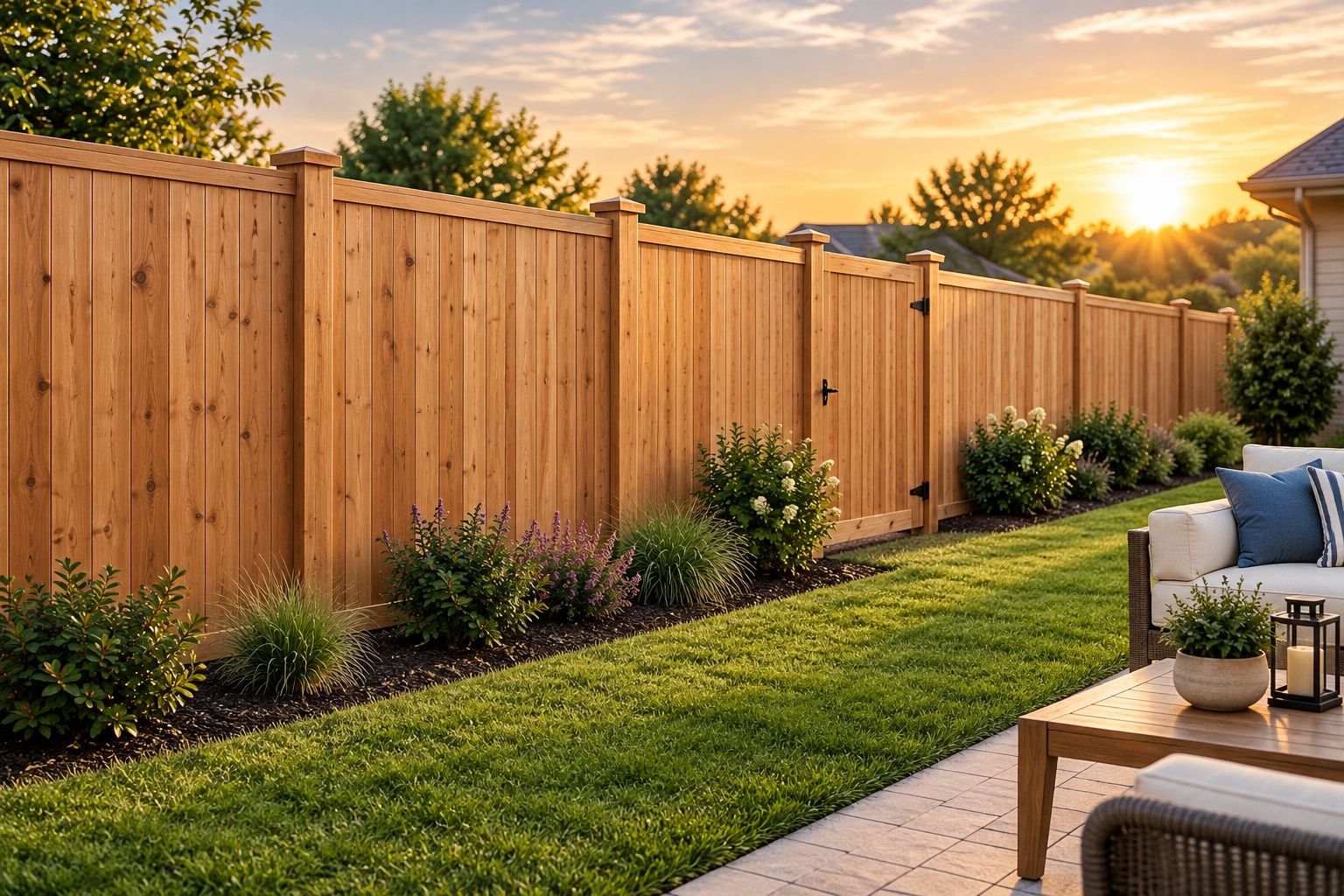
Cedar is the default recommendation when you want a solid wood backyard fence. Cedar heartwood has natural decay resistance, but that does not make every board, post, or connection immune to deterioration.
Choose cedar for the privacy layout and wood appearance—not as a promise of a maintenance-free fence. Discuss board spacing, finish expectations, post specifications, and gate construction together.
Cedar pros:
- Supports solid and partially screened privacy layouts.
- Offers a natural wood surface that accepts suitable finishes.
- Individual boards can be replaced in a board-built fence.
Cedar cons:
- Changes color outdoors unless a suitable finish is maintained.
- Can split, check, or move as moisture conditions change.
- Natural decay resistance does not replace correct installation.
Best for: Homeowners who want wood privacy and accept periodic inspection and finishing decisions.
Verdict: Buy cedar for a privacy-first backyard when maintaining real wood fits your plans.
2. Pressure-treated pine: best for a maintained wood boundary
Pressure-treated pine uses preservative treatment to improve resistance to biological deterioration. Treatment does not prevent all movement, cracking, or weathering, and the treatment category needs to match the component's exposure.
For a 2026 installation, ask the contractor to identify the lumber specification for posts and above-ground boards separately. Hardware compatibility matters because some wood preservatives require particular fasteners and connectors.
Pressure-treated pine pros:
- Works with familiar board-built privacy designs.
- Allows replacement of individual boards.
- Accepts compatible stains or coatings when the wood is ready.
Pressure-treated pine cons:
- Can shrink, twist, and check as it dries.
- Requires attention to treatment suitability and compatible hardware.
- Still needs cleaning, inspection, and finish maintenance where applicable.
Best for: Homeowners who want a conventional wood fence and will maintain its boards, finish, and connections.
Verdict: Buy pressure-treated pine when the written scope specifies appropriate treatment, fasteners, and installation details.
3. Aluminum: best for keeping the backyard view open
Aluminum picket fencing defines a boundary without creating a solid visual wall. It suits a yard where seeing landscaping or the space beyond the fence matters more than screening neighbors.
Aluminum does not rust like iron, but finishes, fasteners, and connections still need inspection. Picket spacing, the gap beneath the fence, and the gate design determine whether a particular installation suits your pets or another enclosure requirement.
Aluminum pros:
- Preserves views through an open picket design.
- Does not require wood staining.
- Avoids the board movement associated with wood fencing.
Aluminum cons:
- Provides little visual privacy.
- Can bend under impact.
- Standard picket layouts do not suit every pet or enclosure purpose.
Best for: Homeowners who want an open boundary rather than a privacy screen.
Verdict: Buy aluminum for visibility; skip aluminum when blocking sightlines is the main goal.
4. Chain-link: best for a practical utility enclosure
Chain-link fencing uses woven metal mesh attached to a supporting framework. It is a functional choice for separating yard areas or creating a pet boundary while keeping the enclosure visually open.
Choose the mesh, framework, coating, gates, and bottom-edge treatment as one system. Adding privacy fabric or slats changes the fence's wind exposure, so do not treat screening as an automatic accessory.
Chain-link pros:
- Keeps sightlines open across the yard.
- Creates a defined enclosure without solid panels.
- Allows localized repair of mesh or framework components.
Chain-link cons:
- Provides little privacy without additional screening.
- Mesh can be climbed by people and some animals.
- Gaps beneath gates or along uneven ground need specific attention.
Best for: Homeowners who prioritize a practical boundary over a solid architectural screen.
Verdict: Buy chain-link for utility; skip chain-link when privacy or climbing resistance is essential.
5. Vinyl: best for privacy without wood staining
Vinyl fencing uses manufactured components rather than exposed wood boards. It belongs on a 2026 shortlist when you want a privacy fence without a recurring wood-staining task.
The panel profile, reinforcement, post system, and installation instructions matter. A vinyl fence still needs cleaning and inspection, and a damaged component needs a compatible replacement rather than an improvised wood-style repair.
Vinyl pros:
- Does not require wood stain.
- Offers solid-panel privacy configurations.
- Avoids splintering associated with exposed wood.
Vinyl cons:
- Can crack or suffer impact damage.
- Repairs depend on matching profiles and components.
- Installation must account for thermal movement and specified support.
Best for: Homeowners who want solid screening and prefer cleaning to wood refinishing.
Verdict: Buy vinyl after reviewing the actual panel system, support requirements, and repair method.
6. Composite: best for wood-look privacy without wood refinishing
Composite fencing uses manufactured boards or panels, with composition varying by product. It is a separate choice from vinyl, not another name for the same material.
Compare the actual system rather than assuming every composite fence performs alike. Confirm board support, permitted spans, expansion clearances, cleaning instructions, and how a damaged board comes out of the assembly.
Composite pros:
- Offers a wood-like appearance without conventional wood refinishing.
- Works in privacy-focused designs.
- Provides manufactured board profiles for a consistent layout.
Composite cons:
- Requires product-specific support and movement clearances.
- Can stain, scratch, or change appearance outdoors.
- Replacement depends on compatible boards and system components.
Best for: Homeowners who want wood-look screening and are prepared to evaluate a specific manufactured system.
Verdict: Buy composite only after the installation and repair details are clear; skip material-only promises.
How these fence materials rank
This ranking puts the backyard's purpose ahead of a universal material score. Cedar leads for wood privacy, aluminum leads for open views, and chain-link leads for a utility-focused enclosure.
Pressure-treated pine fills the maintained-wood slot. Vinyl and composite address a different priority: avoiding conventional wood refinishing while accepting product-specific installation and repair requirements.
The order is a decision tree, not a claim that the first material is strongest on every property. A privacy winner is the wrong choice when preserving a view is your main requirement.
Before you approve a fence installation
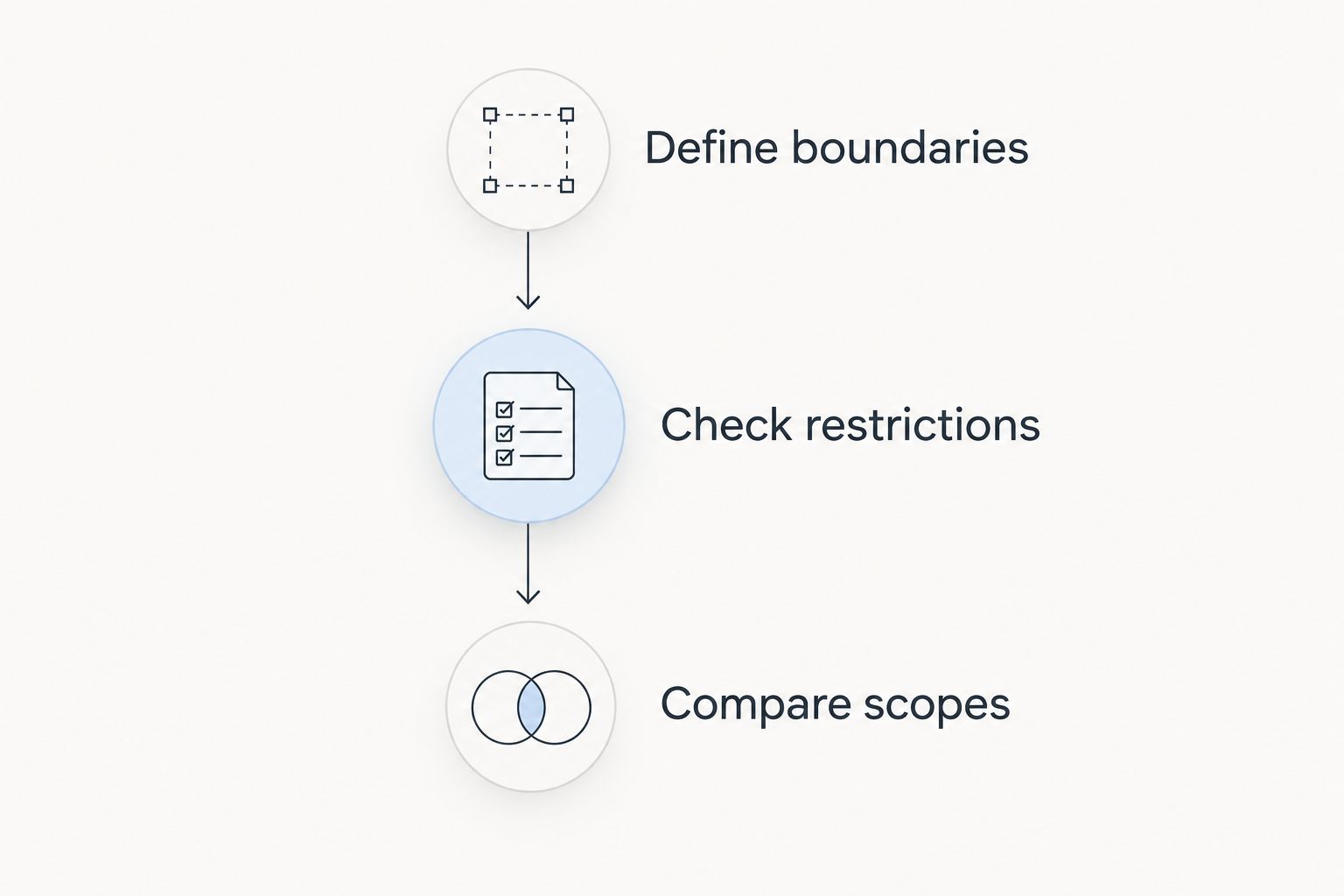
Turn the material shortlist into a defined project. For a 2026 fence installation, follow this sequence before authorizing work:
- Define boundaries. Confirm the proposed fence line against reliable property information. An existing fence is not proof of the legal boundary.
- Check restrictions. Review easements, neighborhood requirements, applicable local rules, and pool-barrier requirements where relevant. Arrange utility locating before excavation.
- Compare scopes. Ask each contractor to describe the same layout, material specification, posts, connections, gates, removal work, and site restoration.
Keep 1 written scope as the reference for every comparison. Review 2 physical samples when finish or texture drives your decision, and request 3 itemized proposals against that same scope if you want a structured contractor comparison. These are planning recommendations, not requirements or guarantees.
Ask who handles permits or approvals when required, how concealed conditions are addressed, and what the proposed installation excludes. Get the answers in writing rather than assuming every proposal covers the same work.
Discuss your backyard fence
Talk through your fencing project in the Conroe/Woodlands area.
Which fence material should you choose?
Choose cedar if your default brief is a private backyard with a real wood fence. Choose aluminum if open views matter more than screening, and chain-link if you need a practical enclosure rather than a visual wall.
Keep pressure-treated pine on the list when you accept wood maintenance. Compare vinyl and composite when avoiding wood refinishing is the deciding factor, but evaluate actual systems rather than broad material claims.
A Finishing Touch Remodeling is a local option for homeowners seeking backyard fencing services in the Conroe/Woodlands area. To discuss your selected material and installation scope, contact the team.
FAQ
What's the best fence material for a Texas backyard in 2026?
Cedar is the default recommendation for a Texas backyard that needs wood privacy. Aluminum suits open views, while chain-link suits a utility-focused enclosure; the right choice starts with the fence's purpose.
Is cedar better than pressure-treated pine for a backyard fence?
Cedar is the stronger fit when natural wood appearance and naturally decay-resistant heartwood are priorities. Pressure-treated pine is another wood-fence option, but its treatment specification, drying movement, and compatible hardware need attention.
Which backyard fence needs the least maintenance?
Aluminum, vinyl, and composite avoid conventional wood refinishing. None eliminates cleaning, inspection, hardware adjustments, or repairs, and vinyl and composite requirements depend on the selected system.
Is vinyl fencing a good choice for Texas heat?
Vinyl belongs on the shortlist only after checking the selected system's installation requirements for thermal movement and support. A general material description does not establish how a particular panel system suits your site.
What fence material is best for dogs?
The best dog fence is the one whose height, openings, bottom edge, and gates match your dog's behavior. Material alone does not solve jumping, climbing, digging, or escaping through gaps.
Can I add privacy screening to a chain-link fence?
Adding screening changes the fence's wind exposure and needs an assessment of the existing framework and connections. Do not assume a fence designed as an open enclosure can support a solid screen.
Does a backyard pool change which fence I should choose?
Yes, a pool changes the requirements you need to check before choosing a fence. Confirm applicable barrier, opening, gate, and latch rules with the relevant authority; a material name alone does not establish compliance.
Does A Finishing Touch Remodeling offer local fencing services?
A Finishing Touch Remodeling offers fencing services to homeowners in the Conroe/Woodlands area. Discuss the proposed fence line, material, gates, and installation scope when planning your project.
One last thing
Specify the gate before approving the fence. A fence can match your material preference and still fail its everyday purpose if the gate opening does not accommodate the equipment you move through it.
Walk the intended route with your mower, bins, or other yard equipment in mind. Record the required clear opening, swing direction, latch location, and ground clearance in the same scope as the fence—not as a finishing detail.