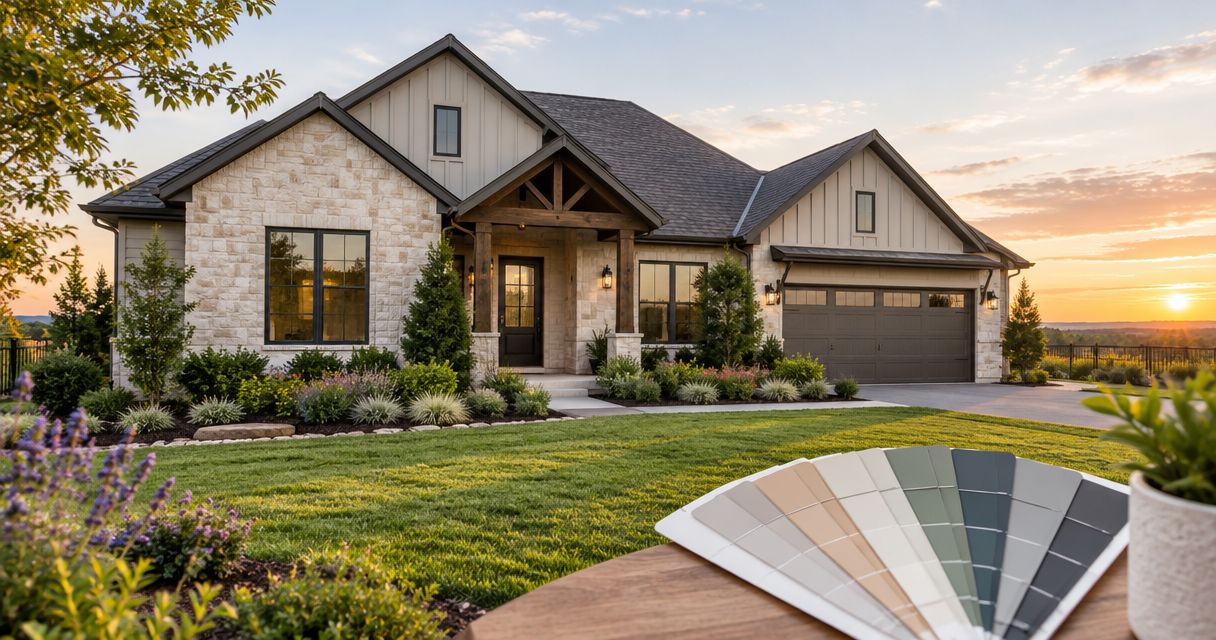
Best overall: warm white. Best for working with existing brick: warm greige. Best for a wooded setting: muted sage. These are the best exterior paint colors Texas homeowners should shortlist in 2026 when the goal is a coordinated exterior rather than a color chosen in isolation.
- The best exterior paint colors Texas homeowners can shortlist start with warm white, warm greige, and muted sage.
- Warm white is the default; warm greige suits a palette built around warm brick or stone.
- A Finishing Touch Remodeling offers painting services to homeowners in Conroe and The Woodlands.
- Choose exterior paint colors against your roof, masonry, and trim before approving the full repaint.
For homeowners in Conroe and The Woodlands, A Finishing Touch Remodeling offers painting alongside other home remodeling services. Use this guide to narrow your color direction before discussing the surfaces and preparation your project needs.
Why this matters
Exterior paint does not sit on a blank canvas. Your roof, brick, stone, driveway, windows, and landscaping remain part of the composition after the painting ends.
Choose the color that works with the materials you are keeping, not the sample you like most by itself. A white that looks balanced beside gray roofing can look disconnected beside strongly orange brick. Likewise, a gray selected indoors needs a fresh assessment outside.
For a 2026 repaint, separate appearance from performance. Color selection determines the visual relationship between surfaces; preparation, coating selection, and application are separate decisions. A fashionable shade does not resolve peeling paint or a damaged substrate.
What makes the best exterior paint colors for Texas homes?
Judge each color against these criteria before comparing the shortlist:
- Fixed-material compatibility: Compare the sample with the roof, brick, stone, and window frames that will remain.
- Undertone control: Look for yellow, pink, green, blue, or violet casts that compete with surrounding materials.
- Light and shade: Review the color on an exposed wall and beneath a porch or overhang.
- Architectural emphasis: Decide whether siding, trim, or the entry should attract attention.
- Scope discipline: Distinguish painting siding and trim from coating previously unpainted masonry.
- Approval requirements: Check applicable neighborhood restrictions before committing to a scheme.
A practical starting point is 3 sample colors, not a wall covered in unrelated swatches. Choose candidates that solve the same problem, such as coordinating with warm brick, so your comparison produces a decision.
Best exterior paint colors at a glance
These rankings describe color families, not specific manufacturers' formulas. Individual shades within each family still need an on-site sample.
| Rank | Color family | Best for | Standout feature | Key limitation |
|---|---|---|---|---|
| 1 | Warm white | A restrained, bright exterior | Creates a quiet backdrop for other materials | Excessively creamy shades can compete with cool finishes |
| 2 | Warm greige | Retaining warm brick or stone | Bridges beige and gray elements | Some shades look muddy beside incompatible masonry |
| 3 | Muted sage | A wooded or garden-facing setting | Introduces restrained color | Green undertones need careful comparison with stone |
| 4 | Light neutral gray | An exterior with cool fixed finishes | Supports a cooler, restrained palette | Blue or violet undertones can clash with warm brick |
| 5 | Muted blue | Giving siding a distinct identity | Adds color without relying on bright saturation | Can compete with orange or red masonry |
| 6 | Charcoal | Doors, shutters, and limited accents | Creates strong visual definition | Large areas can overpower a lighter composition |
1. Warm white: best exterior paint color for a quiet backdrop
Warm white gives you a light-colored exterior without making bright, stark white the starting point. It is the strongest default when you want siding to support the roof, entry, and landscaping rather than become the main feature.
For a 2026 scheme, assess how much warmth the house actually needs. An obviously cream-colored sample is not automatically the right partner for beige stone, and a subtle warm white is not interchangeable with a yellow-toned off-white.
Warm white pros:
- Gives you a restrained base for contrasting doors or trim.
- Keeps the main wall color visually simple.
- Supports a scheme with several existing materials when their undertones agree.
Warm white cons:
- Yellow undertones can conflict with cooler roofing or window frames.
- Closely matched white siding and trim provide little visual separation.
Best for: Homeowners who want the walls to serve as a quiet background.
Compare the siding sample directly with the intended trim white. If the difference looks accidental, either match them deliberately or create clearer separation.
Verdict: Buy into warm white as the default shortlist, then approve the exact shade outside.
2. Warm greige: best exterior paint color for existing masonry
Warm greige sits between beige and gray. Use it as a candidate when the exterior must connect warm brick or stone with more neutral painted surfaces.
The purpose is coordination, not camouflage. Your siding does not need to copy every color in the brick; it needs to avoid introducing a competing undertone.
Warm greige pros:
- Offers a quieter alternative to visibly yellow beige.
- Gives you a middle-ground option between white and deeper colors.
- Can connect warm masonry with neutral trim when sampled together.
Warm greige cons:
- Some shades appear muddy against the wrong brick.
- Subtle undertones become difficult to judge from a small chip.
Best for: Homeowners keeping warm-toned brick or stone and repainting adjacent siding or trim.
Hold the sample against both masonry and mortar. A color that relates to the mortar deserves consideration even when it does not resemble the face of the brick.
Verdict: Buy into warm greige when the existing masonry sets the palette.
3. Muted sage: best exterior paint color for a wooded setting
Muted sage introduces green without making a bright color the center of the exterior. It is a useful direction when you want a visible departure from white or beige while keeping the overall palette restrained.
Treat sage as a family with substantial variation. A yellow-green sample, a gray-green sample, and a blue-green sample will not produce the same relationship with your roof and stone.
Muted sage pros:
- Gives siding a distinct color identity.
- Creates an alternative to an entirely neutral scheme.
- Allows restrained contrast with compatible pale trim.
Muted sage cons:
- Strong green undertones can compete with existing masonry.
- A deeply shaded wall needs its own sample assessment.
Best for: Homeowners seeking a nature-associated color rather than another white or gray exterior.
For a 2026 shortlist, start with a grayed-down sage rather than assuming a saturated green will soften once applied. Review the actual sample beside the house's permanent finishes.
Verdict: Buy into muted sage when you want color without a bright exterior.
4. Light neutral gray: best exterior paint color for cool finishes
Light neutral gray belongs on the shortlist when the roof, windows, or masonry already establish a cooler palette. It provides a quieter field color than blue while keeping the exterior outside the beige family.
Do not select gray simply because it is labeled neutral. Compare its visible undertone with the materials on your particular house.
Light neutral gray pros:
- Supports a restrained, cool-toned composition.
- Gives darker window frames or doors clear definition.
- Offers a lighter alternative to charcoal siding.
Light neutral gray cons:
- Blue or violet casts can conflict with warm masonry.
- A pale gray and pale trim can merge visually.
Best for: Homes whose existing finishes support a cool rather than warm palette.
Place the gray sample beside a warm greige candidate. That comparison helps you decide which direction relates better to the house instead of choosing between nearly identical grays indefinitely.
Verdict: Hold until an outdoor sample confirms the undertone.
5. Muted blue: best exterior paint color for distinctive siding
Muted blue makes the siding a more noticeable part of the house. Choose it when a neutral exterior feels too restrained and you want a clear color decision rather than a barely visible tint.
A gray-influenced blue is a useful starting direction, but the roof and masonry still determine whether it belongs. Do not approve blue solely because it works with a preferred front-door color.
Muted blue pros:
- Establishes a recognizable siding color.
- Creates clear separation from compatible pale trim.
- Offers an alternative to earth-toned palettes.
Muted blue cons:
- Can compete with strongly orange or red brick.
- Adds another color relationship to manage across the exterior.
Best for: Homeowners who want painted siding to carry the visual identity of the house.
Review the largest uninterrupted wall before approving the scheme. A small accent sample does not answer whether you want blue across that entire surface.
Verdict: Buy into muted blue only when the main wall and fixed finishes work together.
6. Charcoal: best exterior paint color for controlled accents
Charcoal creates a dark focal point on a door, shutters, or selected trim. It is the strongest choice here for defining a small feature rather than making every painted surface equally prominent.
Start with the feature you want to emphasize. Dark paint around every opening creates a different composition from a single dark entry door.
Charcoal pros:
- Produces strong contrast against compatible light siding.
- Gives an entry or architectural detail visual emphasis.
- Supports a limited accent strategy.
Charcoal cons:
- Broad applications can overwhelm a lighter palette.
- Dark trim can emphasize details you would rather downplay.
Best for: Homeowners who want selective contrast rather than a dark whole-house scheme.
Evaluate charcoal next to the roof as well as the siding. Two dark surfaces with visibly different undertones deserve the same scrutiny as two competing whites.
Verdict: Buy for deliberate accents; hold on whole-house charcoal until you assess the full elevation.
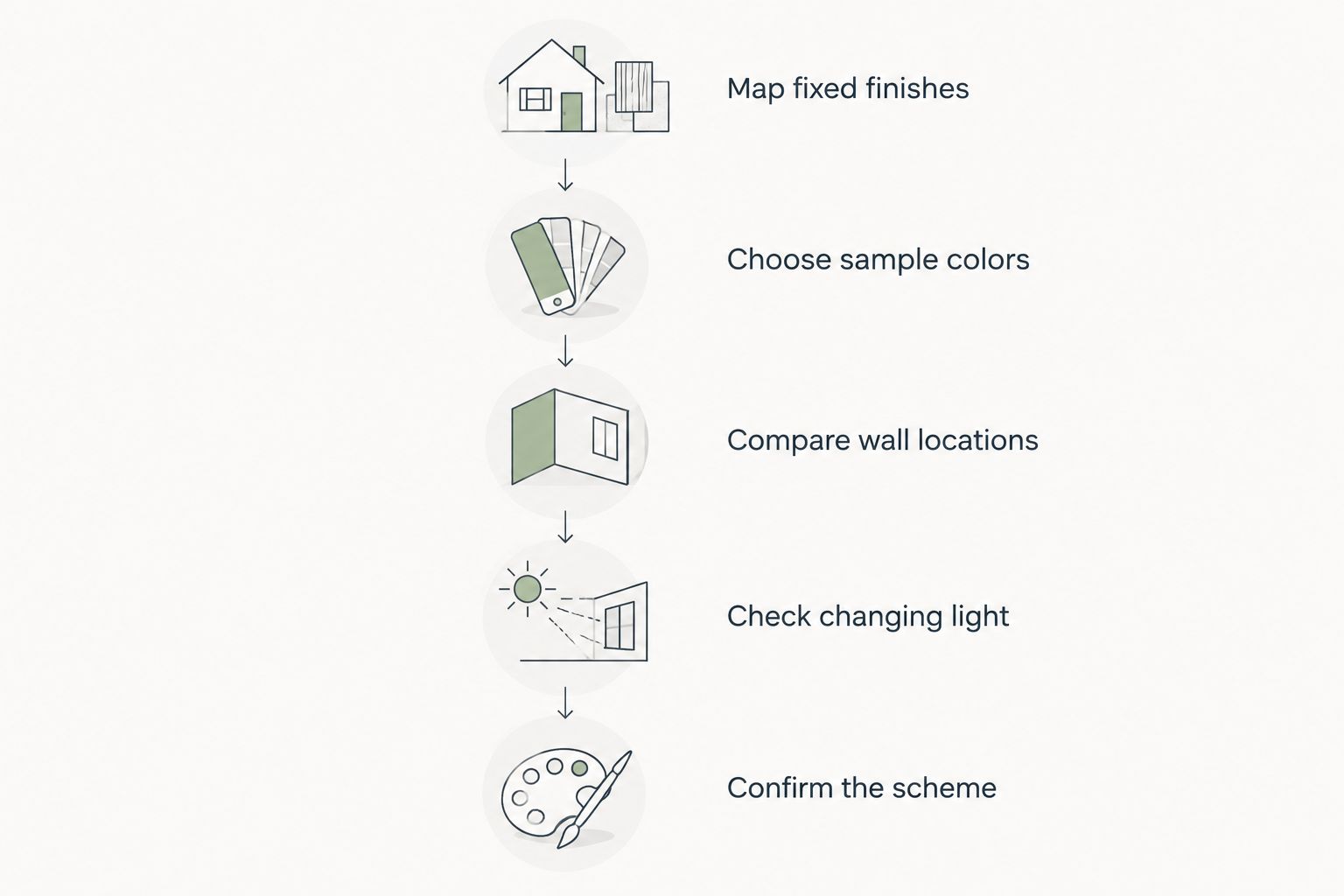
How to test your exterior color shortlist
Use the same comparison process for every candidate. Otherwise, you risk selecting the sample with the most flattering placement rather than the best fit.
- Map fixed finishes. Identify the roof, masonry, windows, and other surfaces that will stay.
- Choose sample colors. Limit the first round to 3 candidates that relate to those finishes.
- Compare wall locations. Review samples on 2 wall locations: an exposed area and a shaded area.
- Check changing light. Assess each candidate in morning light and again later in the day.
- Confirm the scheme. Approve siding, trim, and accents together before the full application.
Ask the painter how the sample should be prepared and applied to represent the planned coating. Keep surface repairs and coating suitability in the discussion; a color approval alone does not define the painting scope.
For a 2026 project, record the approved color names, finishes, and intended surfaces in writing. That record prevents a trim decision from being mistaken for approval to paint a different material.
Discuss your exterior painting project
Talk through your painting scope and color shortlist for your Conroe or The Woodlands home.
How these color families were ranked
The ranking prioritizes compatibility with existing materials, controlled undertones, and a clear role for each color. Warm white takes the default position because it serves as a restrained backdrop; the other families win when a particular material or design goal calls for them.
This is a selection guide, not a durability test or a claim that one color family performs better in Texas weather. A Finishing Touch Remodeling's exterior paint color recommendations here concern appearance; coating specifications require a separate project discussion.
Which exterior paint color should you choose?
Start with warm white unless your existing materials point elsewhere. Move to warm greige for warm masonry, muted sage for restrained green, or light gray for an established cool palette.
Choose muted blue when you want the siding to be a feature. Reserve charcoal for accents unless you have deliberately approved a darker full-house composition.
The best 2026 choice is the one you can explain using the house itself: this shade relates to the stone, this trim defines the windows, and this accent directs attention to the entry. That is a stronger decision than following a color name or trend.
FAQ
What's the best exterior paint color for a Texas home?
Warm white is the default recommendation for a restrained exterior. Choose the exact shade against your roof, masonry, and windows; warm greige is another candidate when warm brick or stone leads the palette.
What exterior paint color goes with red brick?
Warm greige is a useful starting candidate for warm red brick. Compare the sample with the brick and mortar together rather than assuming every red-brick exterior needs the same color.
Is white or gray better for a Texas exterior?
White is the stronger starting point for a quiet backdrop, while light gray suits a palette built around cool fixed finishes. The roof and masonry should determine which family reaches your final shortlist.
Should I paint my Texas home charcoal?
Start by considering charcoal for doors, shutters, or selected trim. Approve a whole-house charcoal scheme only after reviewing how the dark field color changes the complete elevation.
How many exterior paint colors should I sample?
Start with 3 candidate colors. Compare them in exposed and shaded locations, then approve the siding, trim, and accent combination together.
Do I need neighborhood approval before changing exterior colors?
Check your applicable neighborhood requirements before approving a new scheme. Where approval is required, resolve it before the painting work begins.
Does A Finishing Touch Remodeling offer painting services?
A Finishing Touch Remodeling offers painting services to homeowners in the Conroe and The Woodlands area. Discuss your exterior surfaces and planned work directly to establish the project scope.
One last thing
Check the mortar before you blame the brick. When a siding sample seems close but not quite right, compare it with the mortar separately; that overlooked surface can explain why a palette feels disconnected.
Keep the winning sample until the work is complete. A saved reference gives you something concrete to compare with the approved written scheme.