Best overall: porcelain tile. Best for a softer feel underfoot: luxury vinyl plank or tile; best for limiting field seams: sheet vinyl. This 2026 guide compares bathroom flooring for humid climates by moisture performance, maintenance, comfort, and installation requirements.
- Best bathroom flooring humid climate verdict: porcelain tile wins for moisture resistance and routine maintenance.
- Luxury vinyl offers a softer surface, but waterproof planks do not waterproof the floor assembly.
- Sheet vinyl limits field seams; ceramic tile suits floors with verified bathroom-use specifications.
- A Finishing Touch Remodeling serves Conroe and Woodlands homeowners planning bathroom remodeling and flooring projects.
Why this matters
Bathroom floors face two different moisture problems: humid air and liquid water. Ventilation addresses the first; a suitable flooring assembly, sound plumbing, and properly detailed transitions address the second. A water-resistant surface cannot compensate for a leaking toilet or damp subfloor.
For Conroe and Woodlands homeowners, choose the floor assembly before choosing the finish. A Finishing Touch Remodeling offers bathroom remodeling and flooring services in the area. Start your 2026 project with the room’s existing conditions, not a sample board.
Porcelain tile is the best default bathroom flooring for humid climates when you want a moisture-resistant surface and accept grout maintenance. Vinyl earns its place when comfort or fewer seams matters more.
What makes the best bathroom flooring for humidity?
Use these criteria to compare materials before approving a flooring scope:
- Water absorption: Favor materials that resist absorbing water. Porcelain’s classification requires water absorption of 0.5% or less, measured using ASTM C373.
- Assembly protection: Check how the floor handles edges, penetrations, transitions, and water beneath the finish. Surface claims alone are insufficient.
- Wet traction: Choose a product intended for bathroom floors. A textured appearance does not establish slip resistance.
- Maintenance: Consider grout cleaning, sealers where required, and access for repairs. Match the routine to what you will actually do.
- Comfort: Compare hardness, temperature underfoot, and tolerance for dropped objects. Moisture resistance does not make every surface comfortable.
- Installation fit: Verify subfloor condition, flatness, movement requirements, and the manufacturer’s instructions before selecting a material.
Bathroom flooring options at a glance
| Rank and material | Best for | Standout feature | Key limitation |
|---|---|---|---|
| 1. Porcelain tile | A moisture-resistant everyday bathroom | Very low water absorption | Hard underfoot; grout and assembly details need attention |
| 2. Luxury vinyl plank or tile | A softer-feeling bathroom floor | Resilient surface with wood or tile looks | Product-specific wet-area restrictions; trapped water remains a concern |
| 3. Sheet vinyl | Limiting seams across the main floor | Broad sheets reduce joints compared with individual planks | Cuts, perimeter details, and substrate defects affect performance |
| 4. Ceramic tile | Decorative floors with verified suitability | Many glazed finishes and patterns | Absorption and floor-use suitability vary by product |
| 5. Natural stone | A material-led design with accepted upkeep | Natural variation in color and texture | Stone-specific cleaning, sealing, and moisture considerations |
1. Porcelain tile: best bathroom flooring for everyday use
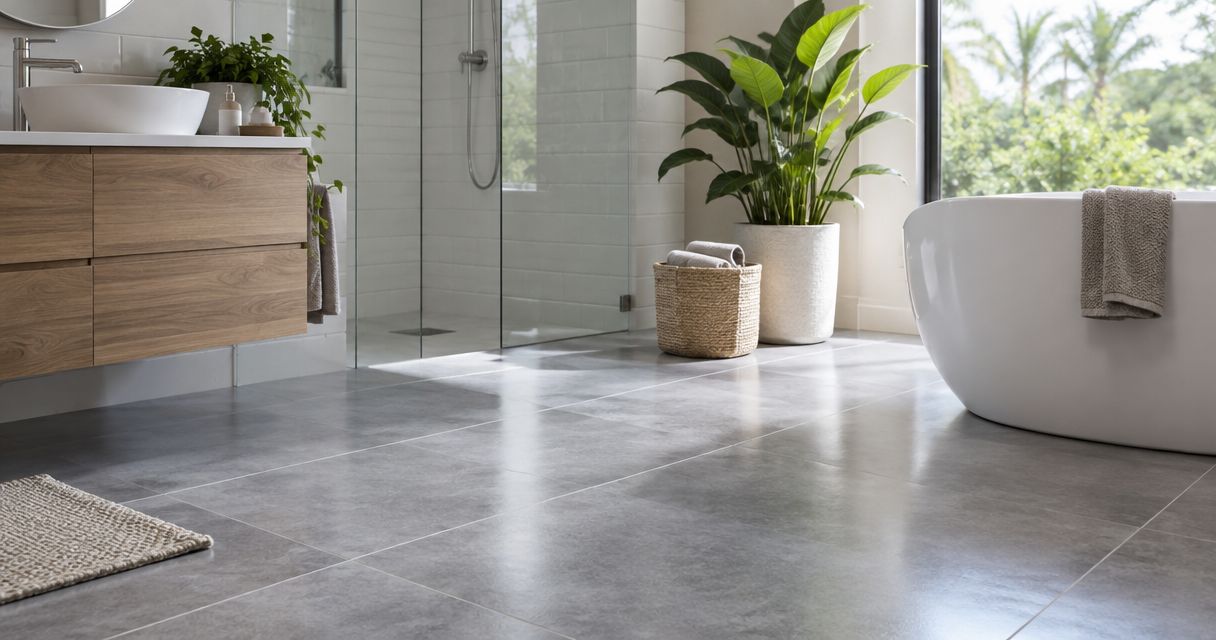
Porcelain tile combines low water absorption with a surface suited to routine bathroom cleaning. It is the strongest default for a 2026 bathroom remodel when your priorities are moisture resistance and straightforward surface care. Select a specific floor-rated tile rather than assuming every porcelain product belongs underfoot.
The tile surface is only one part of the installation. Grout, movement joints, substrate preparation, and any required waterproofing still need a defined specification.
Porcelain tile pros:
- Low water absorption is part of the material’s classification.
- Many finishes allow you to balance appearance with cleaning needs.
- Routine care does not require the stone-specific maintenance that some natural materials need.
Porcelain tile cons:
- The surface feels hard underfoot and is unforgiving when you drop something fragile.
- Grout joints need cleaning, and some grout products require sealing.
- A tiled floor does not automatically form a waterproof assembly.
Best for: Homeowners who prioritize moisture resistance and accept a firm walking surface.
Ask for the tile’s intended-use information and the proposed assembly beneath it. Keep shower-floor selection separate: a tile suitable for the main bathroom floor is not automatically suitable for a sloped shower floor.
Verdict: Buy porcelain tile for the default humid-climate bathroom floor.
2. Luxury vinyl: best bathroom flooring for a softer feel
Luxury vinyl plank and luxury vinyl tile provide a resilient alternative to a hard tile surface. They suit homeowners who want wood or tile styling without the same underfoot feel as porcelain. Bathroom suitability depends on the exact product and its installation instructions.
For a 2026 remodel, inspect the instructions behind any waterproof claim. Water-resistant planks do not establish that water cannot enter at the perimeter, around fixtures, or beneath the floor.
Luxury vinyl pros:
- A resilient surface feels less hard underfoot than tile.
- Wood-look and tile-look options support different room styles.
- The surface avoids grout joints between individual planks or tiles.
Luxury vinyl cons:
- Wet-area permissions and perimeter requirements differ between products.
- Water beneath the floor can remain a problem even when the flooring itself resists water.
- Sharp objects and heavy concentrated loads can damage the surface.
Best for: Homeowners who value underfoot comfort and will follow a bathroom-approved installation specification.
Do not assume a thicker plank fixes an uneven subfloor. Ask how the installer will address flatness, fixture placement, transitions, and the manufacturer’s expansion requirements.
Verdict: Buy luxury vinyl only after confirming the exact product permits your bathroom application.
3. Sheet vinyl: best bathroom flooring for fewer field seams
Sheet vinyl covers broad areas without the repeated joints found between individual planks or tiles. Depending on the room and sheet dimensions, the main floor can require fewer seams. That makes sheet vinyl a practical option when limiting joints is a priority.
The edges still matter. Cuts around a toilet, a tub apron, or a doorway need careful detailing, and the substrate must suit the selected product.
Sheet vinyl pros:
- Broad coverage limits joints across the main floor.
- A resilient surface provides a less hard feel than tile.
- Routine cleaning does not involve a network of grout joints.
Sheet vinyl cons:
- Substrate defects can show through the finished surface.
- A damaged area can be difficult to repair inconspicuously.
- Perimeter cuts and any seams remain potential water-entry locations.
Best for: Bathrooms where reducing field seams matters more than individual tile or plank styling.
Ask whether the proposed layout needs a seam and where it will fall. Do not describe the finished room as watertight solely because the sheet itself resists water.
Verdict: Buy sheet vinyl when the layout reduces seams and the substrate is properly prepared.
4. Ceramic tile: best bathroom flooring for decorative patterns
Ceramic tile offers glazed colors, patterns, and shapes for a design-led bathroom. Unlike porcelain’s defined low-absorption classification, non-porcelain ceramic products have varying absorption characteristics. The exact tile specification matters more than the category name.
A decorative wall tile is not a floor substitute. Confirm floor-use suitability, wet-use guidance, and maintenance requirements before committing to a pattern.
Ceramic tile pros:
- Glazed options provide a wide range of decorative finishes.
- Individual tiles support borders and patterned layouts.
- Suitable floor products work within a properly specified tile assembly.
Ceramic tile cons:
- Water absorption varies between products.
- Glaze damage can expose a contrasting tile body.
- Grout cleaning and movement details remain part of ownership.
Best for: Homeowners whose preferred decorative floor has documented bathroom suitability.
For a 2026 project, compare the actual ceramic and porcelain products rather than treating either label as a complete specification. A finish you can clean and walk on safely matters more than a category preference.
Verdict: Buy ceramic tile when the selected product meets the floor’s use requirements.
5. Natural stone: best bathroom flooring for material character
Natural stone brings variation that manufactured patterns imitate rather than reproduce exactly. Marble, limestone, slate, and other stones do not share one maintenance profile. Choose the specific stone and finish before agreeing to the cleaning and sealing routine.
Sealer does not turn stone into a waterproof assembly. Some stones also react to acidic cleaners, so the cleaning products already in your home belong in the selection discussion.
Natural stone pros:
- Natural variation gives each installation distinct material character.
- Different stone types provide different textures and finishes.
- Stone supports a design centered on the material itself.
Natural stone cons:
- Absorption, sealing needs, and chemical sensitivity vary by stone.
- Some stones etch when exposed to acids.
- Finish selection must account for wet traction and cleaning.
Best for: Homeowners who specifically want natural stone and accept its care requirements.
Request care instructions for the exact stone, not a generic promise that sealing solves moisture exposure. If easy upkeep leads your decision, return to porcelain.
Verdict: Hold unless natural stone’s appearance justifies its specific maintenance demands.
Make the floor assembly work
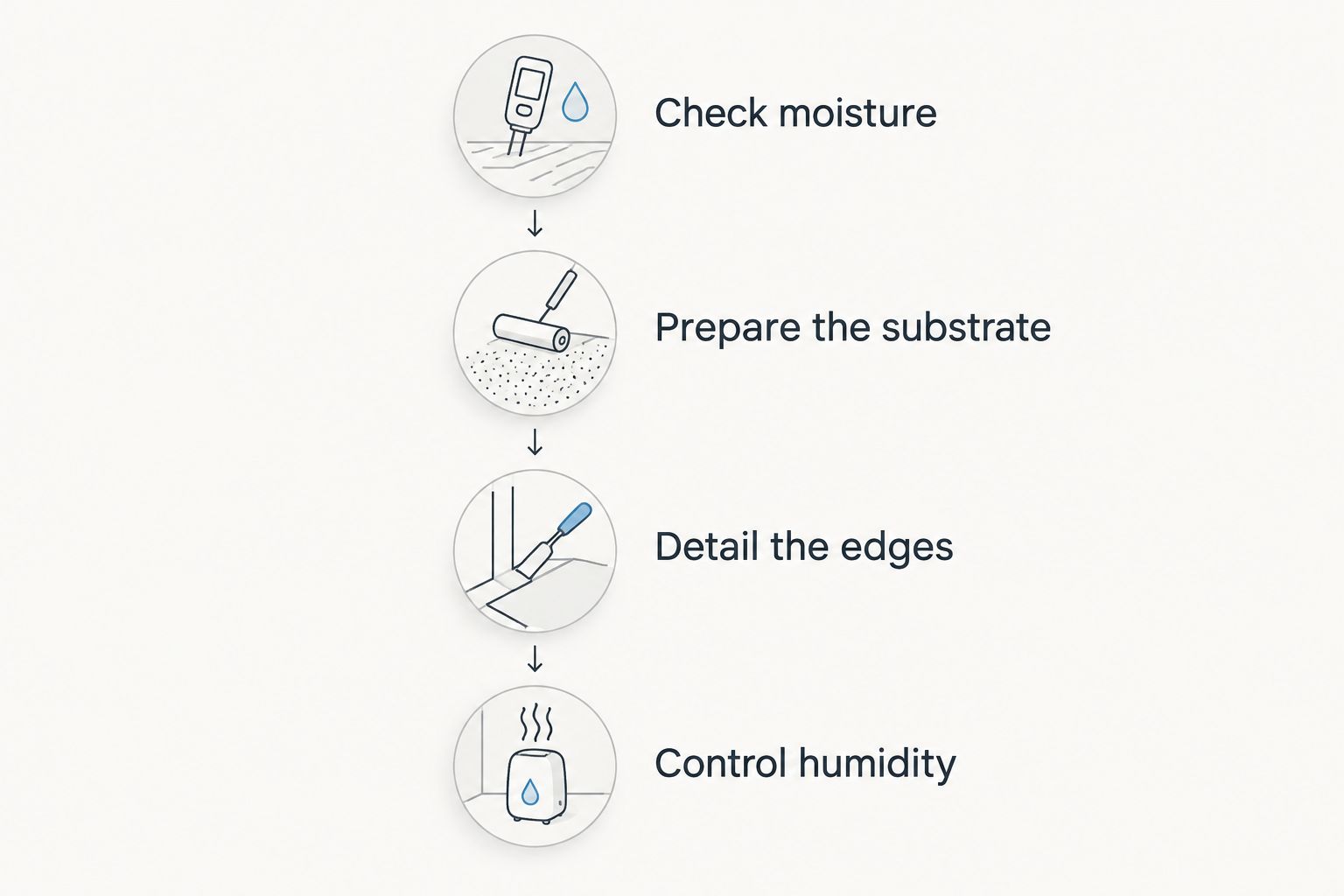
The best bathroom flooring for a humid climate depends on what happens beneath and around the surface. Before installation, turn these checks into a written scope rather than leaving them as assumptions.
Check moisture
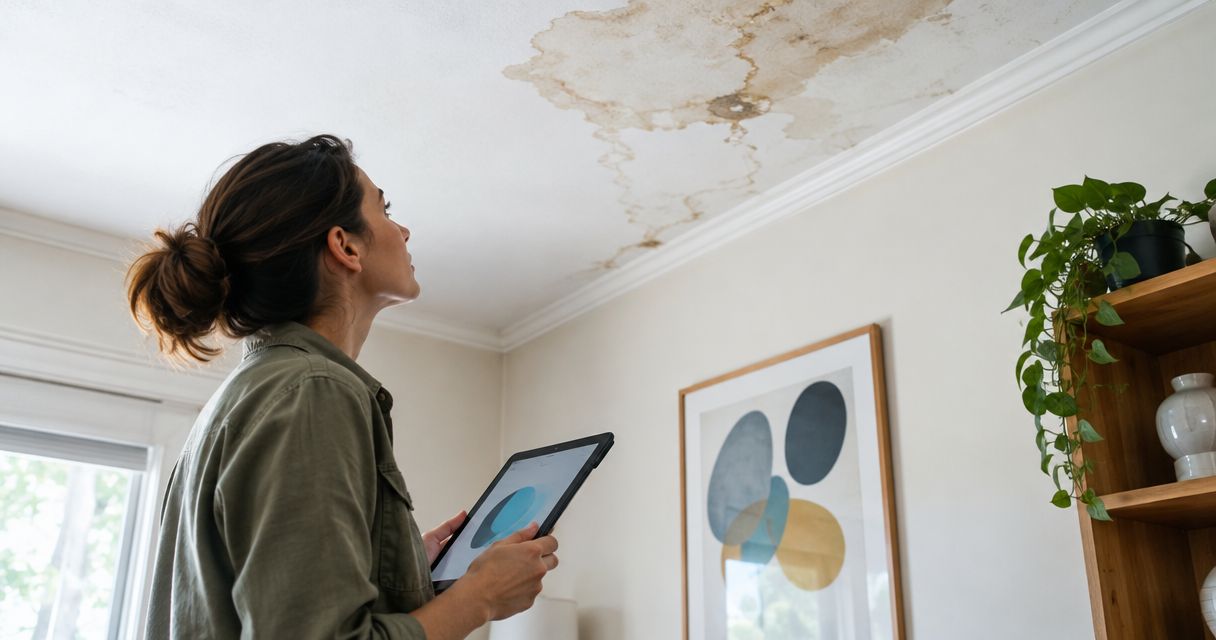
Identify leaks, persistent dampness, and any substrate moisture testing required by the flooring manufacturer. Fix the cause before covering the floor. New material is not a treatment for an unresolved moisture problem.
Prepare the substrate
Confirm that the subfloor is sound and meets the selected system’s preparation requirements. Tile and resilient flooring have different demands, but neither benefits from damaged material underneath. Define repairs before the finish goes down.
Detail the edges
Specify transitions, fixture penetrations, movement joints, and any required waterproofing. A bathroom floor meets several different materials, and those junctions deserve explicit instructions. Do not assume grout or perimeter caulk resolves every detail.
Control humidity
Use a bathroom exhaust system that discharges outdoors. EPA residential moisture guidance recommends indoor relative humidity below 60%, ideally between 30% and 50%; these are household moisture-control targets, not a flooring warranty condition. A hygrometer helps you check conditions instead of judging by how the room feels.
A Finishing Touch Remodeling bathroom flooring discussion should start with the existing room and your maintenance priorities. Bring photographs of damaged areas, your preferred material, and questions about the proposed floor assembly.
Discuss your bathroom flooring project
Talk through your Conroe or Woodlands bathroom remodel and flooring priorities.
How these options rank
This 2026 ranking prioritizes moisture resistance, installation fit, wet-use suitability, maintenance, and comfort. Porcelain leads because its low absorption supports the central requirement without natural stone’s material-specific care. Vinyl ranks well for comfort, while sheet vinyl earns a distinct place for limiting seams.
The ranking compares material characteristics, not completed installations or individual product tests. A correctly specified lower-ranked material beats a poorly detailed installation of the top-ranked material.
Which bathroom flooring should you choose?
Choose porcelain tile if you want the clearest default and accept grout upkeep. Choose luxury vinyl if a softer surface matters more, provided the exact product allows the application. Choose sheet vinyl when fewer field seams are the deciding factor.
Ceramic belongs on your shortlist when a specific floor-rated design meets your requirements. Natural stone belongs there only when its appearance is important enough to justify its care routine. For A Finishing Touch Remodeling bathroom flooring projects, make those priorities explicit before discussing finishes.
FAQ
What's the best bathroom flooring for a humid climate?
Porcelain tile is the best default bathroom flooring for a humid climate because of its low water absorption. The installation still needs suitable substrate preparation, movement details, and any required waterproofing.
Is luxury vinyl better than tile in a humid bathroom?
Luxury vinyl is better for a less hard feel underfoot, while porcelain is the stronger default for low water absorption. Choose vinyl only when the exact product's instructions permit the bathroom application.
Does waterproof flooring stop water from damaging the subfloor?
Waterproof flooring does not automatically protect the entire subfloor. Water can enter at edges, penetrations, or other openings, so the complete assembly needs appropriate detailing.
Can I use the same tile on my bathroom and shower floors?
Use the same tile only if the product is suitable for both applications. Shower floors also require attention to slope, drainage, wet traction, and the waterproofing system.
Is sheet vinyl a good choice for a humid bathroom?
Sheet vinyl is a good choice when reducing field seams is a priority and the product permits bathroom use. Substrate preparation, perimeter detailing, and any required seams still determine installation quality.
What humidity should I aim for in my bathroom?
EPA residential guidance recommends indoor relative humidity below 60%, ideally between 30% and 50%. Use ventilation and a hygrometer to assess persistent humidity rather than relying on the flooring to manage it.
Does natural stone need sealing in a bathroom?
Sealing requirements depend on the specific stone and finish. Follow the stone supplier's care instructions, and do not treat sealer as a substitute for waterproofing.
One last thing
Ask every installer one question before approving your 2026 flooring scope: Where does water go if it gets beneath this surface? The answer should address the actual assembly, not repeat a waterproof label. That question reveals more about the proposed installation than another flooring sample.